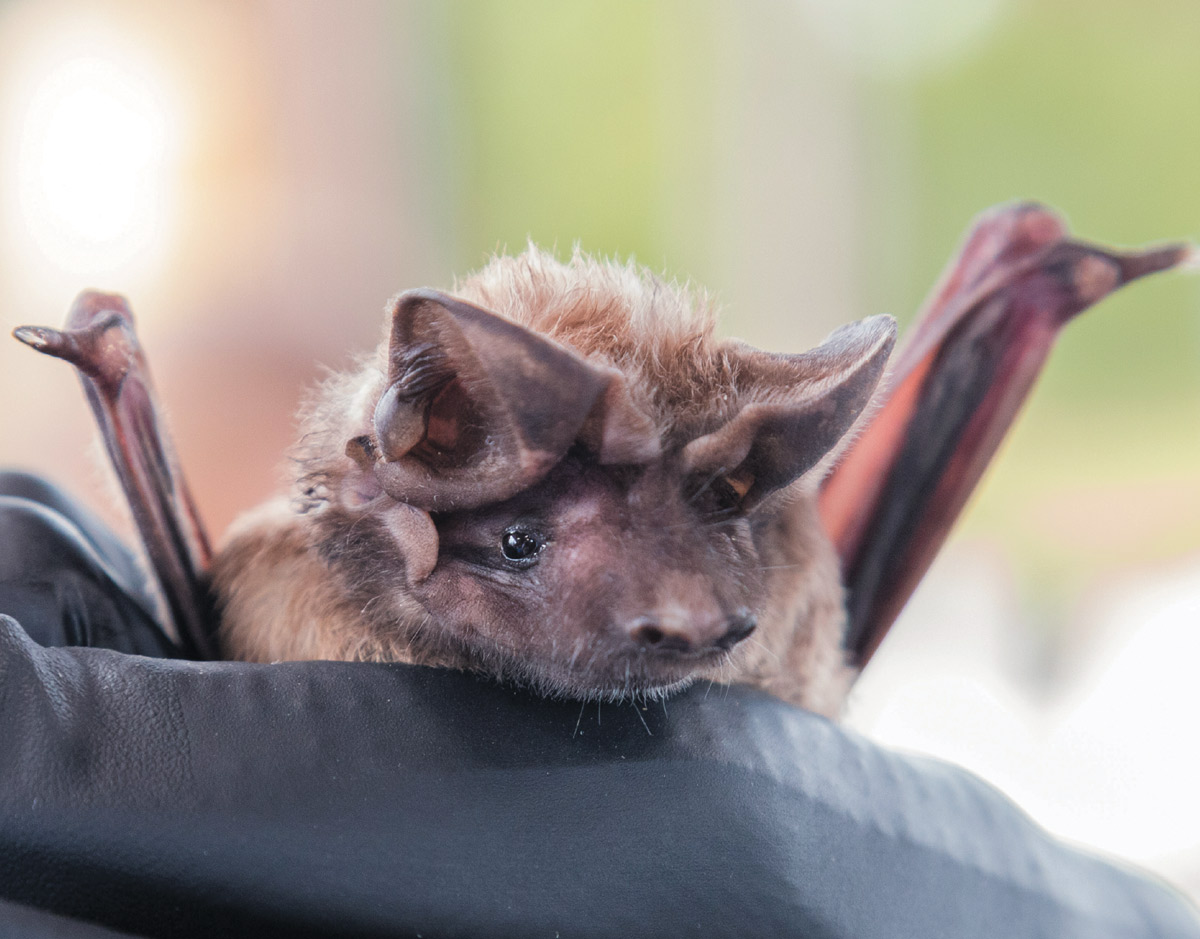
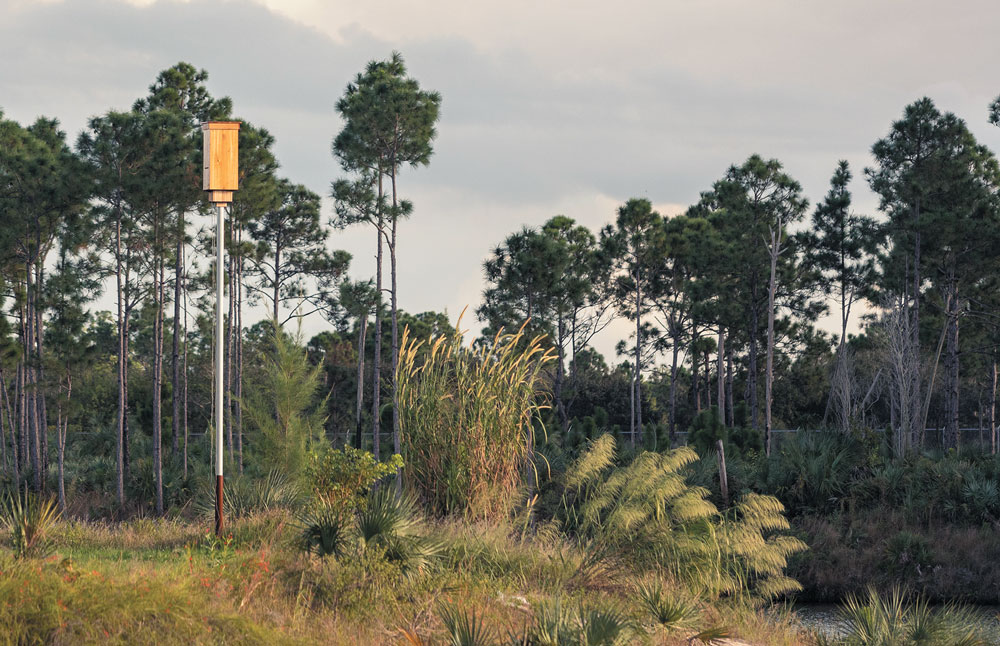
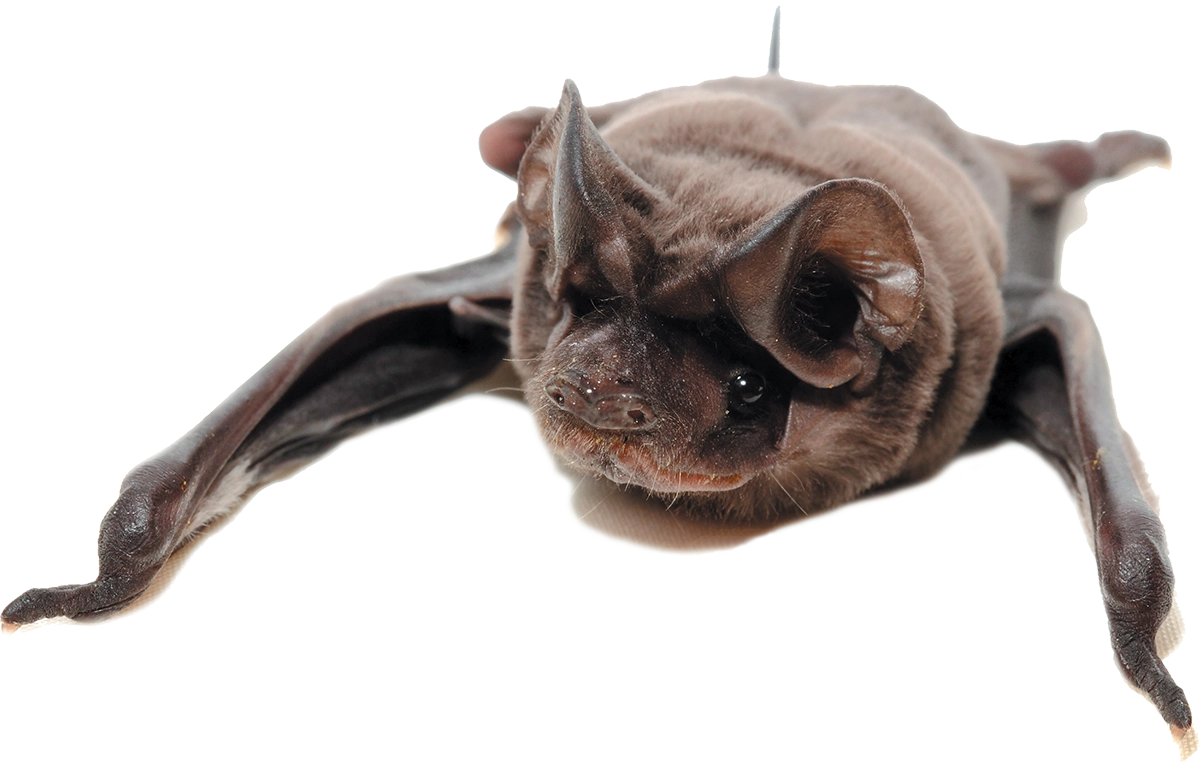
Ridgley’s work with the Florida bonneted bat caught BCI’s attention, and BCI and Zoo Miami worked together to found the Miami Bat Lab, dedicated to the study and protection of Florida bonneted bats. Together, Ridgley and BCI installed artificial roosts—known to most as bat houses—starting in 2018, and the bats flocked to them.
“BCI has continued to be my strongest partner here at the zoo for this program, helping us all work together to figure out what’s needed next for the species,” Ridgley says. “We have this whole network of artificial roosts, and we’ve seen the bats move in and their population grow, so that part’s working. But next we need to look at foraging.”
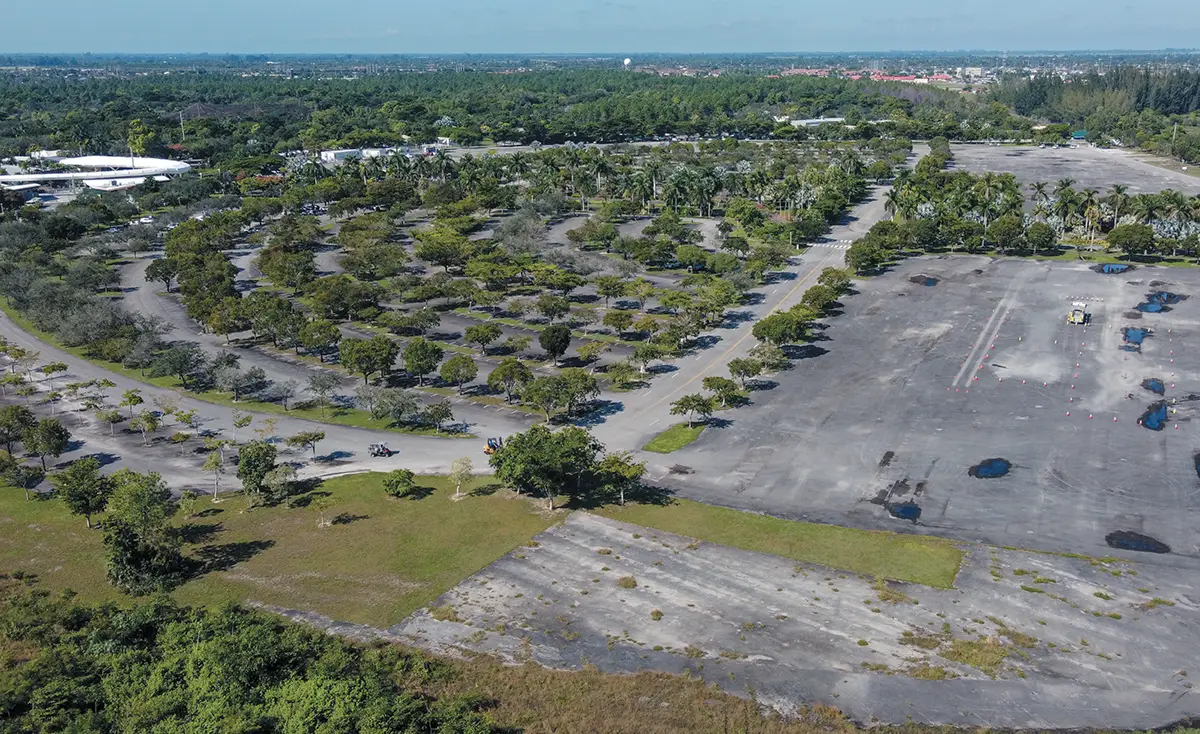
Through his research, Ridgley discovered that the Florida bonneted bat tends to forage for prey—typically large insects—in wide open areas. And that’s partially due to the fact that they’re among the fastest bats in the world. Ridgley likens them to a jet airplane: “They are designed for high-speed, high-altitude flight with their wing shape. They’re made to scream across the sky,” he says. As such, they can’t turn very quickly, so open space is a must for hunting. That brings us to the Zoo Miami parking lot, an open space that’s the perfect foraging ground for Florida bonneted bats—and a water park was set to fill it.


 Feature: Miami Wilds