

bat signals

Studying Power Line Corridor Habitat

Managing vegetation for bats and humans
A field of yellow flowers with electricity pylons under a partly cloudy sky.
A study by BCI researchers explores the importance of power line corridor habitat for bats and how these areas can be best managed to benefit bats.
Photo: Ashley Bennett, EPRI
Vegetation around power line corridors—the strips of land alongside electric transmission lines—is regularly managed to ensure the lines are safe and effective. Bat Conservation International Research Scientist CJ Campbell, Ph.D., and a number of other BCI scientists joined collaborators to study how power line corridors can best be managed to benefit bats. Many species, including bats, use the small strips of land around power lines, which can include forest edge, prairie, scrub, and early successional habitat. The researchers focused on analyzing how vegetation management could impact bats’ roosting, foraging, and commuting in these corridors.

Campbell and colleagues published their recommendations for best management practices in the journal Ecological Solutions and Evidence in late 2024. They noted that it was important to avoid disturbing roosting bats when conducting vegetation management and that an integrated approach is best, with a focus on maximizing native plant diversity. They also explored the potential for targeted intervention strategies like creating artificial roosts and ponds, as well as highlighting topics for future research, including how vegetative management treatments may increase bat fitness.

Make Your Own Bat Out of Clay

Artist Joan Cabarrus shares step-by-step guide
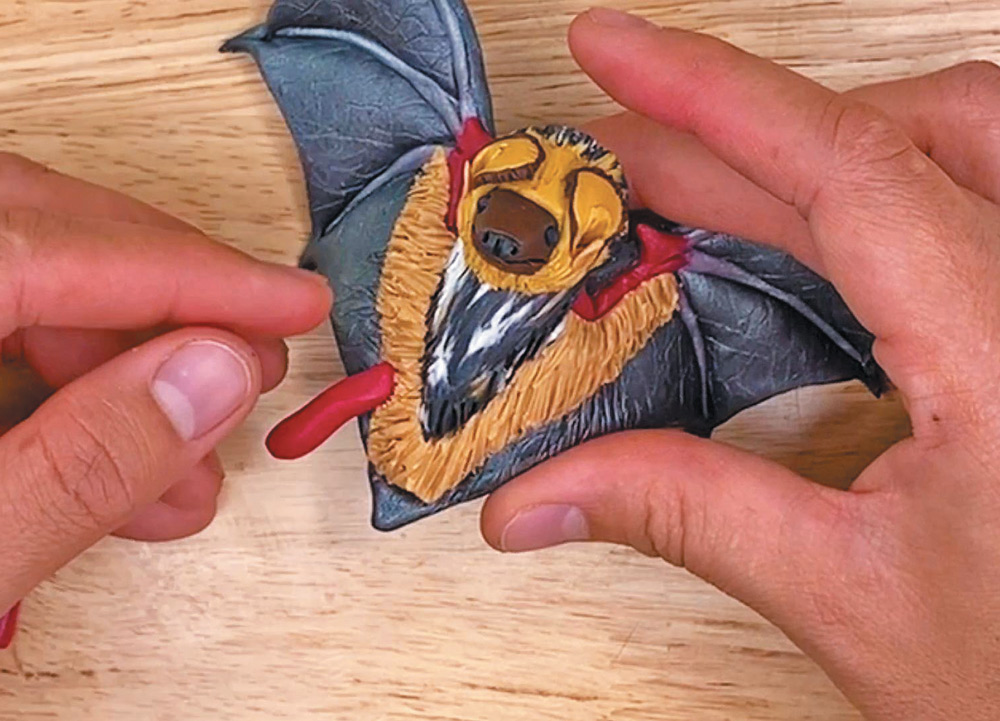
Close-up of hands holding a small bat model with detailed features on a wooden surface.
Learn how to create a bat out of clay with Joan Cabarrus’s step-by-step guide.
Photo: Joan Cabarrus
Gather your materials and get ready to make your very own bat out of clay. Artist Joan Cabarrus worked with Bat Conservation International (BCI), Austin Creative Reuse, and Austin Youth River Watch to create a 9-foot-wide bat out of reused materials (see page 20). Now, she is sharing a step-by-step guide on how to create a hoary bat (Lasiurus cinereus) out of clay on BCI’s website.

The hoary bat is just one of 10 bats Cabarrus covers in her new book, “Bat Bake Polymer Clay: Sculpt 10 bats with polymer clay.” Check out BCI’s website for an instructional video and to download a PDF with step-by-step instructions.

Learn about artist Joan Cabarrus and her book about sculpting bats from clay at jfcrn.com

Annual Report Now Available

Learn about BCI’s work and finances during Fiscal Year 2024
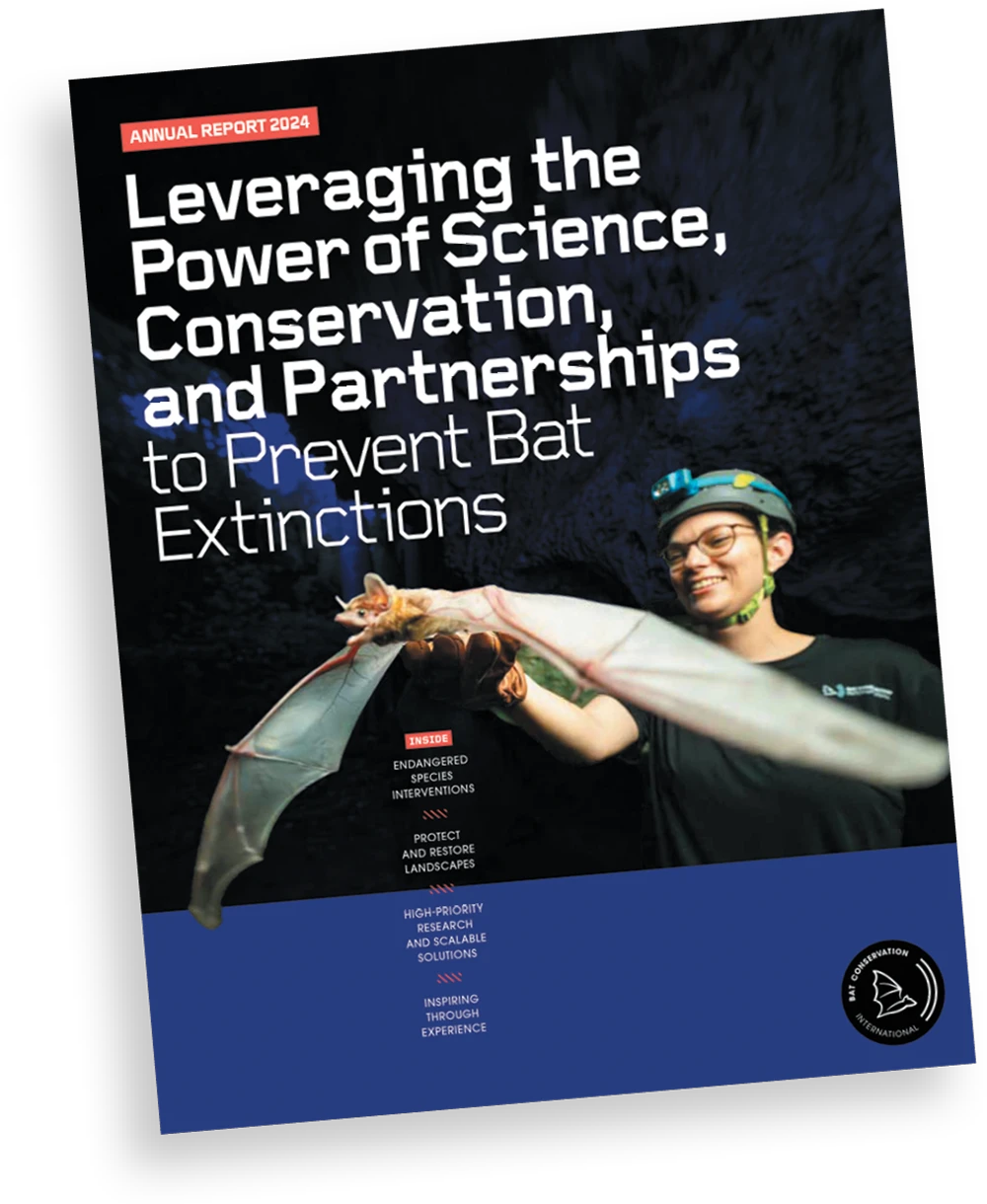
Bat Conservation International 2024 Annual Report cover
Bat Conservation International’s 2024 Annual Report, “Leveraging the Power of Science, Conservation, and Partnerships to Prevent Bat Extinctions,” is now available online. Explore our work focusing on Endangered species interventions, protecting and restoring landscapes, high-priority research and scalable solutions, inspiring through experience, and our most recent financial statements.
Read BCI’s 2024 Annual Report at batcon.org/financials

Conservation Through Creativity

Artists craft series of bat-focused enamel pins
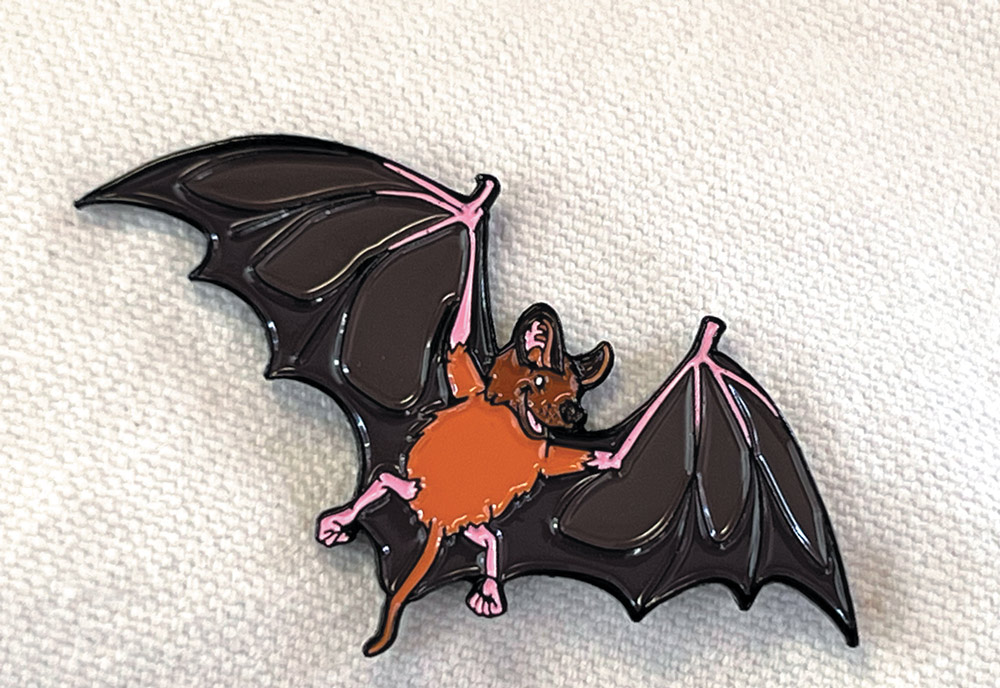
An enamel pin of a bat with an orange body and dark brown wings on a textured gray background.
Peppermint Narwhal’s new enamel pin series by Brian Masuga depicts six different bat species, including the Mexican free-tailed bat (Tadarida brasiliensis).
Photo: Peppermint Narwhal
Becky and Brian Masuga began their business, Peppermint Narwhal, with a love for animals and nature. As artists, they create original designs depicting different wildlife species—including geckos, tigers, and whales—and feature these designs on items like calendars, enamel pins, greeting cards, and ornaments. Each item comes with an interesting fact about the featured species.

Peppermint Narwhal partners with conservation groups to raise awareness about wildlife, with a focus on Threatened and Endangered species. Recently, Peppermint Narwhal worked with Bat Conservation International (BCI) to create a special series of enamel pins depicting bats and donated a portion of sales to support BCI’s work.

The series features original designs showcasing six bat species, including the Hildegarde’s tomb bat (Taphozous hildegardeae), Honduran white bat (Ectophylla alba), Livingstone’s flying fox (Pteropus livingstonii), Mexican free-tailed bat (Tadarida brasiliensis), Mexican long-nosed bat (Leptonycteris nivalis), and tricolored bat (Perimyotis subflavus).

“We hope that as people learn more about animals, they will care about them and want to better conserve them,” Brian says.

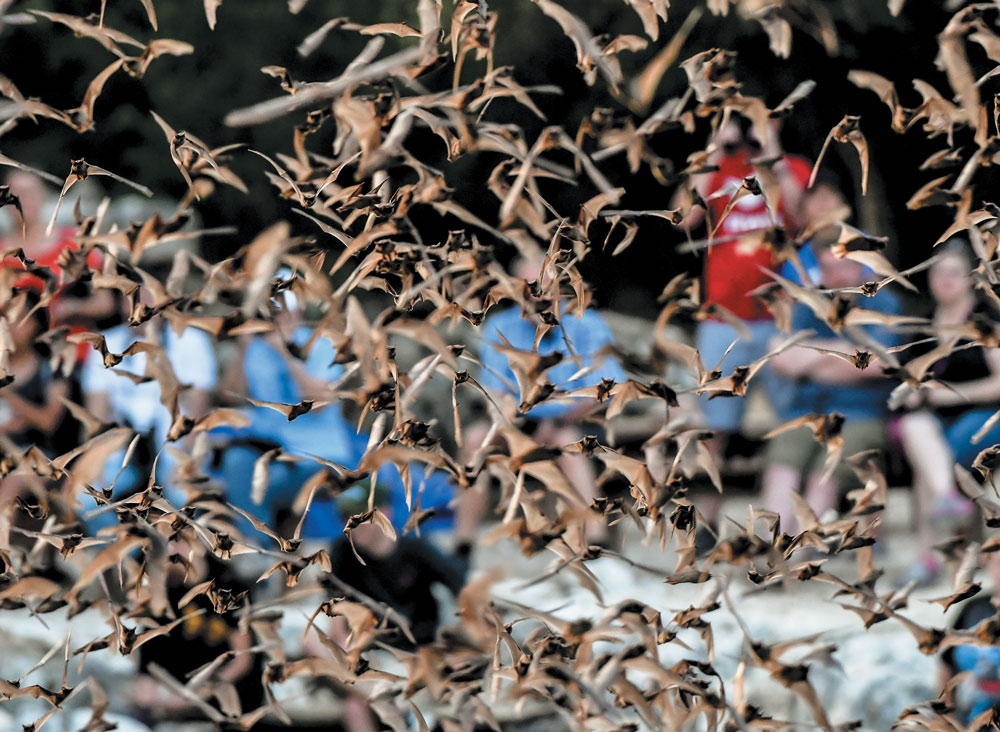
A swarm of bats flying with a blurred crowd in the background.
Experience a “batnado” at Bracken Cave this summer.
Photo: Jonathan Alonzo

Experience Bracken Cave

New changes to Bracken bat flights
In 2025, Bat Conservation International (BCI) members will have more opportunities to visit Bracken Cave, home to the world’s largest bat colony. Fifteen million Mexican free-tailed bats (Tadarida brasiliensis) reside in the cave each summer.

In addition to doubling the number of bat flights members can attend, members can also bring more guests and attend more than once. Bat flight dates for 2025 are available on BCI’s website, and discount codes have been mailed and emailed to members.

Member registration for bat flights will begin on April 1 at 9 a.m. Central Time, with registration for the general public opening on May 1 at 9 a.m. Central Time.

For more details on changes to registration and applicable fees, visit batcon.org/bracken
A white rental bicycle with marine-themed artwork parked on a paved path with trees and a blue sky in the background.
BCI and BCycle partnered to promote bat gardens with the bike share program.
Photo: Alicia Spence-Schlesinger

Bikes for Bats

San Antonio bike share program promotes bat gardens
Thanks to a partnership between San Antonio BCycle and Bat Conservation International (BCI), city residents and visitors can learn how to support bats in their own backyards on their next bike share journey. BCI placed ads featuring Mexican free-tailed bats (Tadarida brasiliensis) and plants native to Texas on bikes in San Antonio’s ecofriendly bike share fleet. Riders who scan the QR code an the ad can sign up to learn about BCI and gardening for bats.

BCycle donated the ad space on 20 bikes, which can be found at 17 docking stations around San Antonio. The partnership includes bat-viewing rides throughout the year, hosted by BCI staff and volunteers.