field notes

Night Watch: A Worldwide Mission

New film series highlights Endangered species intervention projects in Fiji, Jamaica, and Kenya
Photos by Horizonline Pictures
I
Children in a classroom wearing checkered school uniforms with an orange wall and drawings in the background.
Children from Polly Ground Junior School listen to a bat talk.
I
n late 2024, Bat Conservation International (BCI) and Horizonline Pictures rolled out a film series, “Night Watch: A Worldwide Mission,” focusing on BCI’s vital conservation work in Fiji, Jamaica, and Kenya. The series of short films highlights the work BCI is developing with local communities to protect Endangered bats and the ecosystems they rely on.

“To be really lasting and successful, our work has to go beyond the caves and reach into the local communities that surround them,” BCI’s Endangered Species Interventions Director Jon Flanders, Ph.D., says.


Watch the films and learn more about “Night Watch: A Worldwide Mission” at batcon.org/nightwatch

Jamaica

Jamaica’s Stony Hill and St. Clair caves support the last known maternity roosts of the Critically Endangered Jamaican flower bat (Phyllonycteris aphylla) and Jamaican greater funnel-eared bat (Natalus jamaicensis). BCI is working with communities to develop long-term conservation solutions to benefit bats and people. Strategies include installing predator-proof fences to protect bats from predation by feral cats and purchasing a parcel of land to protect the site from encroaching development.
Three people examining a transparent plastic sheet on the ground in a grassy, wooded area.
Team members collect guano from Stony Hill Cave to determine what the bats are eating.
An orange-furred bat rests on a gloved hand with partially extended wings.
Antillean ghost-faced bat (Mormoops blainvillei)
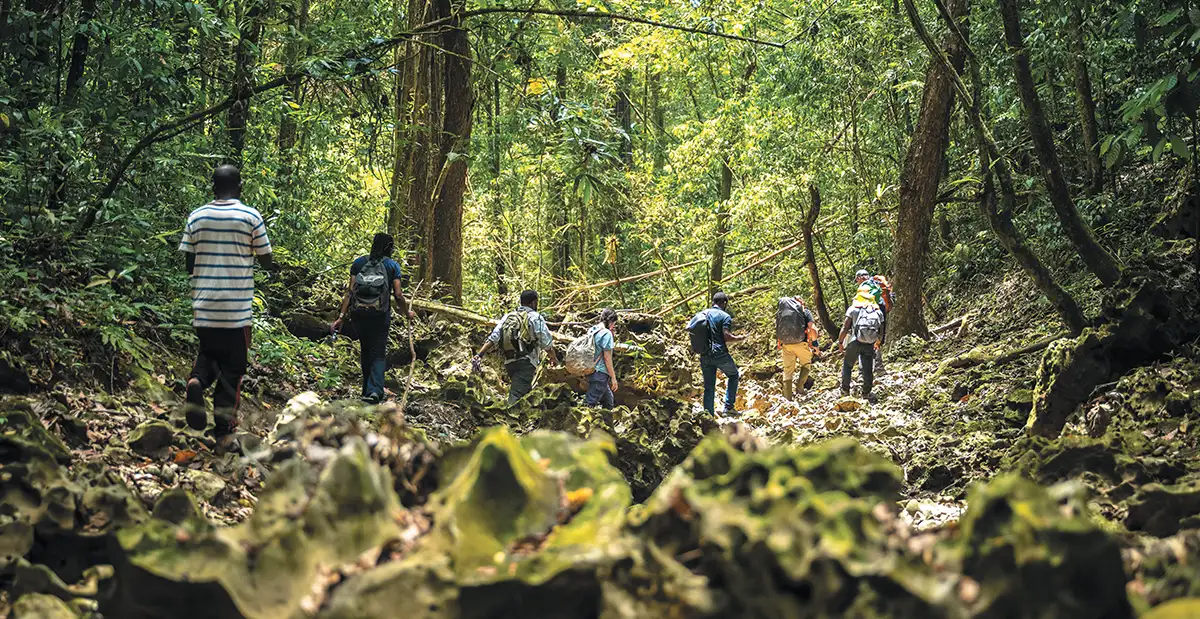
A group of hikers walking along a rocky path in a dense, green forest.
The team treks to St. Clair Cave.

Fiji

Fiji recently established its first bat-focused protected area, Nakanacagi Bat Sanctuary. The Nakanacagi community is essential in this effort, and the protected area provides safeguards to protect the only known maternity roost for the Endangered Fijian free-tailed bat (Mops bregullae).
Three bats hanging from tree branches; one with wings spread and two with wings folded.
A Pacific flying fox (Pteropus tonganus) roosts in a tree.
Man in a field wearing a green T-shirt and gray cap, working with soil.
BCI’s Endangered Species Interventions Director Jon Flanders, Ph.D., plants a tree at the bat sanctuary.
Three people standing in front of tropical plants, wearing wrap skirts with emblems and one with "TONGA" text.
BCI’s Endangered Species Interventions Director Jon Flanders, Ph.D., Semaema Vakaciriwaqa from NatureFiji-MareqetiViti, and BCI’s Habitat Protection and Restoration Director Jason Corbett
A group of eight people standing on a wooden deck with water and greenery in the background, holding a document.
Members of the bat consortium present the management plan to the Fijian government.

Kenya

In Kenya, the Endangered Hildegarde’s tomb bat (Taphozous hildegardeae) is only found in a series of coastal coral caves, including Kaboga and Three Sisters Caves. BCI is working with partners like Angaza Vijiji and Maasai Mara University to conserve land and protect these bats and other species.
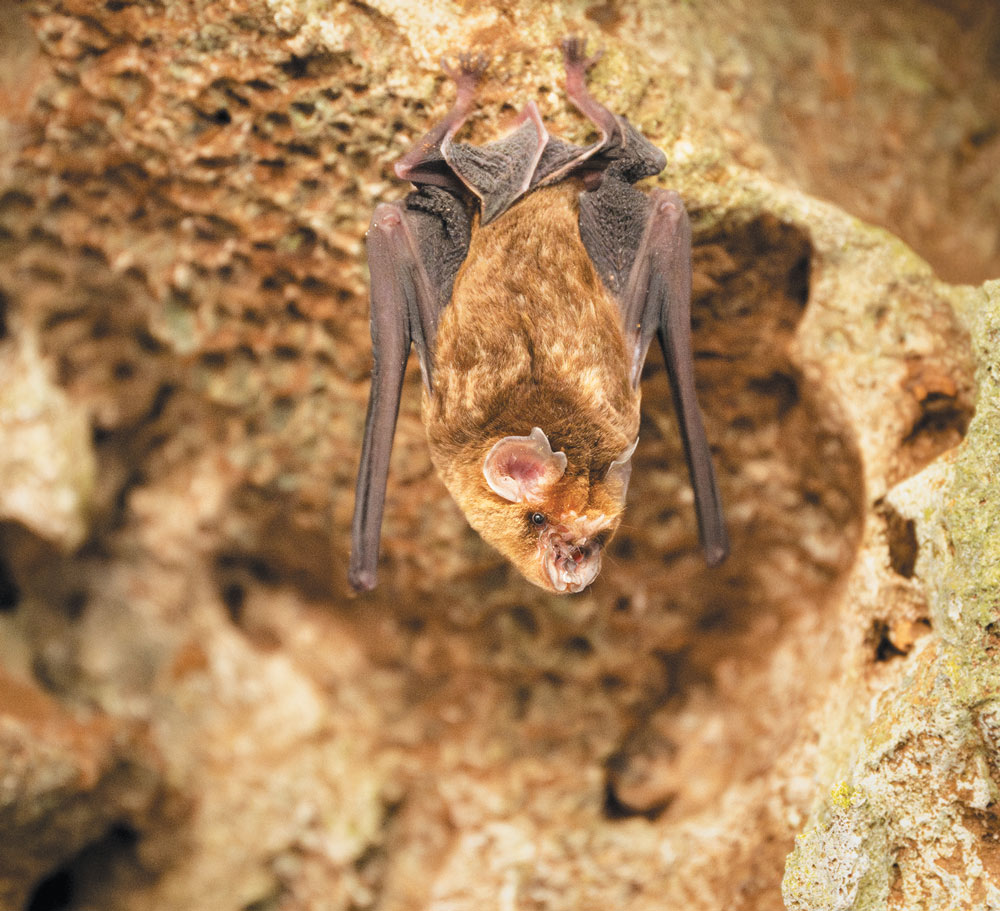
A bat hanging upside down against a rock surface.
African trident bat (Triaenops afer) hangs on a cave wall.
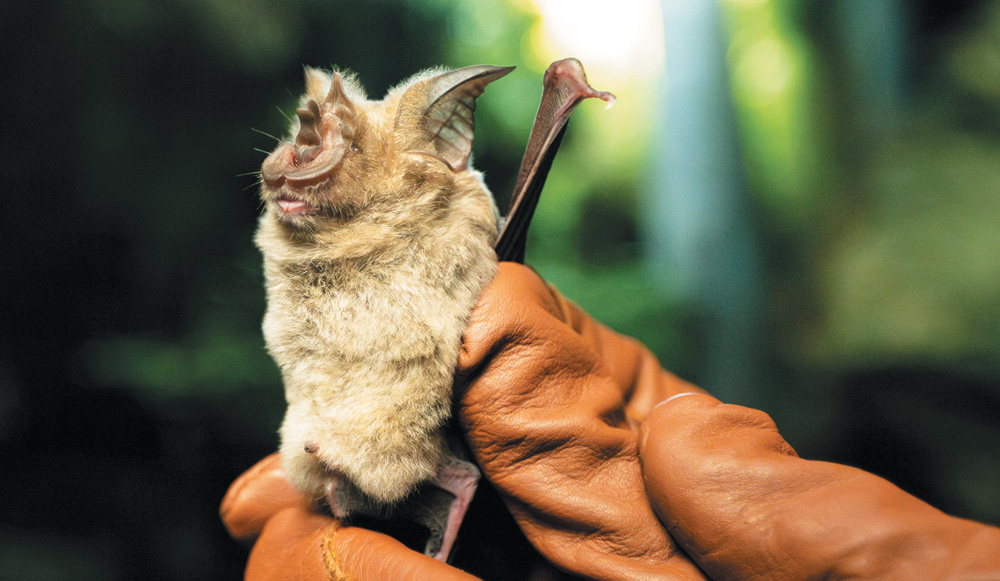
A small bat held in an orange-brown leather glove, mouth open and ears upright.
An eloquent horseshoe bat (Rhinolophus eloquens) is caught during one of the cave surveys.
A person wearing a helmet and gloves holding a large bat with outstretched wings inside a cave.
BCI’s Regional Director, Africa and South Asia, Isabella Mandl, Ph.D., releases a Hildegarde’s tomb bat (Taphozous hildegardeae).
Three people in a cave, two in yellow protective suits and one in casual attire, illuminated by helmet lights, look upwards.
BCI’s team assesses one of the caves in Kenya.