

bat signals

Meet the Himalayan long-tailed myotis

BCI researcher publishes article on newly identified Indian bat
A close-up photograph of a bat with its mouth open, revealing its sharp teeth.
Himalayan long-tailed myotis (Myotis himalaicus)
Photo: Rohit Chakravarty
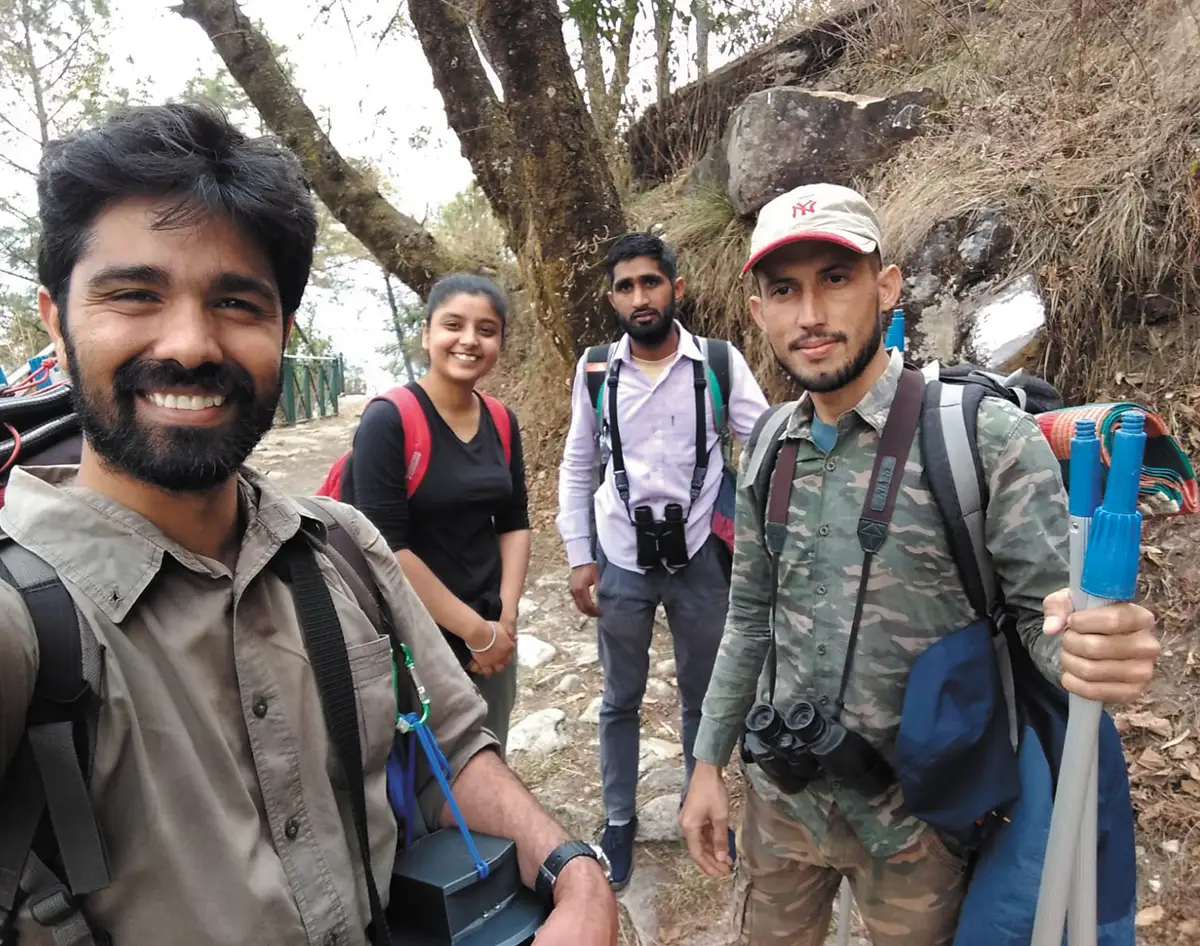
In 2021, BCI India Program Manager Rohit Chakravarty, Ph.D., was working on his doctoral fieldwork when he and his colleagues came across a new bat. They realized it was a bat that hadn’t been scientifically identified before and named it Himalayan long-tailed myotis (Myotis himalaicus) in honor of the mountains where they found it.

The bat is about 3.5 inches long and weighs less than an ounce, with dark brown fur and a lighter golden-brown belly. It has a prominent naked patch around its eyes and a long tail. Chakravarty and his co-authors published their findings about this species in the journal Zootaxa in June 2025.

A group of four smiling people, three men and one woman, are posing for a selfie on a rocky, wooded path. They are dressed in hiking or research gear, including backpacks and binoculars. The man on the far left, who is taking the photo, has a beard and is wearing a green shirt. The person on the far right is holding blue poles.
The research team that found the Himalayan long-tailed myotis (Myotis himalaicus)
Photo: Rohit Chakravarty
Read all about Myotis himalaicus in Chakravarty’s article: mapress.com/zt/article/view/zootaxa.5644.1.1

Celebrate Bat Week 2025

Attend an event or try at-home bat activities Oct. 24–31

Bat Week logo
The last week of October is the battiest week of the year, when people around the world celebrate bats for their incredible roles as pollinators, seed dispersers, and insect-eaters, as well as being all-around amazing mammals.

This annual international celebration focuses on spreading awareness and knowledge about bats, including the importance of conservation, since bats face many threats.

Visit batweek.org to learn how to get involved, from attending a bat-focused event to taking an urban bat walk, hosting a festival, cooking food that bats help produce, or just learning more about these incredible animals.

The website is also packed with activities for young bat conservationists, including a Junior Cave Scientist Activity Booklet, The Bat Brigade Comic Book, and many other fun downloadable activities, from puppet-making to origami.

Learn more and find a Bat Week event near you: batweek.org

The Invisible Mammal

See a screening of award-winning documentary featuring BCI’s work
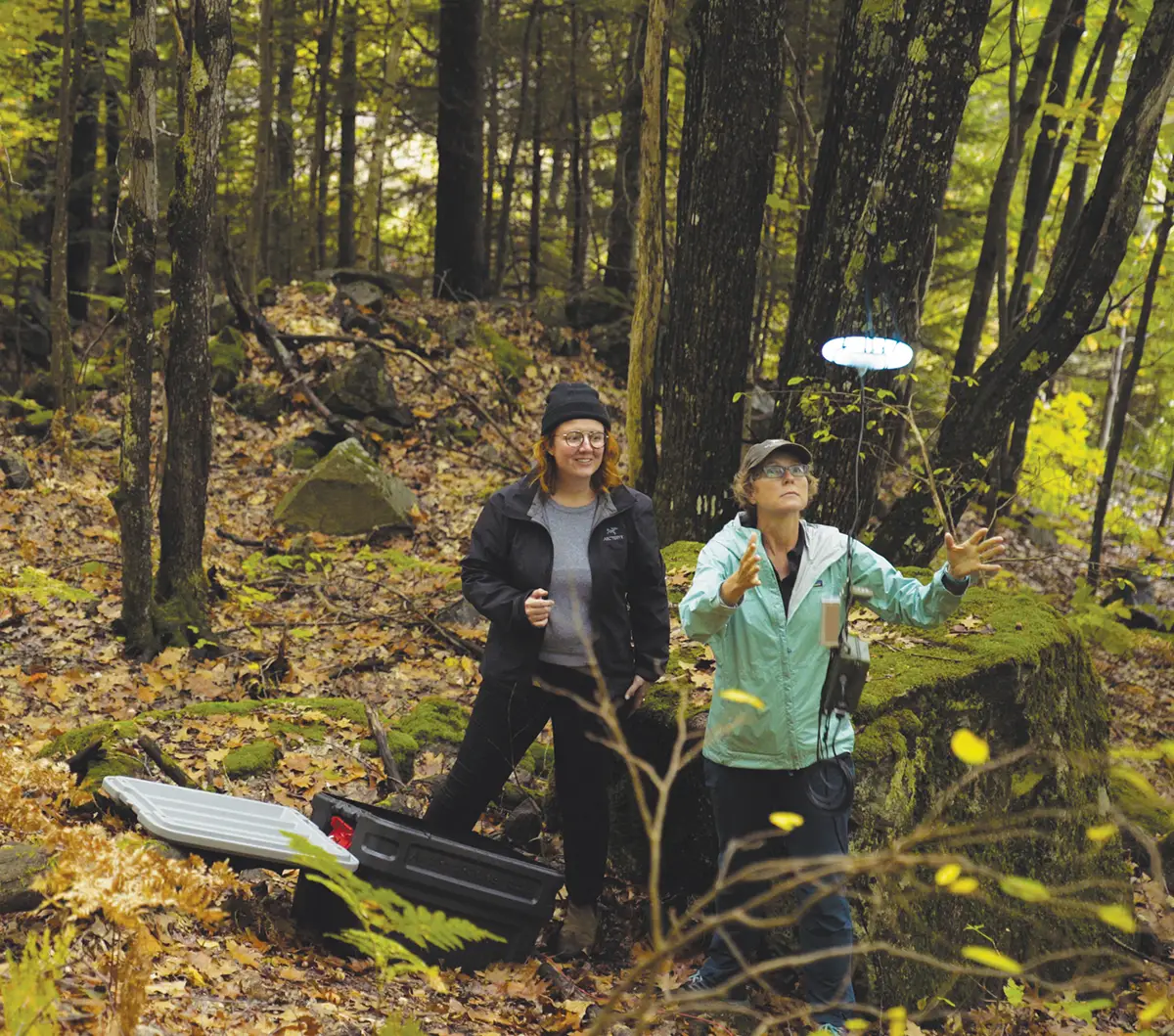
Two women, one in a beanie and black jacket and the other in a light blue jacket and baseball cap, are in a forest. The woman in the blue jacket is looking up and gesturing with her hands toward a small, hovering drone with a glowing light. A black and gray case is on the ground near them. The forest floor is covered in fallen leaves and rocks.
BCI’s Chief Scientist Winifred Frick, Ph.D. (right), with Postdoctoral Researcher Yvonne Dzal, Ph.D., deploying a UV light to test the “bug buffet” as part of Project Fat Bat in the Upper Peninsula of Michigan.
Photo: Skip Hobbie for The Invisible Mammal, Aaron Peterson for The Invisible Mammal
In May, “The Invisible Mammal” debuted at the DocLands Documentary Film Festival in California. The film was so well-received that it took home the DocLands 2025 Audience Choice Award.

The documentary shares an inside peek into the world of bats and showcases Bat Conservation International’s researchers and projects, including Bracken Cave and the Fat Bat project studying solutions to white-nose syndrome.

Following the world premiere, the film is now on the road. Check the film’s website to catch a screening near you, with special screenings planned for Bat Week in October.

Learn more about “The Invisible Mammal” and find screenings near you: theinvisiblemammal.com
Read a Q&A with “The Invisible Mammal” Executive Producer Kristin Tièche in the Summer 2025 issue of Bats Magazine: batcon.org/invisible-mammal/

Leading the Way

Latino Outdoors members train to lead bat walks
A group of people is walking along a dirt road near a body of water at dusk. The sky is dark and cloudy, casting a blue hue over the scene. The people, viewed from behind, are walking away from the camera, and their silhouettes are visible against the landscape.
Members of Latino Outdoors practice using acoustic bat detectors and looking for bats as they learn how to lead bat walks in San Antonio, Texas.
Photo: Elaine Hernández
In June, 10 eager bat conservationists from Latino Outdoors gathered at Mitchell Lake Audubon Center in San Antonio, Texas, to learn how to lead bat walks. That evening, participants practiced using acoustic bat detectors to identify bat calls and discover which bats are in the area. They visited several sites at the center, including wetlands areas and a pond, to see which bats preferred each area. They detected species like the evening bat (Nycticeius humeralis), Mexican free-tailed bat (Tadarida brasiliensis), and Seminole bat (Lasiurus seminolus) during the walk.

The new bat walk leaders will now host their own bat walks at locations throughout San Antonio, including Mitchell Lake Audubon Center and Confluence Park. The training was part of Bat Conservation International’s ongoing partnership with the San Antonio Chapter of Latino Outdoors.

Learn about Latino Outdoors: latinooutdoors.org

Banking for Colombian Bats

Event celebrates first habitat bank for bats
A crowd of people is gathered in a two-story courtyard with a fountain in the center, at what appears to be an evening event. The building has white and light blue walls with green doors and railings. A man on the ground floor is speaking to the group while holding a tablet. Some attendees are on the upper balcony, looking down at the presentation.
BCI and partners gather in Bogota, Colombia, to celebrate the first bat habitat bank in Latin America.
Photo: La Ruta de las Alas
In April, Bat Conservation International (BCI) and partners gathered in Bogota, Colombia, to celebrate the completion of the first bat habitat bank in Colombia and Latin America. The innovative conservation project utilizes Colombian regulatory measures to protect an Endangered species only found in Colombia, the Antioquian sac-winged bat (Saccopterix antioquensis), and more than 80 other bat species in the Antioquia region.

Habitat banking in Colombia involves companies purchasing 30-year credits to protect and preserve habitat for conservation in a designated region, fulfilling a legal requirement to compensate for environmental impacts within the same region. The new habitat bank, called Refuge IKA (IKA means “bat” in the local Indigenous language), is managed by Colombian organization Terrasos, and it will protect and preserve bats and their habitats while also supporting local communities.

Representatives from BCI, our key in-country partner Cuántico, plus other nonprofits, government, private companies, and the oil industry came together to celebrate the launch of Refuge IKA through a special exhibit sharing the project and importance of bat conservation. The exhibit is mobile and will be displayed in different locations in the country.

Learn more about the project: batcon.org/banking-for-bats
Explore Colombian habitat banks for bats: marketplace.terrasos.co/projects/1