



Guardians of the Night
A new exhibit at the Natural History Museum of Jamaica in Kingston, “Guardians of the Night,” showcases the collaboration between Bat Conservation International (BCI), Jamaica’s National Environment and Planning Agency (NEPA), and the Institute of Jamaica.
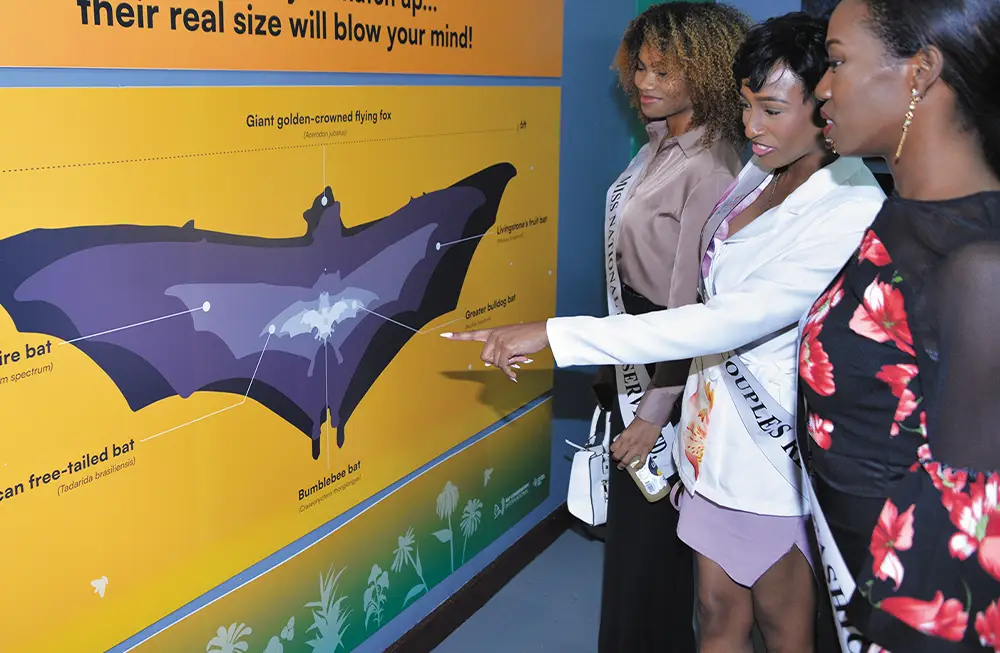
The exhibit features interactive elements, such as a display where visitors can compare their arm span to different sized bats found across the world, helping them visualize the size of bats. 3D models of bat skulls, five times the size of actual bat skulls, offer visitors a chance to get a good look.
The exhibit is so popular it tripled museum attendance after its June opening, and it takes about 45 minutes to walk through. Explanatory elements including storyboards with photographs, videos, and a replica of the roosting site for the Critically Endangered Jamaican flower bat (Phyllonycteris aphylla) deepen visitors’ understanding of Jamaican bats.
“The exhibit shows how close bat habitats are to humans and tells the story of how important bats are to our ecosystem,” says Elizabeth Morrison, the museum’s Zoology Curator.
Morrison says that the exhibit’s primary goal is to disseminate information on Jamaica’s bat species and their importance to the environment. “A lot of people haven’t been exposed to information about bats and there’s a lot of misinformation out there that causes fear,” she says. “We address these in the exhibit so people will not fear bats but be fascinated by them.”
BCI’s Director of Endangered Species Interventions, Jon Flanders, Ph.D., works with his team and collaborators on specific interventions to save bats from extinction in Jamaica. He explains that often the smallest acts make a difference, like building a fence to prevent cats from disturbing bat habitats or purchasing a small plot of land to halt development in areas critical to bat survival.
“This special exhibition takes the technical work of bat conservation and presents it in an accessible, engaging format for the general public,” Flanders says. “Partnering with the Natural History Museum of Jamaica to highlight bats in this way addresses the critical need for public support in conservation efforts and represents the next logical phase in our comprehensive approach to protecting Jamaica’s bat diversity.”
The exhibit is scheduled to run through the end of 2025, with the possibility of an additional three-month extension.