During the course of the project, BCI and the Forest Service consulted with six tribal governments about protecting the images, which date from 1650 to 1880. “All were in support,” Adams says. Besides the pictographs, the cave also harbors Pleistocene fossils of pocket gophers, wood rats, and even extinct species, such as the dire wolf.
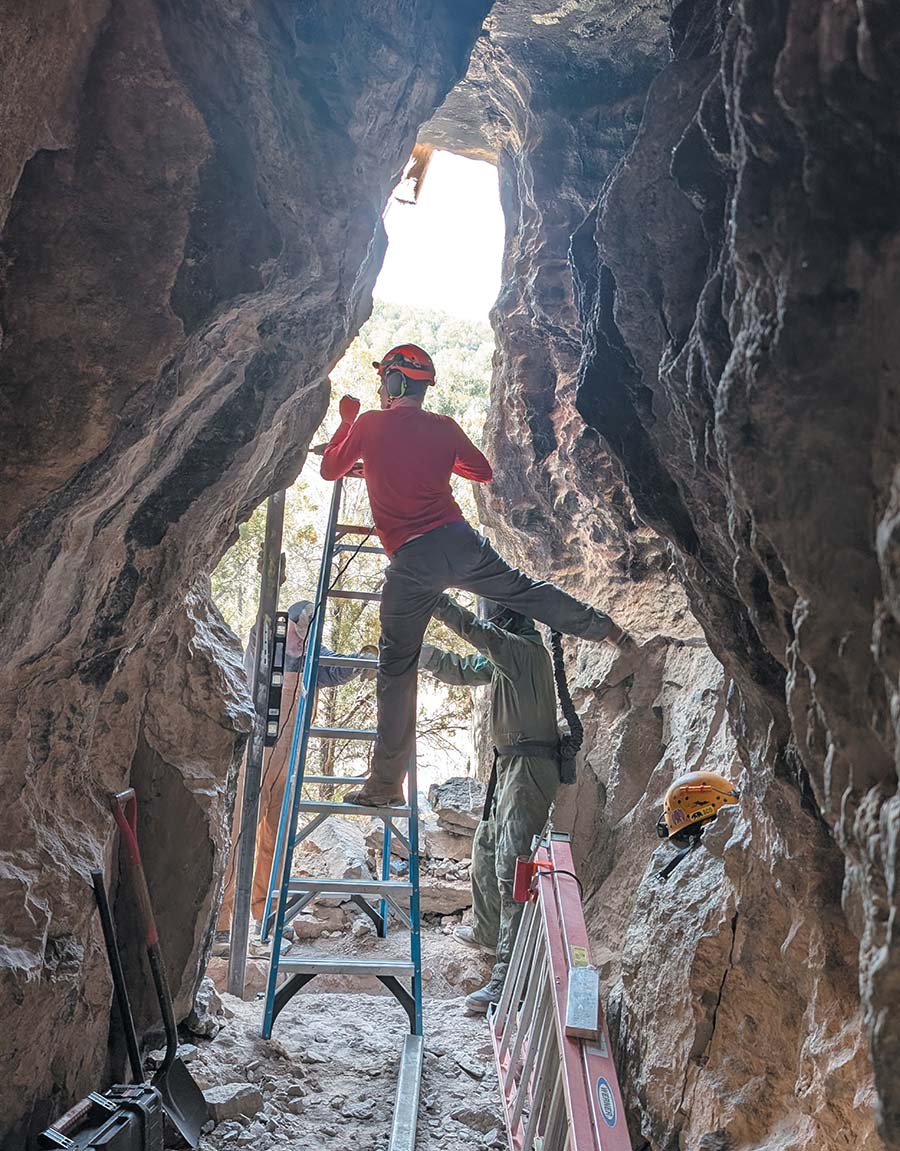
With funding from the Gila National Forest, the partners worked to install five gates, one at each entryway. The gates are designed to allow bats to enter and exit, while excluding humans. Made of iron, the gates will rust and are intended to blend in with the cave and the natural surroundings. The Forest Service also installed a fence around the cave and now controls access to the area.
During surveys at the site, the team discovered that javelina—which are wild, pig-like ungulates— frequently used the site, so the gates were placed a bit inside the cave to ensure that javelinas could continue to access the cave’s shade and protection from the elements.
Additionally, BCI performed a survey of the cave last summer to learn more about the bats that live there. DNA sequencing of guano samples collected by the surveyors identified up to four species in the cave, including the long-legged myotis (Myotis volans) and big brown bat (Eptesicus fuscus), as well as two species which are difficult to genetically distinguish from each other: long-eared myotis (Myotis evotis) and fringed myotis (Myotis thysanodes). Either or both of the species could be present. The survey also turned up insect parts on the cave floor, indicating bats use the cave as a day roost and a night roost for feeding.
The bat gates work to protect this important site, including as habitat for bats.
“Complex caves like this are not that common,” Taylor says. “This project is a big win for bats.”