field notes

Ancient Bats

50,000-year-old bats found in Grand Canyon cave
E

very year, millions of visitors gaze upon the famous vistas of Grand Canyon National Park, but few see its hidden inner world of caves. A small number of dedicated cave researchers have been quietly exploring and documenting this underground world and recently made an unusual discovery: thousands of desiccated bats, scattered along miles of a cave’s passageways.

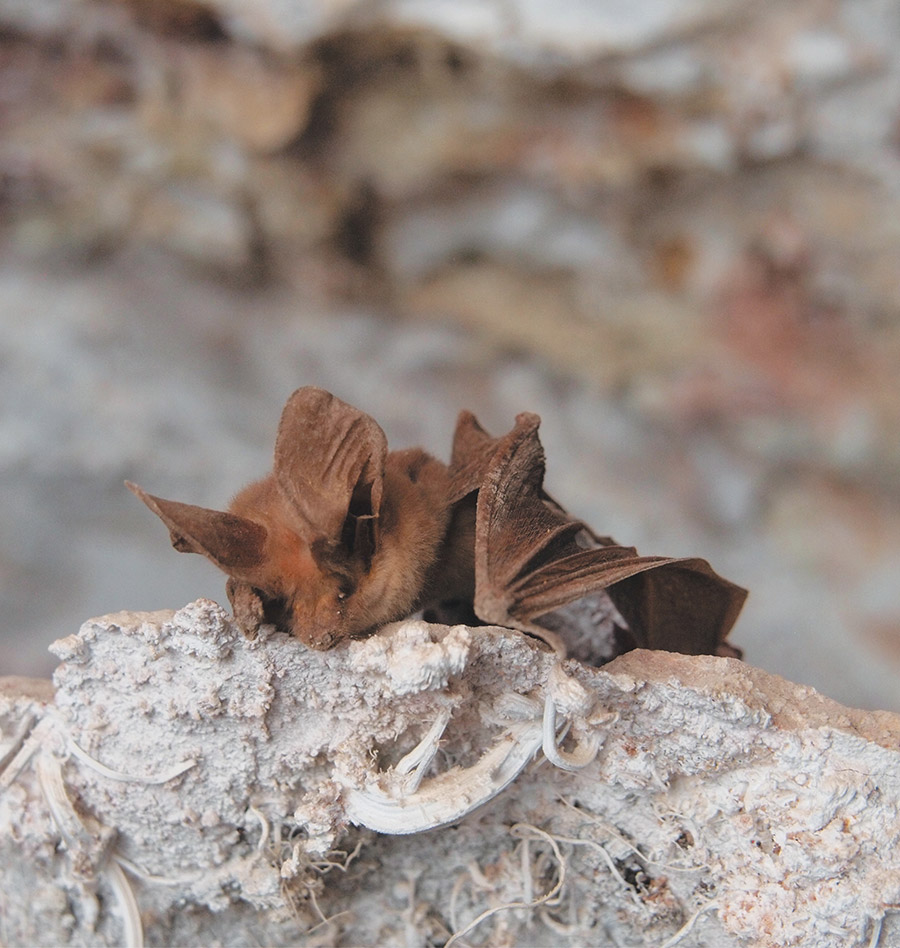
A brown bat with large ears resting on a rough rock surface in a cave.
Pallid bat (Antrozous pallidus) on the cave floor.
Photo: Shawn Thomas
The cave served as nature’s perfect museum, with the dry, stable environment preserving the animals after they died of natural causes. Since the discovery, researchers evaluated some specimens’ ages through radiocarbon dating and found the bats are thousands of years old. Some specimens even exceeded the upper limit of radiocarbon dating, meaning they are more than 50,000 years old.

These initial results demonstrate that bats have continuously occupied the cave system for millennia, illustrating the importance of caves, which serve as habitat anchors through changing climate eras.


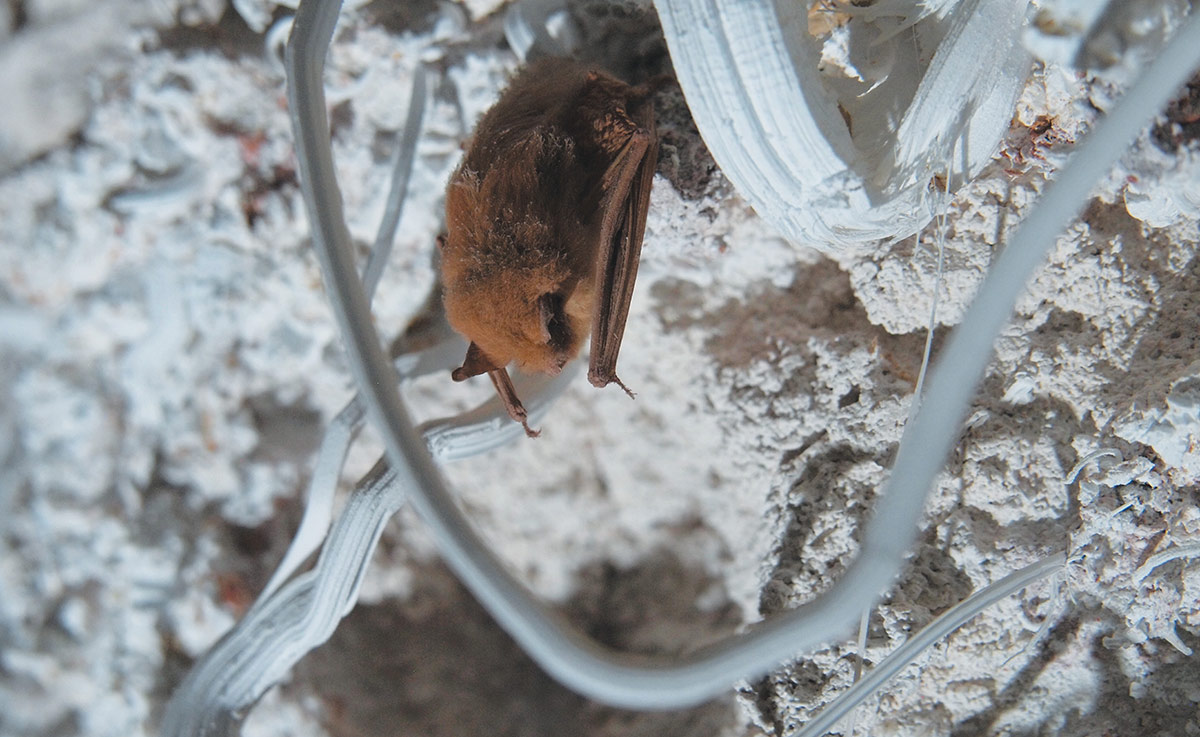
A small brown bat roosting behind delicate white mineral formations inside a cave.
A myotid bat among gypsum flowers.
Photo: Shawn Thomas
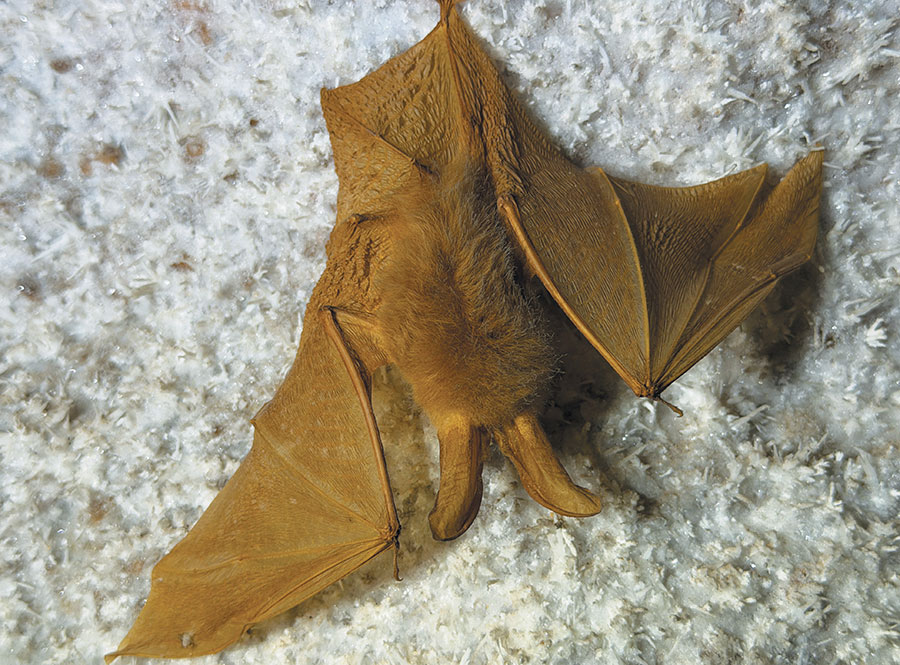
A brown bat clinging upside down to a crystalline rock ceiling with its wings partially spread.
A Townsend’s big-eared bat (Corynorhinus townsendii) inside the cave.
Photo: Shawn Thomas
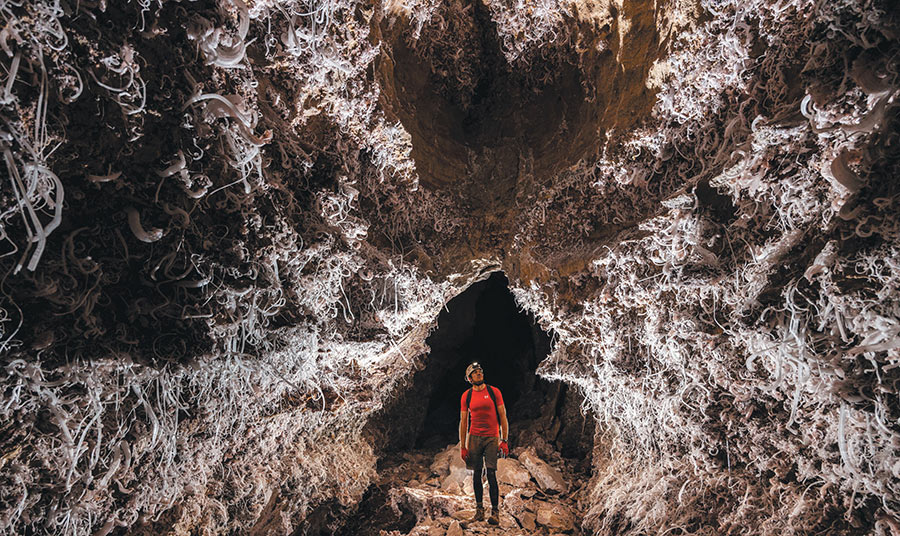
A researcher with a headlamp standing inside a cavern filled with intricate white gypsum formations.
Inside the cave.
Photo: Stephen Eginoire
A researcher rappelling down a steep, rocky cliffside near a deep canyon.
A caver rappelling to reach the cave entrance.
Photo: Stephen Eginoire
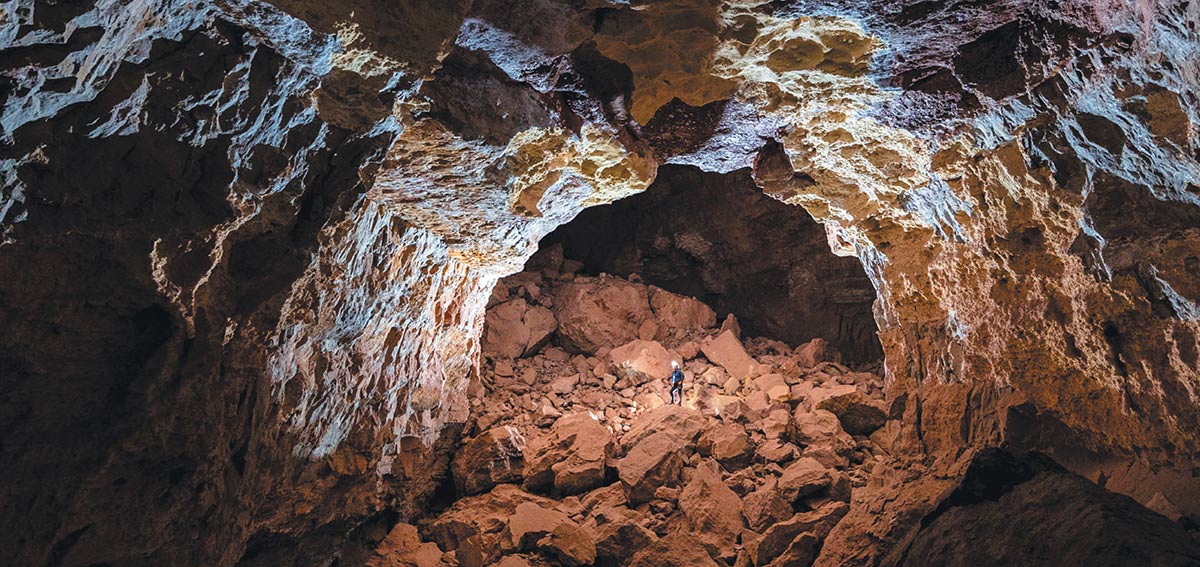
A caver standing among large boulders inside a massive, illuminated underground chamber.
A typical passage inside the cave.
Photo: Stephen Eginoire