Species Study
There are 1,500+ species of bats in the world. This is one of them.

Harrison’s Large-Eared Giant Mastiff Bat

Species at risk despite a large population in Kenya
By Annika Hipple
bat stats
Bat icon
Binomial

Otomops harrisoni
Two bats icon
Family

Molossidae
Bat Globe icon
Colony Size

Up to millions
Scale icon
Weight

26.8–45 g
Bug icon
Diet

Insectivorous
Exclamation Point icon
Status

Vulnerable
Region

Djibouti, Eritrea, Ethiopia, Kenya, Yemen
Black graphic silhouette map of Africa, the Middle East, and parts of Europe against yellow.
Harrison’s large-eared giant mastiff bat
Photo: Isabella Mandl, Ph.D.
C

an a bat be both abundant and Threatened at the same time? In the case of the Harrison’s large-eared giant mastiff bat (Otomops harrisoni), the answer might be yes. Known from only two cave roosting sites located about 500 miles apart in Kenya, this bat was only recognized as a distinct species a decade or so ago, based on genetic evidence distinguishing it from its sister species, the large-eared free-tailed bat (Otomops martiensseni).

The Kenyan caves where the species roosts range from large basalt tubes to vast, high-ceiled cave chambers. One roosting site, Chyulu Hills, is a national park, while the other, Mount Suswa, is a community conservancy managed by local community representatives.

“With only two major roosts for the species, even though those roosts have hundreds of thousands to millions of animals in them, they’re still at risk because those are the only places we know them from,” says BCI’s Director of Conservation Evidence, Teague O’Mara, Ph.D. O’Mara recently visited Mount Suswa to track the bats to determine where they go and how they connect the landscape of southern Kenya when they leave the caves.

Data show that populations fluctuate throughout the year, but it is still unclear whether this is due to movement between the two sites or whether the bats are also spending time in other, unknown locations where they might face additional threats.

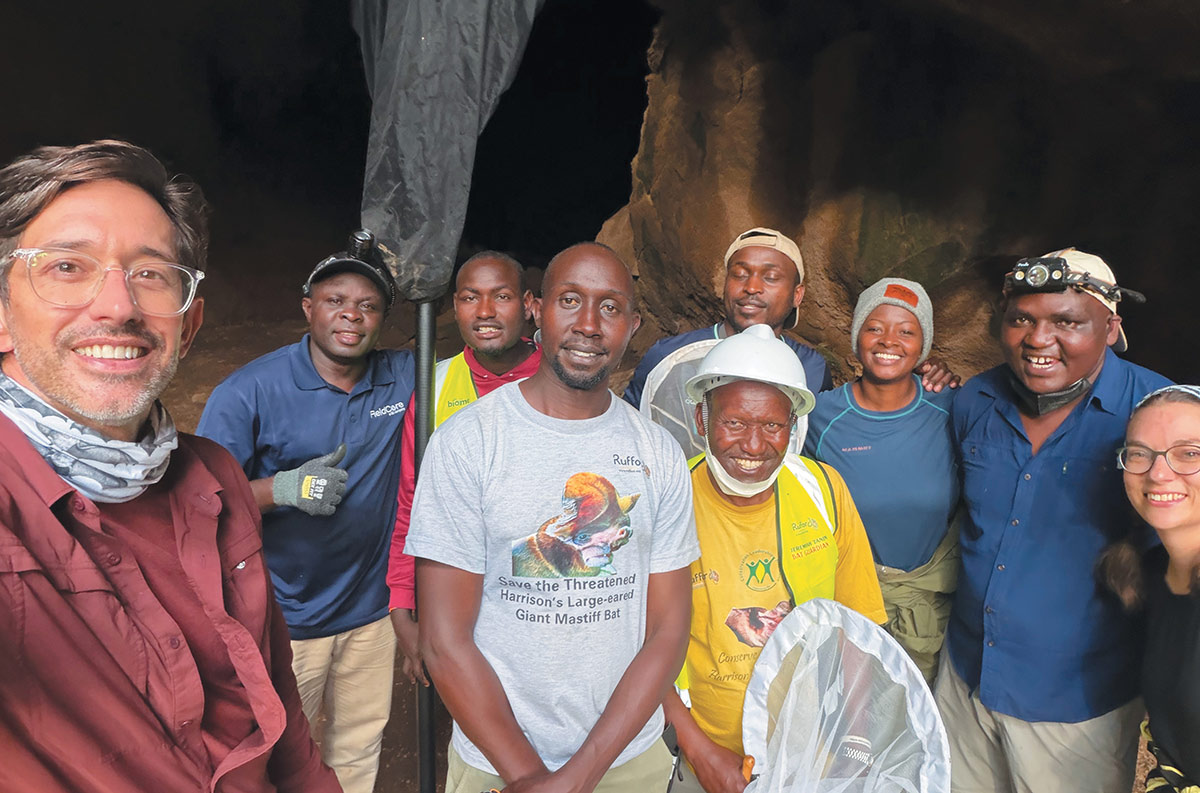
Group of researchers and team members standing together inside a cave for bat conservation.
In May 2026, bat experts, students, and conservancy guardians from Maasai Mara University, BCI, and the Mount Suswa Conservancy East came together to track Harrison’s large-eared giant mastiff bats (Otomops harrisoni) with the goal to identify foraging and roosting sites for this rare species.
Photo: Teague O’Mara, Ph.D.
BCI’s Kenya Program Manager, David Wechuli, Ph.D., has been studying Harrison’s large-eared giant mastiff bat and collaborating with the Mount Suswa Conservancy for four years. “Otomops harrisoni remains one of Kenya’s least understood and most conservation-dependent bat species,” he says. “There are still major knowledge gaps about its distribution, population trends, ecology, and long-term viability. The species depends on specialized cave roosts and suitable surrounding foraging habitats, making it particularly vulnerable to habitat disturbance.”

Based on current data, Wechuli says that major threats include disturbance of cave roosts from uncontrolled tourism, direct mortality from wind turbines, habitat degradation around the caves due to charcoal production and land conversion for agriculture, vegetation loss that reduces foraging habitat, and general human disturbance during sensitive breeding periods. Another direct threat is pesticide use, which reduces insect diversity and potentially affects the bats’ food supply. Climate change, geothermal energy development, and other new pressures on natural resources are likely further impacting roosting and foraging habitats.

Expanding GPS tracking is essential to understanding the species’ movement patterns, foraging range, habitat use, and critical feeding areas. Other priorities include monitoring bat populations and potential threats, restoring and protecting foraging habitats, and expanding conservation education and awareness programs in communities surrounding the conservancy.

Wechuli works with the local population to implement a broad range of initiatives to minimize disturbances to roosting bats, including managing visitation by installing protective gates at the caves to regulate access. In collaboration with local stakeholders, bat expert Paul Webala, Ph.D., led the development and submission of a proposal to designate the Mount Suswa Conservancy as a Key Biodiversity Area, which would provide greater protection for the site and potentially attract greater financial investment in conservation.

Along with funding, monitoring, and managing visitation, challenges include changing negative public perceptions of bats and balancing conservation objectives with tourism and community livelihoods. According to Isabella Mandl, Ph.D., BCI’s Regional Director for Africa and South Asia, one goal is to use data collected through GPS tags to determine where the bats go, then integrate important foraging areas into a comprehensive conservation plan. Wechuli is currently working with local partners to reduce pressure on natural resources by developing alternative sources of income and involving local communities in conservation through training, education, and collaborative management.


Otomops harrisoni remains one of Kenya’s least understood and most conservation-dependent bat species.
—David Wechuli, Ph.D.
Tourism is a key part of the issue. Tour groups often make impromptu stops at Mount Suswa en route to Nairobi from some of Kenya’s most popular national parks. Designated Bat Guardians from the Mount Suswa community guide visitors responsibly in caves, report threats, educate both visitors and locals about bat conservation, as well as act as liaisons between the community and interested outside parties.

“Historically, attitudes toward bats have often been influenced by myths, misconceptions, and fear, with many people associating bats with bad omens or disease,” Wechuli says. “However, attitudes have been improving through sustained education and awareness meetings. Many community members now better understand the ecological importance of bats in insect control, pollination, and ecosystem health. There is growing appreciation that healthy bat populations can support biodiversity conservation and responsible nature-based tourism, although continued outreach remains necessary.”

Mandl points out the growing awareness about the importance of bats locally, saying, “There’s a lot of local pride in the bats and knowing that they have something they can’t find anywhere else in Kenya.”