
leaf iconFeature: Discover Bats!

A Curriculum Takes Flight

A Curriculum Takes Flight typography
white silhouette of a bat

A Curriculum Takes Flight

A Curriculum Takes Flight typography
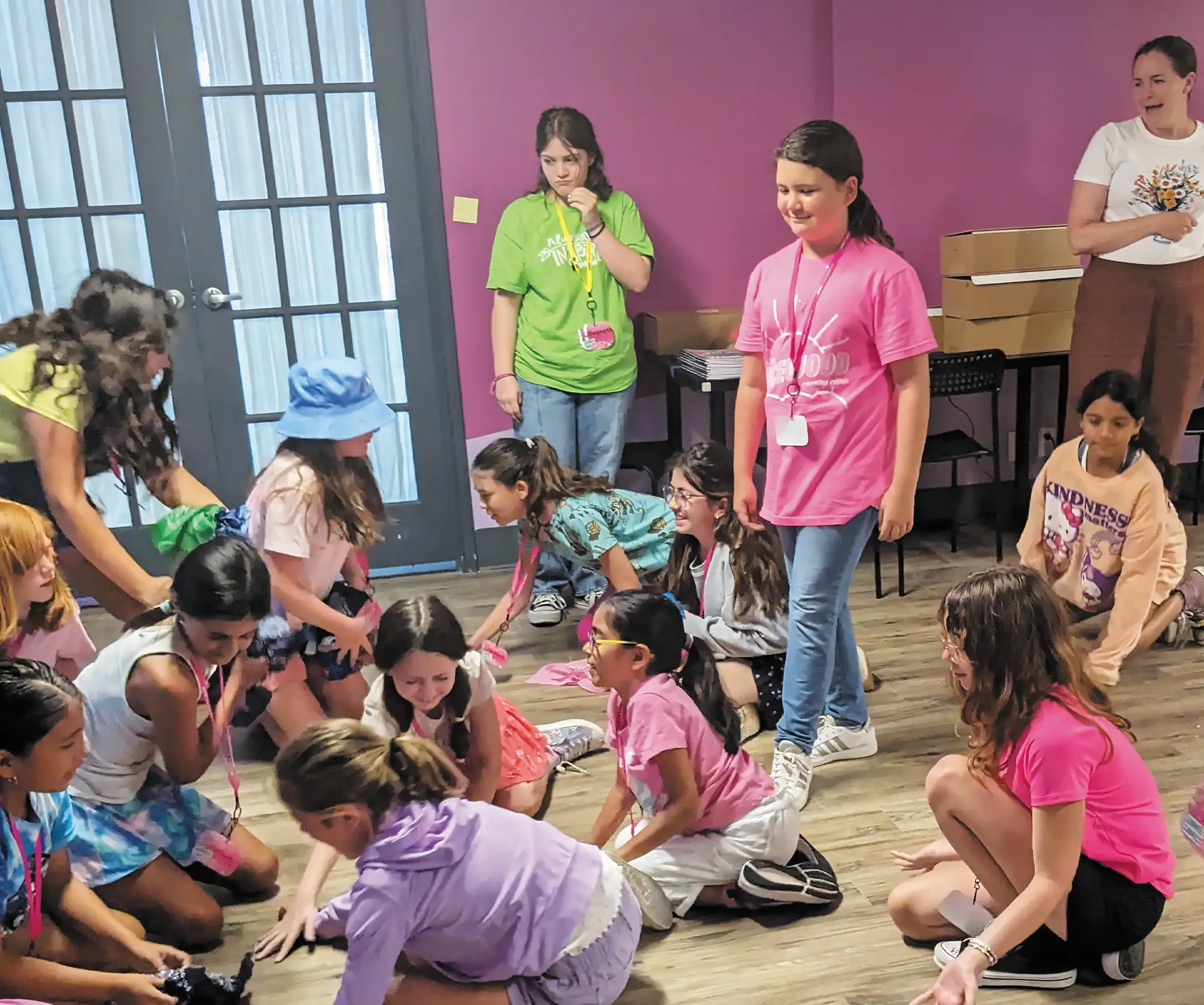
A group of campers from Girlstart are gathered in a room with pink walls and a wooden floor, engaged in BCI’s Batnado activity.

Campers from Girlstart participate in BCI’s Batnado activity.

Photo: Erin Cord

How BCI’s revamped school curriculum is inspiring the next generation of conservationists
By Stefanie Waldek
I

f you were lucky enough to have a career day in school, you likely learned about some fairly standard professions: doctor, lawyer, businessperson, teacher. But where was “conservation scientist” in that mix? Thanks to the revamped “Discover Bats!” curriculum by Bat Conservation International (BCI), middle-school students now have the chance to learn about bat conservation science as a career path at a young age. Even more importantly, they’re seeing that women can—and do—lead the way in STEM (science, technology, engineering, and mathematics) fields.

I truly believe that meaningful personal experiences with nature are the most powerful method for transforming students into lifelong bat enthusiasts. Through the new ‘Discover Bats!’ curriculum, I hope we can inspire the next generation of bat conservationists.
—Kristen Lear, Ph.D.
A young girl holds up an in-progress paper craft bat with pink wings as she sits at a desk in front of a laptop
Students from the Young Women’s Leadership Academy learn about the mechanics of bat flight.
Photo: Joy Tuxhorn
Cut out image of young girl in a pastel tie dye outfit wearing a pink lanyard with a name tag around her neck
Photo: Erin Cord
Developed with support from Lyda Hill Philanthropies’ visionary IF/THEN Initiative, “Discover Bats!” has enabled more than 100 female ambassadors across scientific fields to serve as role models for girls, inspiring their STEM dreams. Kristen Lear, Ph.D., BCI’s Agave Restoration Program Director, is one of them.

“‘Discover Bats!’ showcases 17 middle-school lesson plans that encourage the development of essential STEM skills and knowledge such as research, data collection, habitats, ecology, and conservation, and are aligned with the national Next Generation Science Standards (NGSS) and the Texas Essential Knowledge and Skills (TEKS) standards,” says Lear, who led the project.

Cropped view of young girls, some blindfolded, participating in an indoor activity involving orange cones and colored mats on the floor.

Campers with Girlstart engage with the bat-focused curriculum.

Photo: Erin Cord

A curriculum reborn

BCI’s original “Discover Bats!” curriculum dates back to 1997, but it hadn’t been updated to keep up with developments in education. “Educational standards have changed a lot. Now, teachers have really specific things to cover within their year of curriculum,” says Erin Cord, BCI’s Community Engagement Manager, who worked closely with Lear on the project. “We’ve wanted to redo ‘Discover Bats!’ and make it more useful to the teachers of today, but we just haven’t had the resources or the time.”

That is, until recently. Thanks to Lear’s connection with the IF/THEN Initiative, BCI secured a grant from Lyda Hill Philanthropies to overhaul the curriculum with more accessible, standards-aligned materials that teachers can easily integrate into their lesson plans.

Once funding was in place, the team partnered with Expand Learning Consultants, a company founded by two retired teachers-turned-curriculum-designers who immersed themselves in the world of bats for the project. “They went into this not knowing much about bats, and now they are enthusiastic bat advocates, which is just so fun to see,” Cord says.

The result of their hard work is 17 lessons for grades four through eight that cover everything from bat anatomy and habitats to conservation strategies, and align with NGSS and TEKS standards. Best of all, the curriculum is free for all educators, available to download on BCI’s website. “The goal of this curriculum is to immerse middle school students in the amazing world of bats and showcase wildlife conservation as an exciting STEM career,” Lear says.

Role Model

Meet Kristen Lear, Ph.D
cover of the comic book based on Dr. Kristen Lear, “the Girl Scout turned Scientist”
Bat scientist. Educator. Role model. Comic book heroine. Kristen Lear, Ph.D., wears many hats.

“Growing up, I watched shows about people like Jane Goodall working with charismatic animals, who inspired me to pursue a career in conservation,” Lear says. “I loved bats as a kid, but it wasn’t until college that I discovered bat conservation was an actual career.”

Dr. Kristen Lear, a woman with a braided ponytail, stands next to her orange life-size 3D-printed statue, both with hands on their hips, surrounded by other orange statues in a grassy outdoor setting.

Kristen Lear, Ph.D., stands with her life-size 3D-printed statue.

Courtesy of IF/THEN Collection

That discovery led her to become the Agave Restoration Program Director at BCI, helping protect migratory nectar bats in the American Southwest and Mexico. But her STEM superpowers certainly don’t end there.

In 2019, Lear was selected as an American Association for the Advancement of Science (AAAS) IF/THEN Ambassador—a STEM role model for young women across the country. In fact, she became a physical model, too.

A life-size 3D-printed statue of Lear was featured in the high-profile “#IfThenSheCan – The Exhibit” in Washington, D.C., the largest collection of statues of women ever assembled. And if that weren’t enough, Lear also became a comic book character in the “SciWomen Origin Story” series, a collaboration between SciAll.org and the IF/THEN Initiative.

Through it all, her message remains the same: Conservation is a career—and it’s a career for women. “I hope we can show kids early on that bat conservation is an amazing career,” Lear says.

A woman sits on a stool addressing a group of Girlstart campers sitting on the floor, with a large screen behind her displaying a presentation about bat conservation.
Girlstart campers provide feedback on the lessons.

Photo: Erin Cord

Testing the waters

Before launching the new curriculum, BCI piloted lessons with partner schools and organizations in San Antonio and Austin, Texas, including Girlstart and the Young Women’s Leadership Academy. “The girls got to trial the hands-on lessons,” Lear says. “Students, teachers, and facilitators gave us feedback on the lessons in real time and through evaluation forms, which we incorporated into the final versions of the lessons.”

Feedback was overwhelmingly positive from students and teachers alike. “We did a lot of work to make sure the curriculum is actually useful for teachers,” says Cord. “It’s not something additional to what they’re already teaching. They can easily fit it into their existing curriculum.”

BCI also unveiled the curriculum at the 2024 Conference for the Advancement of Science Teaching in San Antonio, attended by 5,000 educators.

“We spread awareness of the curriculum, and we offered a training session attended by 30 interested teachers,” Lear says. “We also had a booth at the conference that engaged an estimated 500 educators to share this work and provide printouts of the lessons for teachers to take and use in their classrooms.” It was the first big push in what BCI hopes will be an expanding national rollout.

Beyond the classroom

“Discover Bats!” isn’t confined only to the classroom. “We also worked with an informal educational expert, Sarah Adlis, to create two lessons for informal settings, like after-school programs or Girl Scouts, to make it relevant to other groups,” Cord says. “This way, the curriculum can impact students in nontraditional settings where interest in science might blossom.”

white silhouette of a bat in flight

The “Discover Bats!” curriculum includes 17 middle-school lesson plans that align with the national Next Generation Science Standards (NGSS) and the Texas Essential Knowledge and Skills (TEKS) standards.

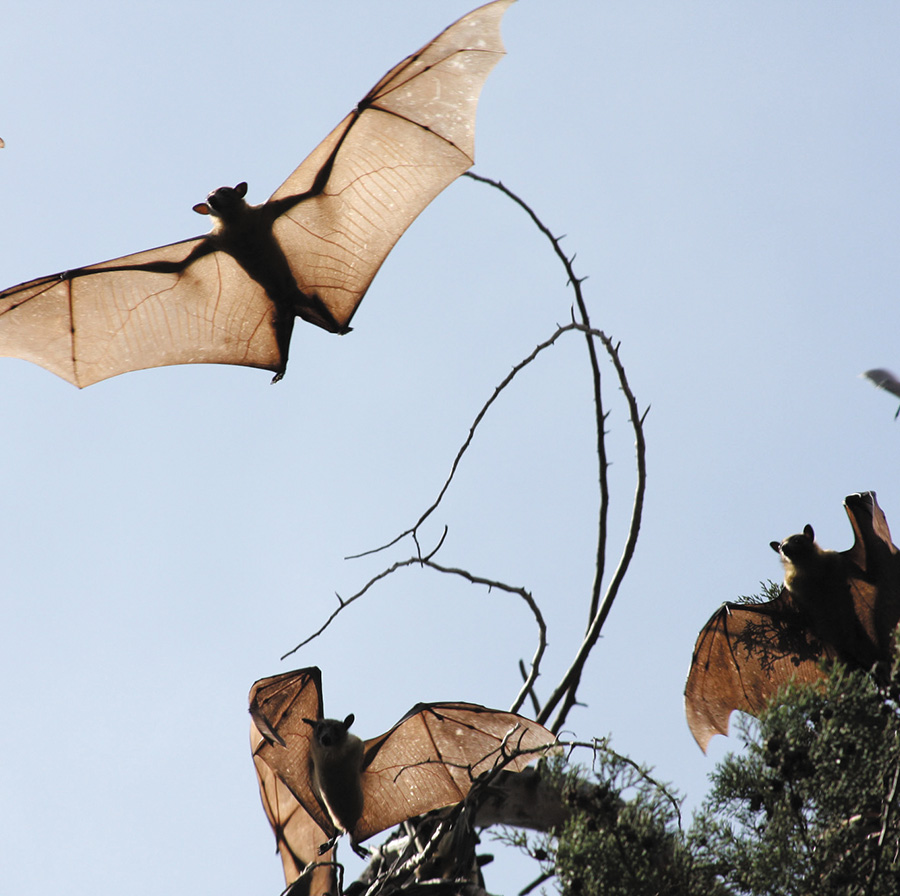
A circular image shows several bats, some in flight against a clear sky, and others hanging from tree branches.

Photo: Paul Webala

Go Batty

Girl Scouts create bat-focused patches

Bat conservation among young women is on the rise thanks to bat patch programs in Girl Scout councils across the U.S. In Girl Scouts, badges are earned for meeting a standardized national set of requirements in certain subject areas, whereas patches offer opportunities for further exploration and can be designed by regional groups, like Girl Scout Councils.

In collaboration with BCI’s Agave Restoration Program Director Kristen Lear, Ph.D.,the Girl Scouts of Western Ohio—where Lear was once a Scout—created the “Bats: So Awesome” patch. Lear and the Council worked together as part of Lear’s IF/THEN She Can Change the World mini grant titled “Girl Scouts Go Batty—Bat Education and Leadership Development Project.”

This patch program mirrors the lessons in BCI’s “Discover Bats!” curriculum, from busting bat myths to learning about bat anatomy and putting yourself in the shoes of a bat conservationist. And while the patches might be small, the impact is huge. Hundreds of young women are discovering that science is not only fun—it’s for them.

white silhouette of a bat in flight
Three adults are seated around a round table covered with papers, a game board, and personal items, engaged in an activity.
Teachers at the CAST conference try out The Migration Game.
Photo: Erin Cord

Plus, BCI supported hands-on community experiences to complement the lesson plans during the initial launch phase of the project. “We were able to bring 10 families, about 30 people, from Bonham Academy in San Antonio out to the nearby Bracken Cave Preserve in partnership with Latino Outdoors,” Cord says. “It was the first time out at the cave for many of the attendees, and they got to enjoy the bat flight along with an educational program about bats and bat conservation.”

Lear also shared her bat conservation experiences with attendees at the Girlstart Summer Camp, aiming to inspire their own conservation careers. “We were able to invite 50 families from Girlstart out on a Bat Cruise in downtown Austin. We rented a boat from Capital Cruises and the families got to enjoy a view of the world’s largest urban bat colony,” Lear says.

BCI even helped install bat gardens on the campuses of Bonham Academy and the Young Women’s Leadership Academy in San Antonio. “These gardens are accessible to all students at both schools for a combination of more than 1,000 elementary students total who will benefit from the hands-on learning opportunities that these gardens will provide,” Cord says. “The two bat gardens we installed with our school partners allowed students to put into action the learnings of the lessons, and they will continue to provide experiential learning opportunities into the future.”

We did a lot of work to make sure the curriculum is actually useful for teachers. It’s not something additional to what they’re already teaching. They can easily fit it into their existing curriculum.
—Erin Cord
A young girl wearing a school uniform with a red tie is working on a craft project at a desk, with a pink paper showing a white glue outline of a bat wing shape.

Students from the Young Women’s Leadership Academy try out the “Engineering a Bat Wing” lesson.

Photo: Joy Tuxhorn

The future of bat education

With “Discover Bats!” officially live on the BCI website—and also translated into Spanish—it’s time to explore more ways to share it. While the initial project meets national and Texas standards, the team recognizes each state has its own unique standards.

“The more the curriculum gets out there in the world, the more we may have to tweak it,” Cord says. “What if there’s a state that has different standards that doesn’t work with everything else? Maybe there’s a way we can work with those teachers.”

But no matter the state standards, the core purpose of the curriculum will always remain the same—education and inspiration. “I truly believe that meaningful personal experiences with nature are the most powerful method for transforming students into lifelong conservationists,” Lear says. “Through the new “Discover Bats!” curriculum, I hope we can inspire the next generation of bat conservationists.”

Explore the “Discover Bats!” curriculum: batcon.org/about-bats/learn