










Bat Conservation International Bats Magazine

Bats Magazine logo
A Win for
Community
Science
Mexican long-nosed bat discovered in new territory thanks to eDNA surveys
Bat Conservation International logo
Volume 44 • Issue 2
Photo: Jaime Pacheco & Amanda Vilchez
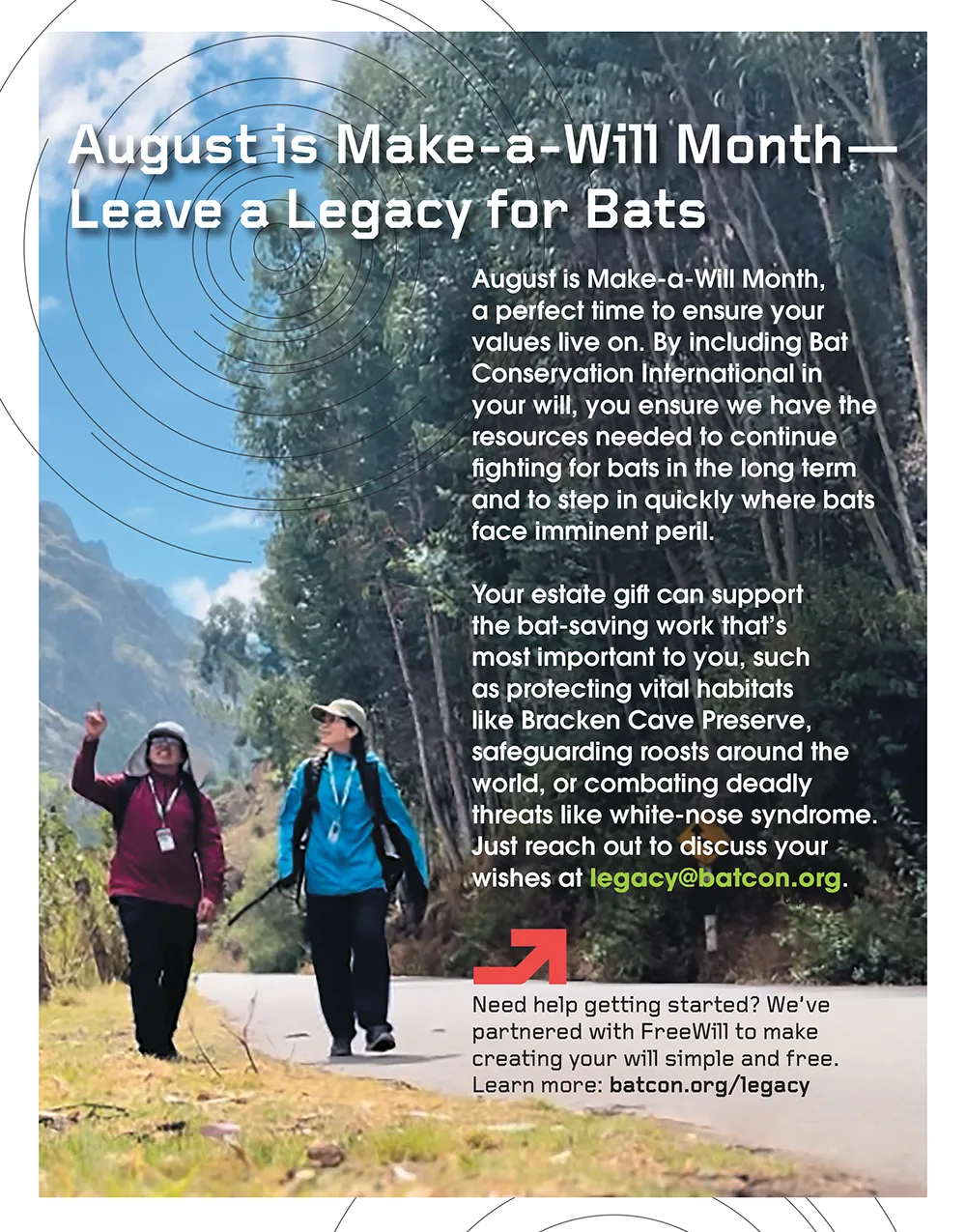
Legacy Advertisement
Issue 2 • 2025

Inside this Issue

Bats magazine logo
14
Photo: Kristen Lear, Ph.D.

Features

08A Curriculum takes flight

How BCI’s revamped school curriculum is inspiring the next generation of conservationists
14a win for community science

Mexican long-nosed bat discovered in new territory thanks to eDNA surveys
Departments

02Off the Bat

BCI Executive Director Mike Daulton on working together to save bats from extinction
06Species Study

Straw-colored fruit bat
24Bat Chat

BCI Student Scholar Carme Tuneu-Corral, Ph.D., discusses her work
25Bat Squad

Filmmaker Kristin Tièche shares the importance of bats in new documentary
Read past issues of Bats Magazine at batcon.org/batsmag

news & updates

Photo: Bruce D. Taubert
18
3Bat Signals

Conservation news and updates
  • BCI published in Conservation Letters
  • Bat-focused music
  • BCI featured on Jeff Corwin’s new show
  • Bat STEM kits in libraries
  • Supporting bats
18Field Notes

Research news from around the globe
  • Lesser long-nosed bat flights
  • New Student Scholars
  • Wildfire restoration in New Mexico
  • Photos of the subterranean
Bats Magazine Volume 44, Issue 2 cover
ON THE COVER: A researcher swabs a blooming agave in New Mexico as part of Bat Conservation International’s environmental DNA (eDNA) surveys.
Image: Natalie Gross, BLM Las Cruces
off the bat
A few words of introduction from your friends at Bat Conservation International

Working Together to Save Bats from Extinction

Global conservation work is the core of what we do
I

n collaboration with our extensive network of global partners, Bat Conservation International (BCI) is hard at work saving the world’s 1,400+ bat species from extinction. Global conservation work is the core of what we do to fulfill our mission of saving bats from extinction, and in this issue, we highlight the people involved with our work, the communities we engage with, and the tangible impact we’re making.

For more than 35 years, BCI’s Student Scholarship program has funded more than 400 scholars conducting bat-focused research in 80 countries. In the Bat Chat Q&A, we sit down with one of these incredible Student Scholars, Carme Tuneu-Corral, Ph.D., who has conducted fieldwork in Madagascar and Spain focusing on the impact of bats in agroecosystems. We also tell the story of an African bat monitoring network that focuses on the straw-colored fruit bat (Eidolon helvum). This network includes collaborators in 13 countries all working to keep tabs on the species and protect it.

Masthead

Bat Conservation International logo
Bat Conservation International (BCI) is a 501(c)(3) organization dedicated to protecting bats and their essential habitats around the world. A copy of our current financial statement and registration filed by the organization may be obtained by contacting our office in Austin, Texas, below, or by visiting batcon.org.

Main Office

500 N Capital of TX Hwy, Bldg 8, Suite 225
Austin, TX 78746, USA
512-327-9721

Managing Editor

Kristen Pope

Chief Editor

Javier Folgar

Contributors

Michelle Donahue / Proofreader

Publication Management BackPocket Agency

Bats Magazine welcomes queries from writers. Send your article proposal in a brief outline form and a description of any photos, charts, or other graphics to the Editor at pubs@batcon.org.

Members: We welcome your feedback. Please send letters to the Editor to pubs@batcon.org. Changes of address may be sent to members@batcon.org or to BCI at our Austin, Texas, address above. Please allow four weeks for the change of address to take effect.
Board of Directors
Dr. Andrew Sansom, Chair
Eileen Arbues, Vice Chair
Ann George, Secretary
Dr. Gerald Carter
Gary Dreyzin
Dr. Brock Fenton
Danielle Gustafson
Alison Greenberg
Cecily Read
Dr. Shahroukh Mistry
Sandy Read
Dr. Nancy Simmons
Jenn Stephens
Science Advisory Committee
Dr. Luis Aguirre
Dr. Enrico Bernard
Dr. Sara Bumrungsri
Dr. Gerald Carter
Dr. Liliana Dávalos
Dr. Brock Fenton
Dr. Tigga Kingston
Dr. Gary McCracken
Dr. Stuart Parsons
Dr. Paul Racey
Dr. Danilo Russo
Dr. Nancy Simmons
Dr. Paul Webala
Senior Staff

Mike Daulton, Executive Director
Mylea Bayless, Chief of Strategic Partnerships
Dr. Winifred Frick, Chief Scientist
Kevin Pierson, Chief of Conservation and Global Strategy

Visit BCI’s website at batcon.org and the following social media sites:

Bat Signals BCI updates and conservation news
BCI staff members in St. Clair Cave in Jamaica
Photo: Horizonline Pictures

New BCI Research in Conservation Letters

Evidence shows bat conservation contributes to global sustainability goals

A

team of Bat Conservation International (BCI) scientists led by One Health Director Luz de Wit, Ph.D., published an article in the journal Conservation Letters titled “Co-Benefits From Species-Level Conservation Contribute to Multilateral Environmental Agreement Targets.” The article explores how bat conservation can contribute to global biodiversity and sustainable development agendas, as outlined in the Kunming-Montreal Global Biodiversity Framework (GBF) and the United Nations Sustainable Development Goals (UNSDGs).

The team identified multiple pathways by which bat conservation actions—such as reducing threats and training early career professionals—as well as bat conservation outcomes like bat-derived pollination and pest control can benefit bats, biodiversity, and human well-being. The analysis documents how BCI’s programs can directly contribute to 17 GBF targets and 14 UNSDGs.

leaf icon
Read the open-access study in Conservation Letters: doi.org/10.1111/conl.13072

bat signals

A “Symphony” of Bats

Composer creates bat-inspired music
A string quartet performs on a wooden stage, with two violinists, a cellist, and a violist playing their instruments.
The Delgani String Quartet (pictured) was selected to perform Washington Plada’s musical composition.
Photo: Tina Cheng, Ph.D.
When composer Washington Plada visited Bracken Cave to experience the “batnado” of 15 million Mexican free-tailed bats (Tadarida brasiliensis) emerging from the cave, he was in awe. The experience inspired him to create a three-minute-long musical piece using the bats’ echolocation signatures. Now, music lovers can enjoy this string quartet set to visual representations of the batnado, which Plada is releasing this summer.

The piece begins with a quiet and serene depiction of Bracken Cave, capturing the stillness before dusk. Gradually, the composition comes to life as scattered rhythmic patterns and airy harmonics evoke the echolocation calls of the bats. As they take flight, the music intensifies, building in energy as the sky fills with movement. At its peak, the sound is dense and swirling, mirroring the overwhelming scale of the emergence. Then, as the final bats leave, the intensity fades, returning to silence.

Species Study
There are 1,400+ species of bats in the world. This is one of them.
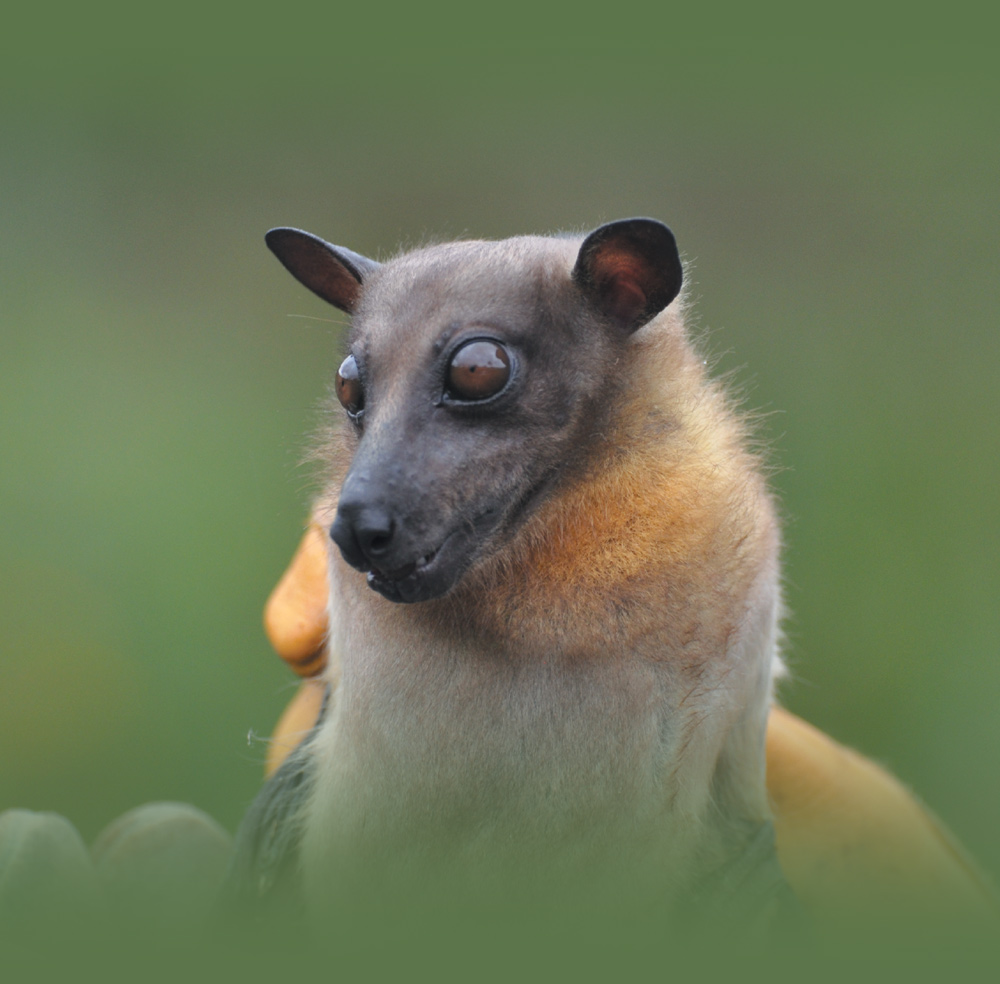
Close-up of a spectacled flying fox with dark gray and orange-brown fur.

Straw-colored Fruit Bat

Research network comes together to keep tabs on African species
By Michelle Z. Donahue
bat stats
Bat icon
Binomial

Eidolon helvum
Two bats icon
Family

Pteropodidae
Bat Globe icon
Colony Size

Tens to hundreds of thousands to millions

Scale icon
Weight

Up to 10 ounces (350g)
Leaf icon
Diet

Fruit, pollen, nectar
Exclamation Point icon
Status

Near Threatened
Region

Central to southern Africa; Senegal to Ethiopia and southeast to South Africa; limited populations along Red Sea coast of Yemen and Saudi Arabia
Stylized map of Africa, Europe, and the Middle East in black on a yellow background.
Photo: Paul Webala, Ph.D.
W

hile home gardens are often awash in colorful flowers and foliage, the walls of Glenys Shone’s garden in Ndola, Zambia, are painted with bats. Green stylized silhouettes of bats in flight and a roosting bat with a mouthful of fruit are displayed against a bright yellow backdrop.

The art is paired with cheerful hand-painted text imploring passers-by to not disturb the large group of straw-colored fruit bats (Eidolon helvum) roosting in the garden from September to January. “We disperse seeds from the fruit we eat so more trees can grow,” reads one placard. “Trees are essential to the environment, and so are we.”

leaf iconFeature: Discover Bats!

A Curriculum Takes Flight

A Curriculum Takes Flight typography
white silhouette of a bat

A Curriculum Takes Flight

A Curriculum Takes Flight typography
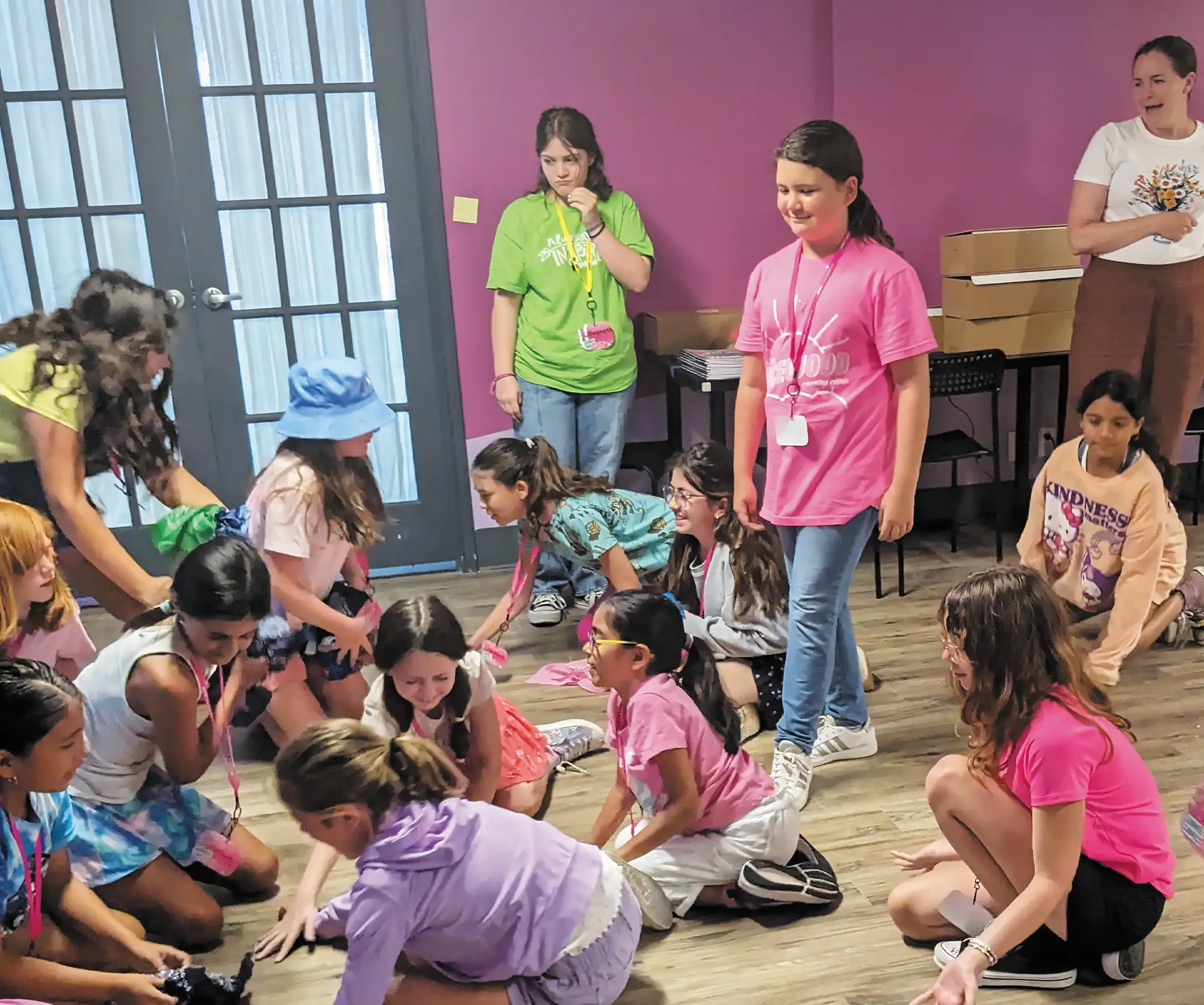
A group of campers from Girlstart are gathered in a room with pink walls and a wooden floor, engaged in BCI’s Batnado activity.

Campers from Girlstart participate in BCI’s Batnado activity.

Photo: Erin Cord

How BCI’s revamped school curriculum is inspiring the next generation of conservationists
By Stefanie Waldek

I

f you were lucky enough to have a career day in school, you likely learned about some fairly standard professions: doctor, lawyer, businessperson, teacher. But where was “conservation scientist” in that mix? Thanks to the revamped “Discover Bats!” curriculum by Bat Conservation International (BCI), middle-school students now have the chance to learn about bat conservation science as a career path at a young age. Even more importantly, they’re seeing that women can—and do—lead the way in STEM (science, technology, engineering, and mathematics) fields.

leaf iconFeature: eDNA

A Win for Community Science

A Win for Community Science typography
Mexican long-nosed bat discovered in new territory thanks to eDNA surveys
By Lindsay Lee Wallace

An Endangered Mexican long-nosed bat (Leptonycteris nivalis) visits agave flowers for nectar.
Photo: Horizonline Pictures
A

l Bamman says he can tell when bats have been sipping from his hummingbird feeder. “Bat saliva has a very distinctive odor, like a wet dog,” he says. In mid-April, when his feeders start to acquire this scent, Bamman knows the nectar bats have returned to southeastern Arizona.

Bamman is part of a community science initiative led by Bat Conservation International (BCI), in partnership with Northern Arizona University (NAU) and dozens of community members and partners across the U.S. Southwest and northern Mexico. Participants swab their hummingbird feeders to collect saliva left behind by nectar bats that visit at night to fuel their migratory journeys. The saliva contains cells that provide insight into which bat species visited.

Field notes Research news from around the globe
A lesser long-nosed bat (Leptonycteris yerbabuenae) visits a flower to feed.
Photo: Bruce D. Taubert

Long-Distance Flyer

Study reveals lesser long-nosed bats fly great distances—even across open water

By Annika Hipple
A

lesser long-nosed bat (Leptonycteris yerbabuenae) can weigh less than an ounce, but researchers found these tiny bats can fly vast distances–with one bat flying 117 miles in a single night. To learn more about these migratory pollinating bats and their journey following flowering resources across the Sonoran Desert, scientists from Bat Conservation International (BCI) collaborated with a binational research team to study them.

A surprising find

In 2013, BCI Chief Scientist Winifred Frick, Ph.D., installed passive integrated transponder (PIT) tag readers—the same technology used to microchip pets—at two known lesser long-nosed bat roosts in the Mexican state of Baja California Sur on the Baja California Peninsula. Frick and other researchers wanted to understand how bats on the Baja Peninsula—which is surrounded by water—are connected to other parts of the range.
microscope icon
Bat researchers are using passive integrated transponder (PIT) tags to track bats. This is the same type of microchip veterinarians use to reunite lost pets with their families.
field notes

Global Scholarship

BCI welcomes newest cohort of Student Scholars
By Jill Robbins
A female researcher, wearing a bandana and long-sleeved shirt, attaches a small device to a tree in a natural landscape at dusk.
BCI 2024 Student Scholar Angélica Viviana Yantén Arévalo installs an acoustic recorder in Brazil.
Photo: Marcelo Martins
S

ince it began in 1989, Bat Conservation International’s (BCI) Student Scholarship program has supported the work of 417 researchers working on projects across 80 countries. BCI recently welcomed its 2025 cohort of Student Scholars, with 14 graduate students representing 10 different countries, including the first-ever BCI Student Scholars from Burkina Faso and Kosovo.

This annual scholarship program allows BCI to provide financial support and professional development to emerging scientists. The application process includes a proposal addressing multiple bat conservation challenges, including the impact of human-caused environmental changes. Scholars must submit their projects to BCI for approval and are encouraged to share their findings with local communities.

Recovering From a Devastating Wildfire

Black Fire Watershed Restoration Action Plan focuses on creating resources for bats in the Gila National Forest

By Annika Hipple
View from the crest of the Black Range looking east into the Mud Spring Canyon watershed. Nearly 80% (9,107 acres) of the watershed burned during the 2022 Black Fire.
Photo: Elizabeth James
I

n 2022, the devastating Black Fire burned 327,263 acres in New Mexico’s Gila National Forest. Now, scientists from Bat Conservation International (BCI) are partnering with the U.S. Forest Service to initiate restoration projects that were identified in the 2024 Watershed Restoration Action Plan (WRAP) to guide recovery. BCI served as the lead author on the WRAP, in partnership with the Gila National Forest.

The Gila National Forest provides critical habitat for more than 20 species of bats, including Allen’s big-eared bats (Idionycteris phyllotis), fringed myotis (Myotis thysanodes), Townsend’s big-eared bats (Corynorhinus townsendii), and western red bats (Lasiurus frantzii). Twenty-two of the 24 watersheds included in the WRAP burned—the other two suffered downstream impacts from upstream burning—leaving a patchwork of intact forest surrounded by fire-impacted areas.

The WRAP is a comprehensive roadmap for recovery that identifies restoration projects to improve the health of ecosystems and their resilience to changes in the climate and environment while also enhancing watershed conditions for the benefit of bats, fish, and other wildlife.

leaf icon
In 2022, the devastating Black Fire burned 327,263 acres in New Mexico’s Gila National Forest.
field notes

Shots of the Subterranean

Josh Hydeman shares images of BCI’s underground work
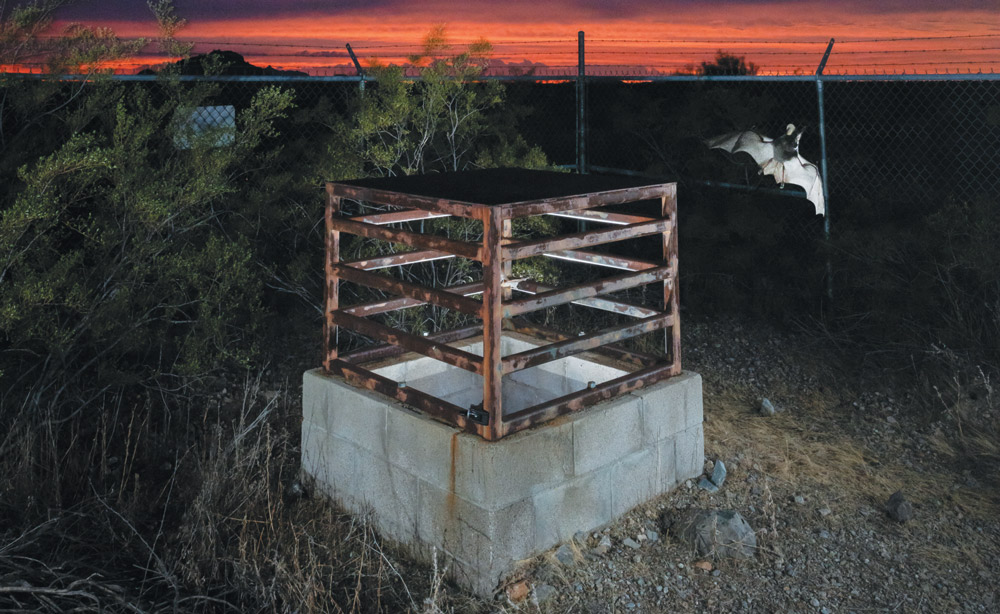
A
Concrete structure with a rusted metal grate, set outdoors at sunset with a flying bat and a fence in the background.
A single bat emerges from its roost in July 2024 as the sun sets over the Tohono Decant Line in Arizona. What was once a drainage solution for mine waste has now become habitat for a colony of California leaf-nosed bats (Macrotus californicus). The steel box affixed to the decant line, known as a cupola, protects the colony from vandals while ensuring safe passage for the bats to enter and exit.
A
Josh Hydeman headshot
Photo: Matthew King
Josh Hydeman headshot
Photo: Matthew King
s Subterranean Specialist for Bat Conservation International (BCI), Josh Hydeman spends a lot of time below ground and en route to remote locations to survey mines and caves. He totes his camera equipment with him and chronicles the team’s work along the way.

Before he joined BCI in 2021, Hydeman worked as a freelance photographer specializing in cave research and exploration. He’s captured subterranean images from volcanic glacier caves on Oregon’s Mount Hood to the deepest cave in the Western Hemisphere near Oaxaca, Mexico. Publishers including National Geographic and Outdoor Photographer have featured Hydeman’s work, and he received the Best in Show award at the National Speleological Society’s Photo Salon, as well as an inclusion in National Geographic’s special issue, “100 Best Photos: Iconic Images from this Century.”

See more of Hydeman’s work at instagram.com/josh_hydeman and josh-hydeman.squarespace.com
Bat Chat A Conversation with a noted expert
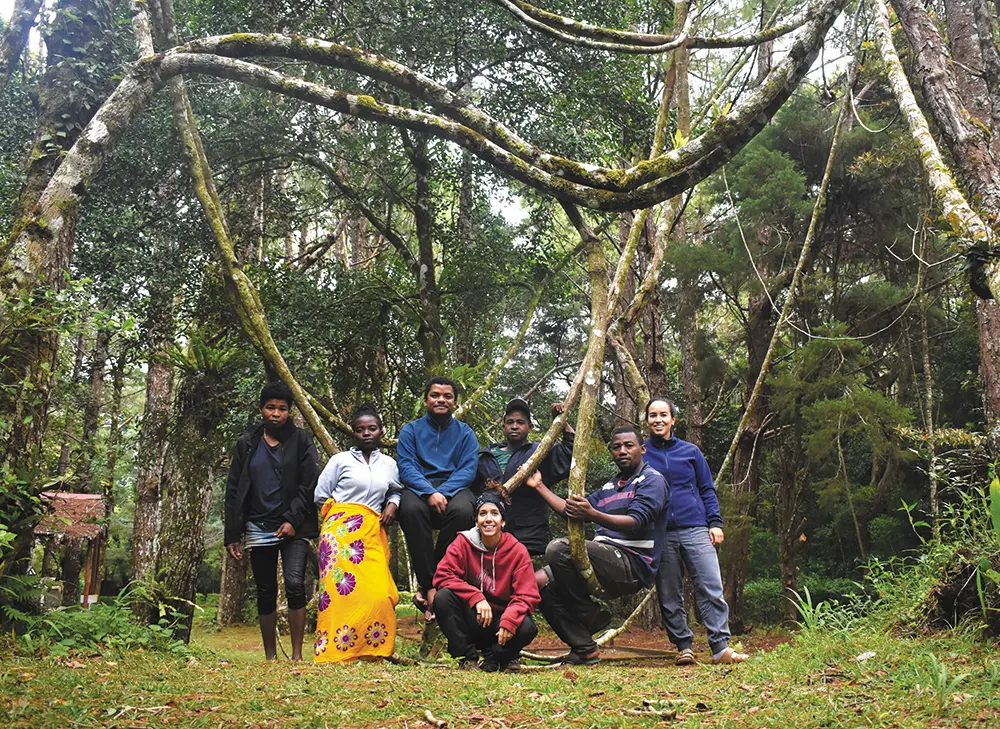
Portrait orientation outdoor photograph of a group of seven young adults that are made up of men plus women who are posing for a photo outdoors in a lush, green forest; Some are standing, others are sitting or crouching, and one man is leaning against a thick vine; They are all smiling and appear to be enjoying the natural surroundings; The individuals pictured here happen to be Carme Tuneu-Corral’s team during a fieldwork expedition in northern Madagascar

Investigating
Bats’ Role in
Agriculture

Tuneu-Corral’s team during a fieldwork expedition in northern Madagascar
Photo: Carme Tuneu-Corral

Investigating Bats’ Role in Agriculture

Student Scholar Carme Tuneu-Corral discusses her work
By Fiona Tapp
C

arme Tuneu-Corral, Ph.D., is a Bat Conservation International (BCI) Student Scholar who recently completed her doctoral work, which included fieldwork in Madagascar and Spain. Tuneu-Corral first became a BCI Student Scholar in 2020, and here she shares her work focusing on the impact of bats on agroecosystems, like farms and gardens.

Your work highlights the economic value of bats in pest control. How do you quantify this benefit for farmers?

We used a field experiment using large structures called exclosures, which prevent bats from accessing specific areas of croplands (in our case, rice paddies). I created small “imaginary worlds” without bats, which allowed me to measure the impact of pests on crops in both the presence and absence of bats. By comparing the crop damage levels in both conditions, I was able to estimate the amount of rice yield loss prevented by bats and the resulting economic savings for farmers, expressed in Euros.
Bat Squad For the young conservationist

The Invisible Mammal

Filmmaker Kristin Tièche shares the importance of bats in new documentary
By Fiona Tapp
F

ilmmaker Kristin Tièche recently released “The Invisible Mammal,” a documentary focusing on the importance of bats and bat conservation. Bat Conservation International (BCI) asked her a few questions about the film and bat conservation.

What inspired you to make “The Invisible Mammal”?

One night, I thought I saw something fly by. I looked up in the sky, and it was just filled with bats. It was so cool. I had never seen anything like that before. Then years later, I read an article about how this disease called white-nose syndrome (WNS) was killing bats by the millions. I had this really emotional response to that article and decided the topic would make a really interesting documentary.
Photo: Horizonline Pictures
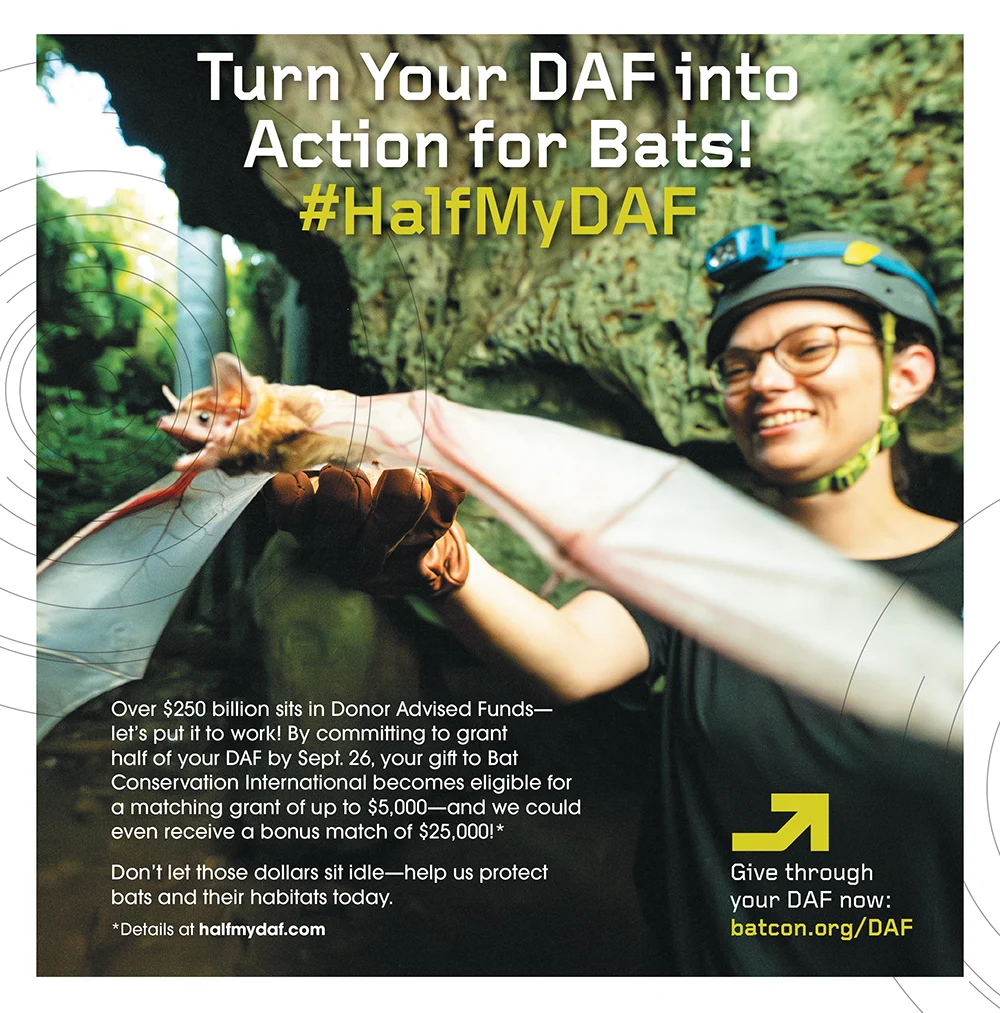
Donor Advised Funds Advertisement
Bats Magazine logo
Thanks for reading our latest issue!