


Investigating
Bats’ Role in
Agriculture
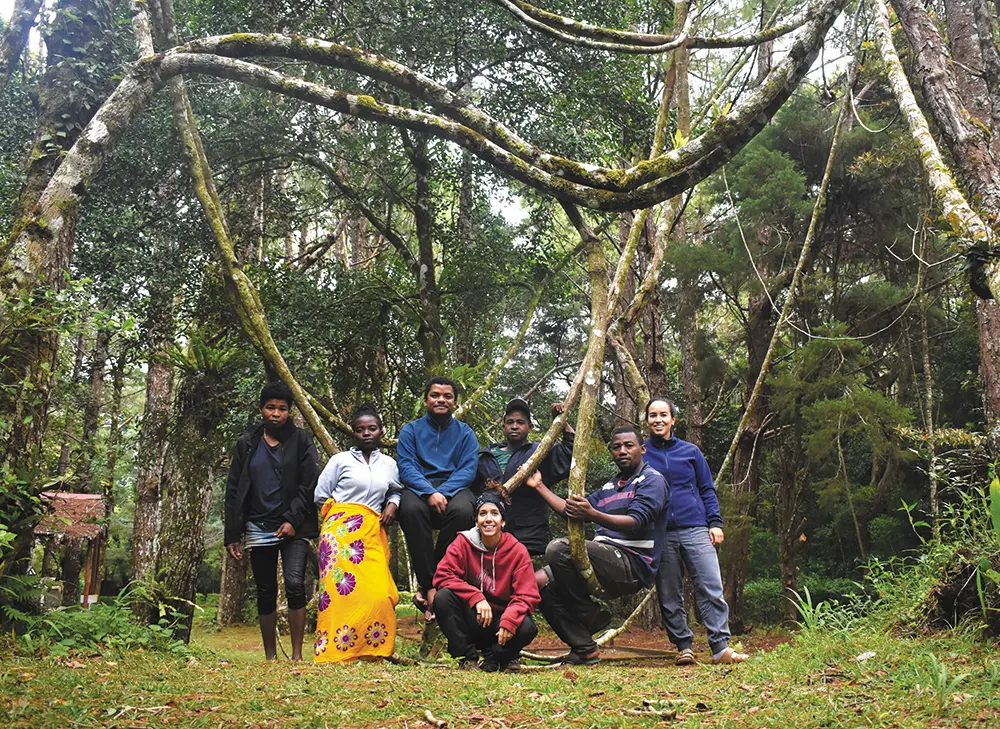
Tuneu-Corral’s team during a fieldwork expedition in northern Madagascar
Photo: Carme Tuneu-Corral
Investigating Bats’ Role in Agriculture
Student Scholar Carme Tuneu-Corral discusses her work
By Fiona Tapp
C
arme Tuneu-Corral, Ph.D., is a Bat Conservation International (BCI) Student Scholar who recently completed her doctoral work, which included fieldwork in Madagascar and Spain. Tuneu-Corral first became a BCI Student Scholar in 2020, and here she shares her work focusing on the impact of bats on agroecosystems, like farms and gardens.
Your work highlights the economic value of bats in pest control. How do you quantify this benefit for farmers?
We used a field experiment using large structures called exclosures, which prevent bats from accessing specific areas of croplands (in our case, rice paddies). I created small “imaginary worlds” without bats, which allowed me to measure the impact of pests on crops in both the presence and absence of bats. By comparing the crop damage levels in both conditions, I was able to estimate the amount of rice yield loss prevented by bats and the resulting economic savings for farmers, expressed in Euros.
What are the biggest gaps in our understanding of bats’ roles in agriculture that still need further research?
Further research is needed to better understand all the ecological processes and trophic connections that occur in agroecosystems. This knowledge will help us improve measures and develop strategies that promote stable bat populations in croplands, maximizing their pest control benefits while minimizing potential negative impacts, such as the consumption of natural pest enemies.
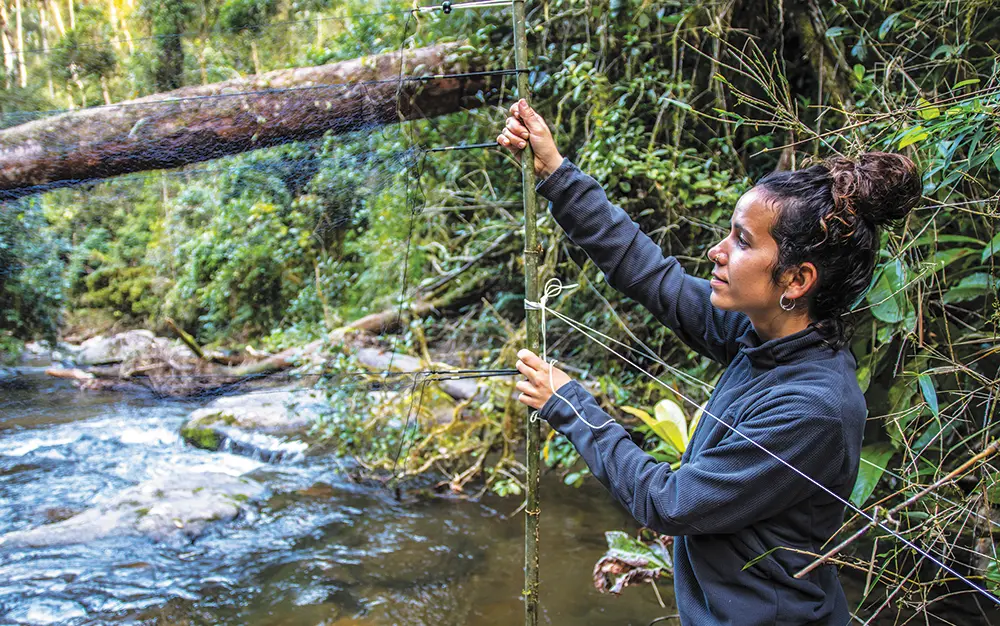
Tuneu-Corral sets up mist-nets to capture Malagasy bats to study the presence of agricultural pests and disease vectors in their diets.
Photo: Adrià López-Baucells
What advice would you give to students interested in studying bats and ecosystem services?
I would tell them that studying ecosystem services is a powerful way to bridge the gap between society’s needs and biodiversity conservation. Ecosystem services are not about viewing nature just as a source of money. They allow us to highlight nature’s benefits in a tangible way that people can easily understand. My advice would also be to focus on making research applicable and accessible not only to the scientific community, but also to farmers and the general public.
What’s next for you? Are there any upcoming research projects or conservation initiatives you’re excited about?
I have many ideas in mind and some projects underway. At the moment, I’m actively involved in a large project with Cárol Sierra-Durán, another BCI Student Scholar, which continues to explore the ecosystem services of bats in agriculture. We are studying how different agricultural practices influence the presence of bats and other natural pest enemies in farmlands while also assessing the effectiveness of strategies to enhance natural pest control from a farmer’s perspective.
I also plan to continue my research in Madagascar, where I have an ongoing bat house project. In addition to all of this, one of my top priorities is adapting the key findings of my Ph.D. into an engaging and accessible format for farmers and the general public, both in Spain and Madagascar.