Bat Squad For the young conservationist

The Invisible Mammal

Filmmaker Kristin Tièche shares the importance of bats in new documentary
By Fiona Tapp
F

ilmmaker Kristin Tièche recently released “The Invisible Mammal,” a documentary focusing on the importance of bats and bat conservation. Bat Conservation International (BCI) asked her a few questions about the film and bat conservation.

What inspired you to make “The Invisible Mammal”?

One night, I thought I saw something fly by. I looked up in the sky, and it was just filled with bats. It was so cool. I had never seen anything like that before. Then years later, I read an article about how this disease called white-nose syndrome (WNS) was killing bats by the millions. I had this really emotional response to that article and decided the topic would make a really interesting documentary.
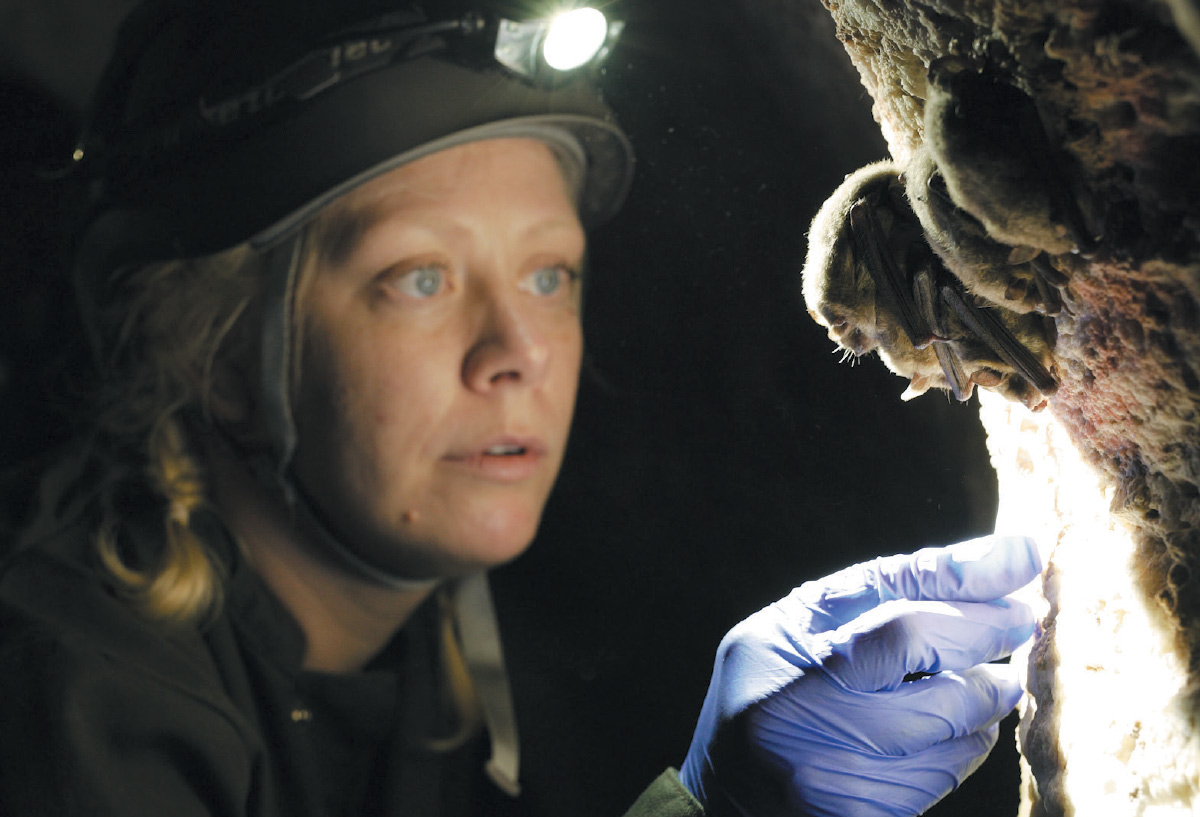
Kristin Jonasson wearing a headlamp and gloves while observing a bat up close
“The Invisible Mammal” shows bat researcher Kristin Jonasson, Ph.D., collecting samples in 2019.
Photo: Skip Hobbie and Aaron Peterson / The Invisible Mammal
Two women in a forest wearing jackets, pants, and beanies. The woman on the right is looking up and has her hands up. The woman on the left is looking forward with a slight smile. The ground is covered with leaves, and there are many trees. The trees in the background are out of focus.
The documentary shows BCI Chief Scientist Winifred Frick, Ph.D., and bat researchers Yvonne Dzal, Ph.D., and Kristin Jonasson, Ph.D., piloting Operation Fat Bat in Michigan’s Upper Peninsula in fall of 2019.
Photo: Skip Hobbie and Aaron Peterson / The Invisible Mammal


Could you tell us about your most memorable experience with bats?

In 2019, we went to Bracken Cave for the first time to film there, and I still tell people that was one of the greatest wildlife experiences that I’ve ever had in my entire life. When you witness the “batnado” with 20 million Mexican free-tailed bats emerging in a vortex from a cave, it’s something that just moves you. I hope that when people see the film, they’ll feel that too.

Was it challenging to film bats?

Oh, absolutely. I mean, the first thing is that bats are small and fast, so you have a very small window of opportunity to get the shots that you need. Something in general about wildlife is that sometimes you just can’t make them do what you want them to do on cue.

What advice would you give young people who are passionate about wildlife filmmaking?

Just start doing it. No matter who you are, where you come from, or your background, there are so many interesting stories about wildlife in every single neighborhood and region on Earth. Whatever wildlife you have in your region of the world, there’s a story there.

What do you hope audiences take away from watching your film?

When audiences see the film, we hope that they will be inspired to go see a bat flight or bat emergence. We hope that they’ll be inspired to support bat conservation science and the work that scientists are doing through BCI, specifically the work of Operation Fat Bat and the research on WNS to prevent the extinction of a species.
leaf icon
Learn more about “The Invisible Mammal” and find a screening near you: theinvisiblemammal.com