field notes
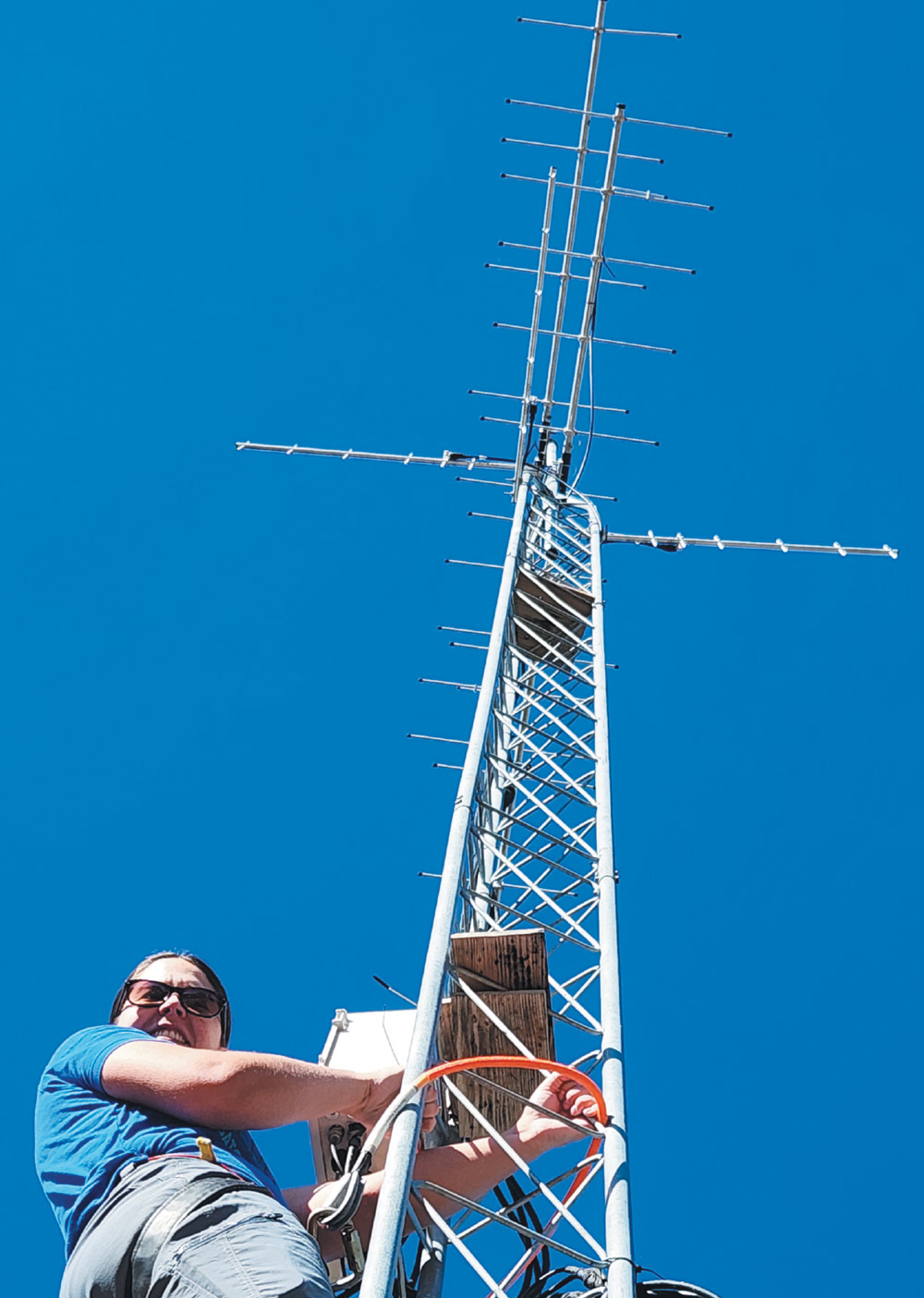
A person wearing sunglasses and climbing gear works on a tall, silver lattice telemetry tower. The metal tower is topped with multiple antenna arrays against a clear, bright blue sky.
Photo: Fran Hutchins

From Birds to Bats

Tracking bats via Motus towers across North America
By Stefanie Waldek
Every summer evening at BCI’s Bracken Cave Preserve near San Antonio, the sky churns with life. Millions of Mexican free-tailed bats (Tadarida brasiliensis) stream out of the cave in a rushing spiral at dusk to feed.

But come fall, Bracken—which is the largest known bat colony on Earth and the largest known gathering of mammals on Earth (with 20 million animals during peak season)—empties out. While scientists know that many of the bats, like birds, fly south for the winter, their precise migratory routes and winter roosting sites aren’t well known. A newly installed tower perched on the Bracken Cave Preserve landscape might contribute to solving the mystery.

A new way to track bats

Launched in 2014 by Birds Canada, the Motus Wildlife Tracking System comprises a network of radio-receiving towers across North America designed to track birds tagged with tiny radio transmitters. As tracking technology becomes smaller and lighter, researchers are taking advantage of the Motus system for smaller flying creatures, including bats.

When a tagged bat passes within approximately 12 miles of any Motus tower, that receiver logs the signal, allowing researchers to trace where and when the animal was detected. Over time, those individual pings connect to form a migration map.

The movement towards tracking bats with Motus towers at Bracken began in earnest through the work of University of Oklahoma Ph.D. student and 2026 BCI Student Scholar Kristin Dyer, who uses both Motus and PIT tags (short for “passive integrated transponder,” similar to the microchips used for cats and dogs) to track the movement of Mexican free-tailed bats roosting in Selman Cave, Oklahoma. Dyer has observed her tagged bats traveling south across Texas—including to Bracken Cave—and into various parts of Mexico, before returning north to Selman Cave.
compass icon
Motus towers can detect bats that fly within 12 miles.
Dyer’s work helped establish a foundation for integrating Motus towers into larger sites where bats are found, including Bracken Cave. “We’re doing this because we don’t know a lot about the corridors, routes, or timing of the Mexican free-tailed bat migration,” says Bracken Cave Preserve Director Fran Hutchins. “We know they start showing up in mid-February, they’re here all summer, and they start leaving in September. But we don’t know where all the roosts are in Mexico. Finding the different roosts in Mexico will help us protect them in the future.”
Finding the different roosts in Mexico will help us protect Mexican free-tailed bats in the future.
—Fran Hutchins

Seeing immediate results

Bracken Cave installed its Motus tower in spring 2024, and even in the early stages of the project, researchers are already seeing movement they had never been able to document before.

In October 2025, Hutchins and his team tagged 18 Mexican free-tailed bats at the preserve. Only a few days later, one of the bats pinged in Big Bend, Texas. “It may spend the winter there, or it may go farther south into Mexico,” Hutchins says. This data could help scientists understand Mexican free-tailed bats that migrate shorter distances or even stay within Texas year-round.

As the Motus network expands and more towers are added across the Southwest U.S. and Mexico, researchers expect clearer, more detailed maps to emerge. For now, each new ping—each tiny signal from a bat passing a tower—adds another piece to a migration puzzle that, until recently, was almost entirely out of reach.


Click to load the live tracking dashboard