










Bat Conservation International Bats Magazine

Bats Magazine logo
Making the Sky Safer for Bats
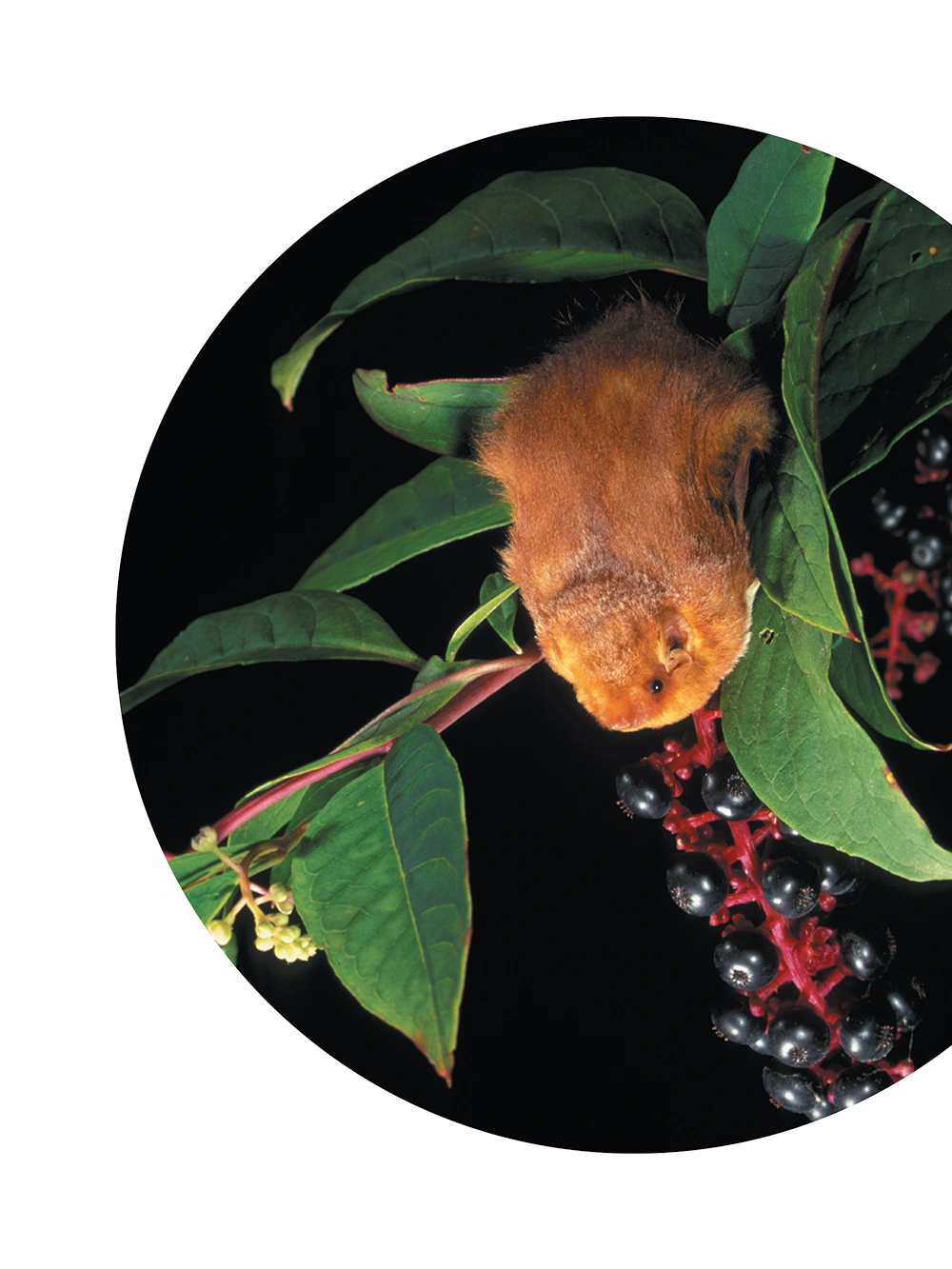
A small, fluffy orange-brown bat clings to a green leafy branch next to a cluster of dark purple berries. The scene is set against a solid black background within a circular frame.
How a new understanding of bat migration can reduce wind turbine fatalities
Bat Conservation International logo
Volume 45 • Issue 1
Photo: Jonathan Alonzo
Bracken Advertisement
Issue 1 2026

Inside this Issue

Bats magazine logo
08
Photo: Brian Anschel

Features

08Making the Sky Safer for bats

How a new understanding of bat migration can reduce wind turbine fatalities
12The bat kit of peru

Educational initiative informs and inspires children and adults

Departments

02Off the Bat

BCI’s Director of Endangered Species Interventions Jon Flanders, Ph.D., and Regional Director for Mexico and Latin America Ana Ibarra, Ph.D., share how BCI is working to protect Brandon Hill Cave
06Species Study

Tomes’s sword-nosed bat
24Bat Chat

BCI’s Luz de Wit, Ph.D., explains new predictive tool to locate roosts
25Bat Squad

Animal mascots can be a win for conservation and sports
Read past issues of Bats Magazine at batcon.org/batsmag

news & updates

Photo: Charles M Francis
05
3Bat Signals

Conservation news and updates
  • Home renovation for bats
  • Remembering Jane Goodall
  • Combining biking and bat education
  • 2027: International Year of the Bats
18Field Notes

Research news from around the globe
  • Confirmed range expansion for Endangered bat
  • Planting trees for bats in Texas
  • A look inside the Tolga Bat Hospital
  • The State of India’s Bats Report
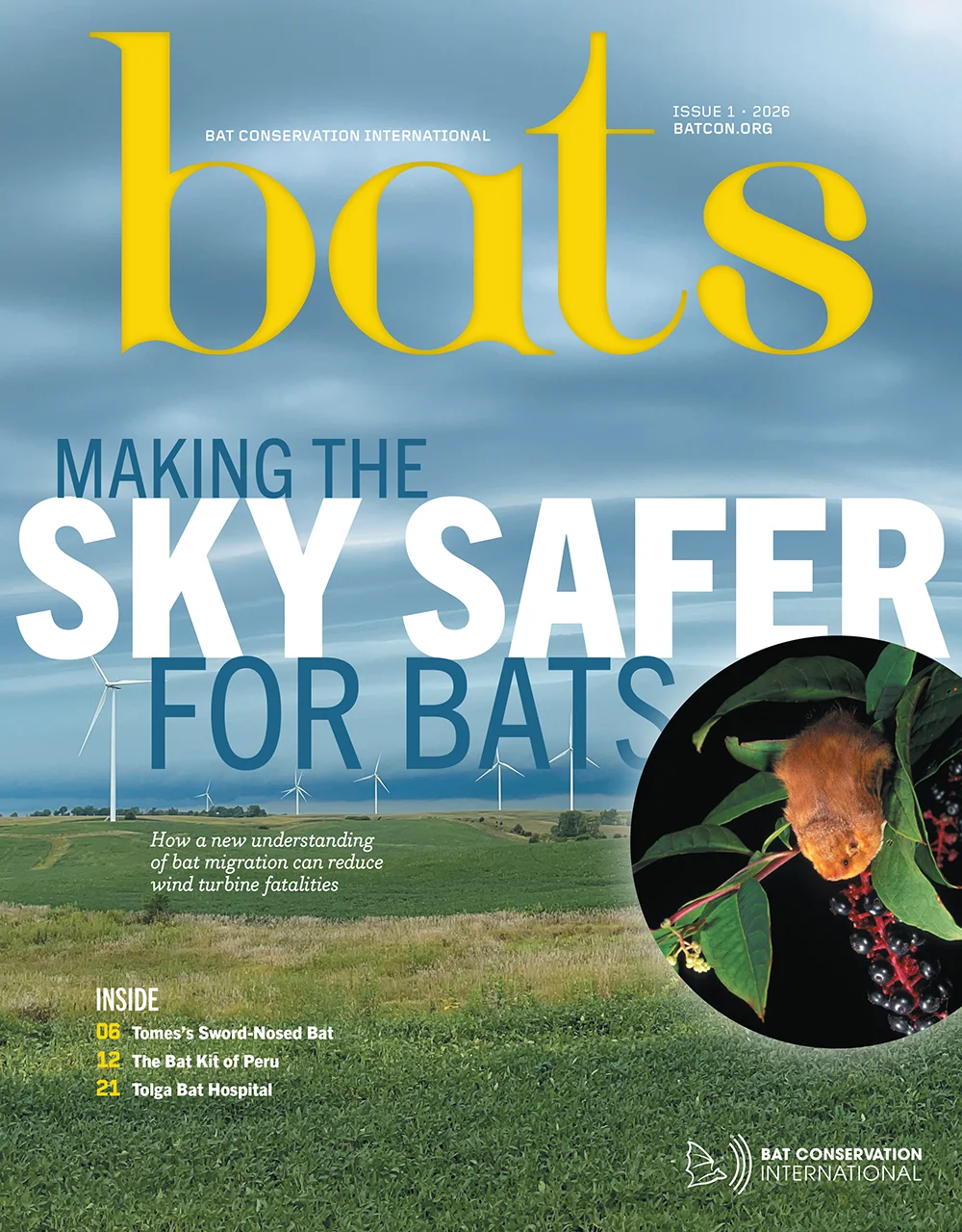
Bats Magazine Volume 45, Issue 1 cover
ON THE COVER:
In this issue, we explore how a new understanding of bat migration can reduce wind turbine fatalities.
Image: Brian Anschel
off the bat
A few words of introduction from your friends at Bat Conservation International

Protecting Brandon Hill Cave Together

By Jon Flanders and Ana Ibarra
F

or this issue of Bats Magazine, we have been given special permission to step out of our usual roles and write to you directly because we have some truly exciting news to share. As some of you may have seen across our social media channels already, we are pleased to announce that Bat Conservation International (BCI) has been able to secure the purchase of Brandon Hill Cave in Honduras to permanently protect it from development.

We wanted to thank everyone personally for their generosity and overwhelming response to this crisis, and to Rainforest Trust for the match funding they were able to provide. When we learned that Brandon Hill Cave and the surrounding land was under immediate threat of sale and development, it was clear that time was not on our side. However, the response was truly remarkable. The speed and scale of donations allowed us to move swiftly and decisively, completing the acquisition in record time before development interests could close in. Behind the scenes, this was a collaborative effort. Our communications and development teams worked tirelessly to tell the story of Brandon Hill, ensuring that the urgency of the situation never overshadowed the science or the long-term vision.

Masthead

Bat Conservation International logo
Bat Conservation International (BCI) is a 501(c)(3) organization dedicated to protecting bats and their essential habitats around the world. A copy of our current financial statement and registration filed by the organization may be obtained by contacting our office in Austin, Texas, address below, or by visiting batcon.org.

Main Office

500 N Capital of TX Hwy, Bldg 8, Suite 225
Austin, TX 78746, USA
512-327-9721

Managing Editor

Kristen Pope

Editor-in-Chief

Kathryn Slater

Contributors

Michelle Donahue / Proofreader

Publication Management BackPocket Agency

Bats Magazine welcomes queries from writers. Send your article proposal in a brief outline form and a description of any photos, charts, or other graphics to the Editor at pubs@batcon.org.

Members: We welcome your feedback. Please send letters to the Editor to pubs@batcon.org. Changes of address may be sent to members@batcon.org or to BCI at our Austin, Texas, address above. Please allow four weeks for the change of address to take effect.
Board of Directors
Andrew Sansom, Ph.D., Chair
Ann George, Secretary
Gerald Carter, Ph.D.
Gary Dreyzin
Brock Fenton, Ph.D.
Danielle Gustafson
Alison Greenberg
Cecily Read
Shahroukh Mistry, Ph.D.
Sandy Read
Nancy Simmons, Ph.D.
Jenn Stephens
Science Advisory Committee
Luis Aguirre, Ph.D.
Enrico Bernard, Ph.D.
Sara Bumrungsri, Ph.D.
Gerald Carter, Ph.D.
Liliana Dávalos, Ph.D.
Brock Fenton, Ph.D.
Tigga Kingston, Ph.D.
Gary McCracken, Ph.D.
Stuart Parsons, Ph.D.
Paul Racey, Ph.D.
Danilo Russo, Ph.D.
Nancy Simmons, Ph.D.
Paul Webala, Ph.D.
Senior Staff

Mylea Bayless, Chief of Strategic Partnerships
Winifred Frick, Ph.D., Chief Scientist
Kevin Pierson, Chief of Conservation and Global Strategy
Gift Venezio, Chief Operating Officer

Visit BCI’s website at batcon.org and the following social media sites:

Bat Signals BCI updates and conservation news
Sustainable agave harvest for livestock fodder.
Photo: Sofia Navarrete Zur

A Living Legacy

Immersive storytelling highlights BCI’s agave work
B

CI is excited to tell the story of a remarkable partnership for conservation in “The extraordinary flight of the Mexican long-nosed bat,” an article produced for BCI by BBC StoryWorks Commercial Productions, presented by International Union of Conservation of Nature as part of Living Legacy.

The immersive storytelling depicts BCI’s Agave Restoration Initiative in the U.S. and Mexico, featuring binational partners working together to protect the Endangered Mexican long-nosed bat (Leptonycteris nivalis), and the interconnected threads between these bats, agaves, and the people who rely on them for their livelihoods.

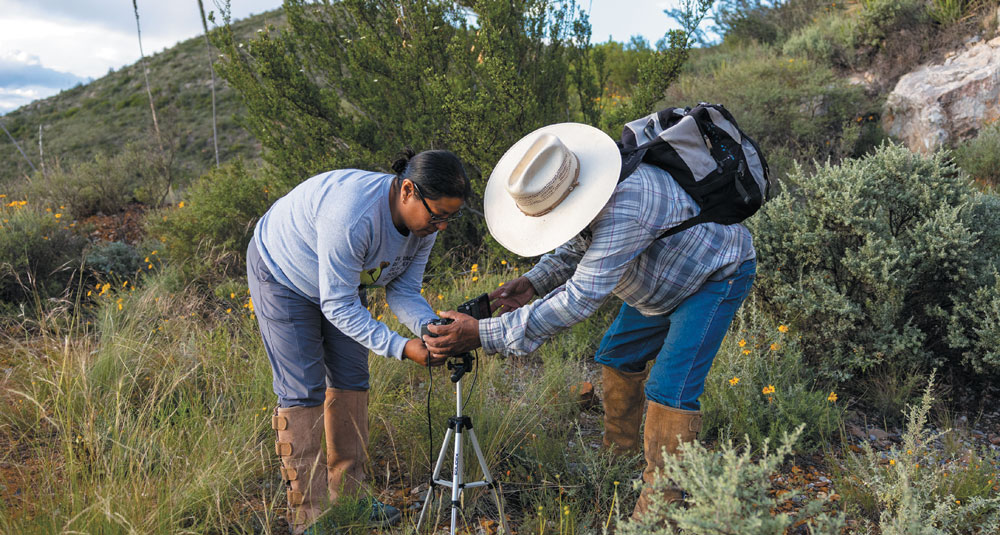
Two people working with a tripod in a grassy mountainous area with shrubs and wildflowers.
A community monitoring crew member and CONANP staff setting up infrared cameras to monitor a Mexican long-nosed bat (Leptonycteris nivalis) roost in Sierra La Mojonera, Mexico.
Photo: Sofia Navarrete Zur
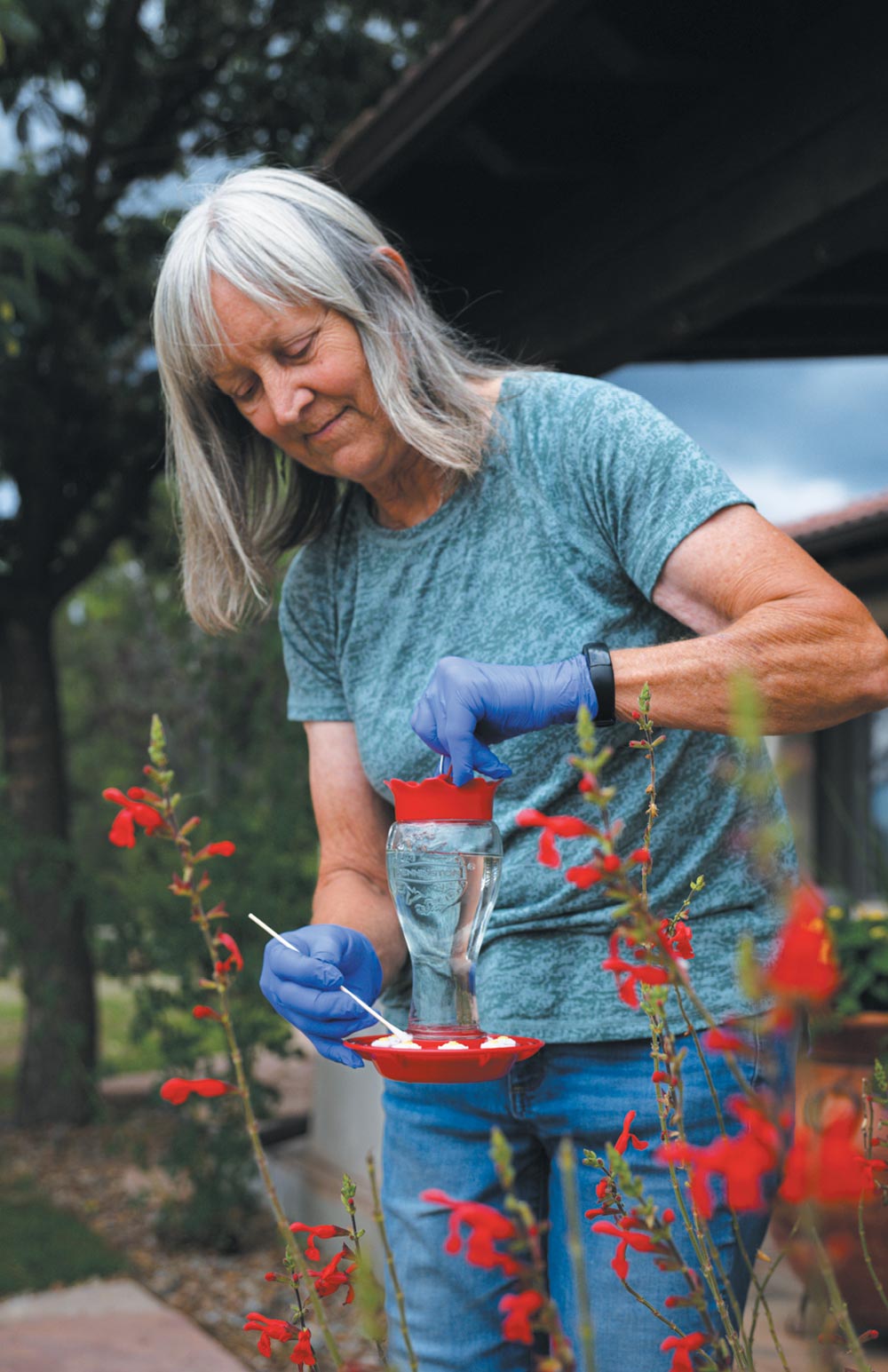
Person with gray hair handling an inverted hummingbird feeder among red flowers.
A member of the Gila Native Plant Society swabbing a hummingbird feeder for nectar bat DNA.
Photo: Will Sardinsky
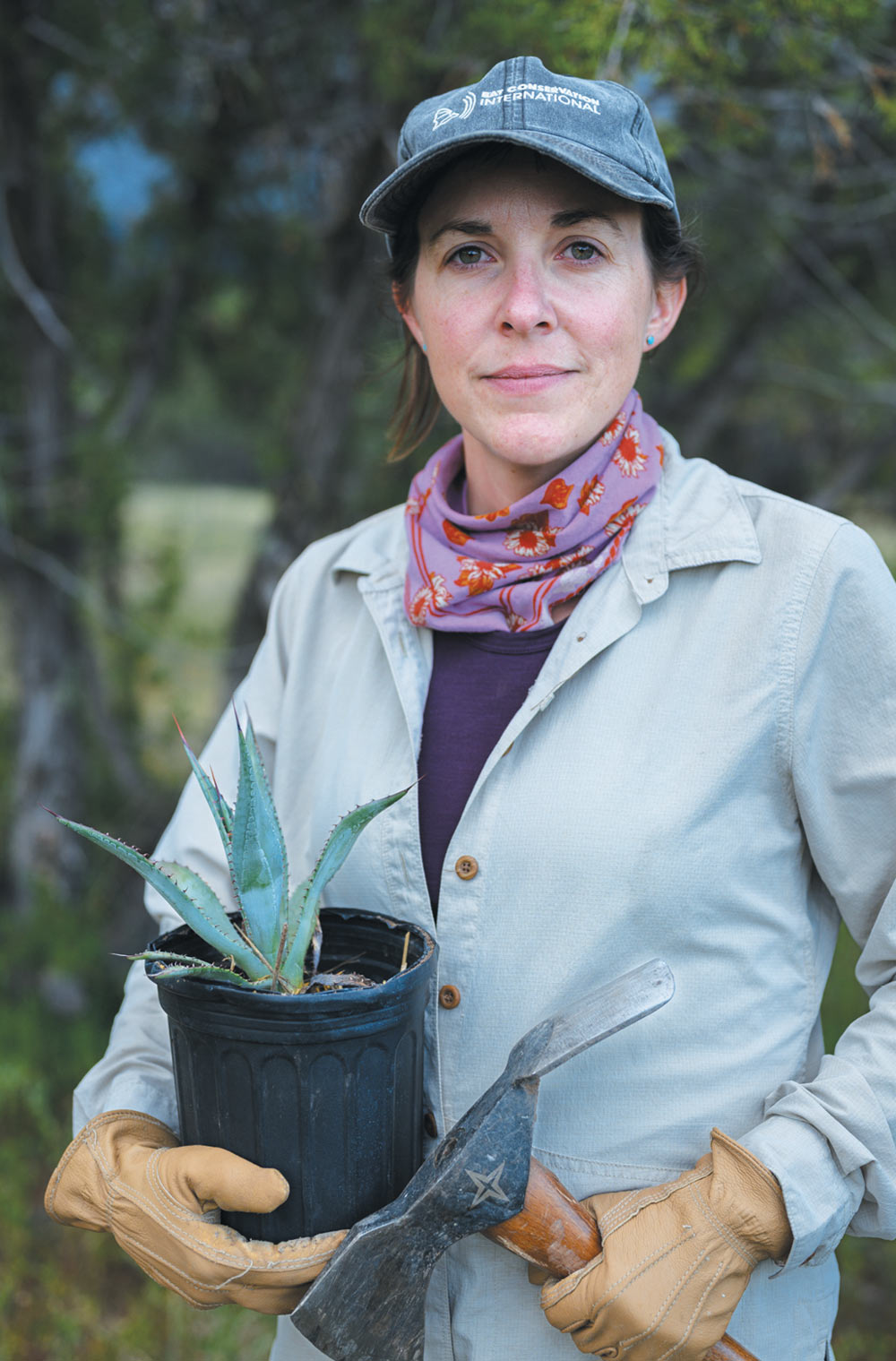
A person holding a potted agave plant and a planting tool, wearing a gray cap and light gray shirt.
BCI’s Agave Restoration Coordinator, Rachel Burke, planting agaves in Silver City, New Mexico.
Photo: Will Sardinsky

bat signals

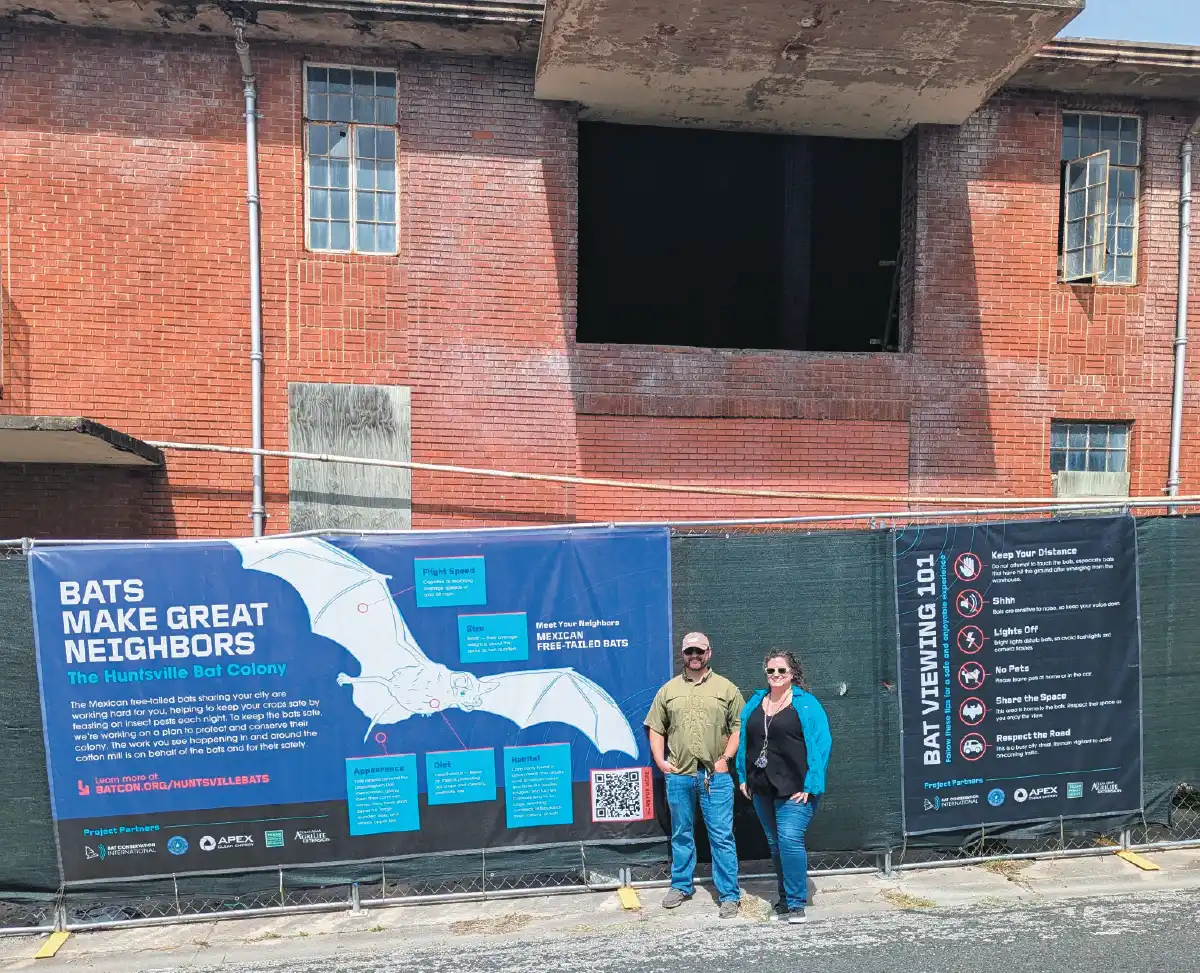
Two conservationists standing in front of an educational "Bats Make Great Neighbors" banner at the Huntsville Bat Colony site
Educational banners at the warehouse showcase the work to protect the Huntsville bat colony.
Photo: Amanda M. Adams, Ph.D.

Home Renovation for Bats

Partnership to protect a million-bat maternity colony in a Texas warehouse
In Huntsville, Texas, a warehouse built in 1937 and owned by the Texas Department of Criminal Justice (TDCJ), is now home to approximately 1 million Mexican free-tailed bats (Tadarida brasiliensis). TDCJ’s concerns about the structure’s stability, as well as security and public health, led to initial plans to exclude bats and tear down the building. However, conservationists wanted to ensure the bats’ protection, so a collaborative effort was born to devise a long-term plan and to renovate and stabilize the structure for bats in the short term.

In 2022, TDCJ, BCI, and Texas Parks and Wildlife Department secured financial support from Apex Clean Energy to collect data on the roosting area within the building, engage with the public about the project, and install a protective roof on the warehouse, which was installed in 2024. New signage at the warehouse was added in May 2025, and an annual workshop keeps the community informed about their resident bats and the project’s status. The new warehouse roof provides waterproofing and stability to the structure, ensuring a safe and stable environment for the bats as conservation partners continue to plan for future efforts to relocate the colony.

Species Study
There are 1,500+ species of bats in the world. This is one of them.

Tomes’s Sword-Nosed Bat

Working to protect a Honduran cave and its maternity colony
By Annika Hipple
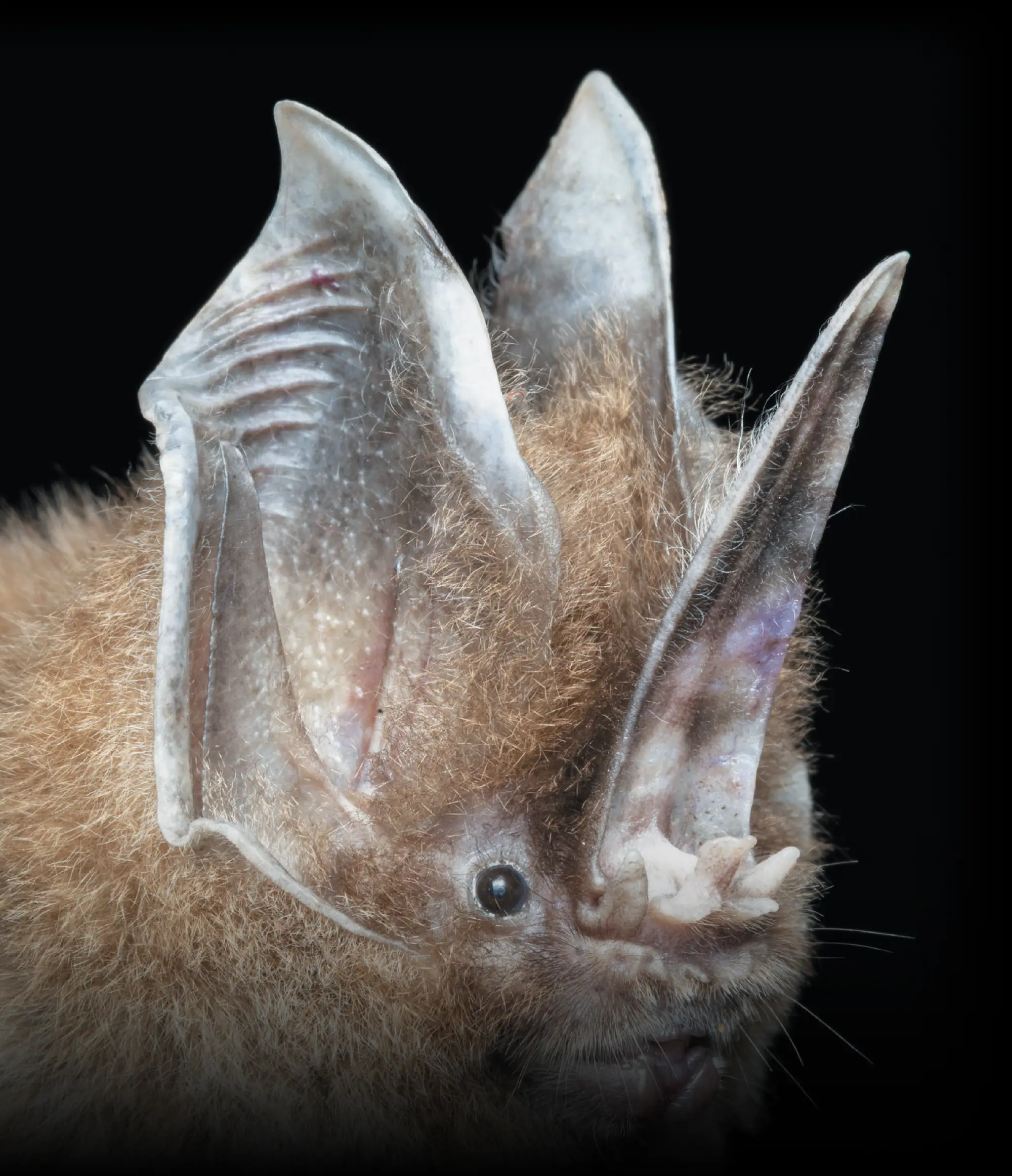
Extreme close-up of a Tomes’s sword-nosed bat. It features brown fur, large pointed ears with internal ridges, a small dark eye, and a distinct, upright fleshy nose leaf.
bat stats
Bat icon
Binomial

Lonchorhina aurita
Two bats icon
Family

Phyllostomidae
Bat Globe icon
Colony Size

10–500 individuals
Scale icon
Weight

10–22 grams
Bug icon
Diet

Insectivorous (and very occasionally fruits)
Exclamation Point icon
Status

Least concern
Region

Central and South America
A high-contrast graphic map showing the silhouette of South America and Central America in black against a bright yellow background, used to indicate the species' native range.
Photo: Jennifer Barros, Ph.D.
O

n the small Caribbean island of Utila, off the coast of Honduras, lies a bat cave of such significance that BCI took a rare step: buying the land it sits on to ensure its protection in perpetuity.

Brandon Hill Cave is a refuge for approximately 6,000 bats representing at least six of Utila’s 13 known bat species, including a small population of the Tomes’s sword-nosed bat (Lonchorhina aurita), also known as the common sword-nosed bat. Brandon Hill Cave is the only known reproductive site for this species in Honduras. Five additional species are also known to roost in the area surrounding the caves, which the Latin American and Caribbean Network for the Conservation of Bats (RELCOM) officially designated a Site of Importance for the Conservation of Bats (SICOM) in 2022.

bat in flight iconFeature: Wind Turbines

Making the Sky Safer for Bats

Making the Sky Safer for Bats typography; A hoary bat in flight against a white background with wings extended. It has thick, frosted-looking fur on its head and shoulders, a yellow-orange face, and dark, veined wing membranes.
Each year, many hoary bats are killed in collisions with wind turbines. | Growing demand for electricity is leading to a global expansion of wind energy development.
Photos: Josh Hydeman | Brian Anschel
How a new understanding of bat migration can reduce wind turbine fatalities
By Lindsay Lee Wallace

W

hen BCI Research Scientist CJ Campbell, Ph.D., first set out to study bat migration during her graduate program, she thought she knew what she’d find. After all, you don’t have to be a scientist to understand the basics of typical seasonal migration: as temperatures drop, people and animals alike tend to head toward warmer climates.

But a paper that Campbell and colleagues recently published suggests that winter migration is far more complicated for certain bat species. They found that two of the three bat species most affected by wind turbine collisions—the hoary bat (Lasiurus cinereus) and Eastern red bat (Lasiurus borealis)—don’t follow this typical pattern.

leaf iconFeature: The Bat Kit of Peru
Educational initiative informs and inspires children and adults
By Annika Hipple

The Bat Kit of Peru

The Bat Kit of Peru
Yunkawasi and the Ministry of the Environment present the Bat Kit of Peru.
Photo: ©Gerson Ferrer-Yunkawasi
The Bat Kit of Peru
Yunkawasi and the Ministry of the Environment present the Bat Kit of Peru.
Photo: ©Gerson Ferrer-Yunkawasi
Educational initiative informs and inspires children and adults
By Annika Hipple

“B

ats in the air, fewer pests on the ground.”
“Bats: nocturnal allies.”
“Discover the power of bat friends.”
“Bats are not what you think!”

These are messages that BCI and Peruvian partners are spreading to children and adults alike, through an innovative new curriculum that is already changing attitudes towards bats and improving how people see them and the important ecosystem services they provide.

Field notes Research news from around the globe
BCI staff collecting eDNA samples from a blooming agave in New Mexico.
Photo: Skylar Sherbrooke

Significant Range Expansion Confirmed for Endangered Bat

Community science is key to new detections of Endangered Mexican long-nosed bat
By Fiona Tapp
B

CI and partners recently used environmental DNA (eDNA) to confirm a significant range expansion for the Endangered Mexican long-nosed bat (Leptonycteris nivalis). The species was definitively detected in Arizona for the first time and in areas beyond its previously known range in New Mexico. These discoveries provide researchers with information about the bats’ migratory patterns, as well as other vital information that can help guide critical conservation actions for the species.

A less disruptive way to study bats

These discoveries were made by collecting eDNA, which is the traces of genetic material left behind from bats’ saliva as they feed. Surveys using eDNA do not require catching or disturbing the bats, which is especially useful with Endangered and sensitive species like the Mexican long-nosed bat.
field notes
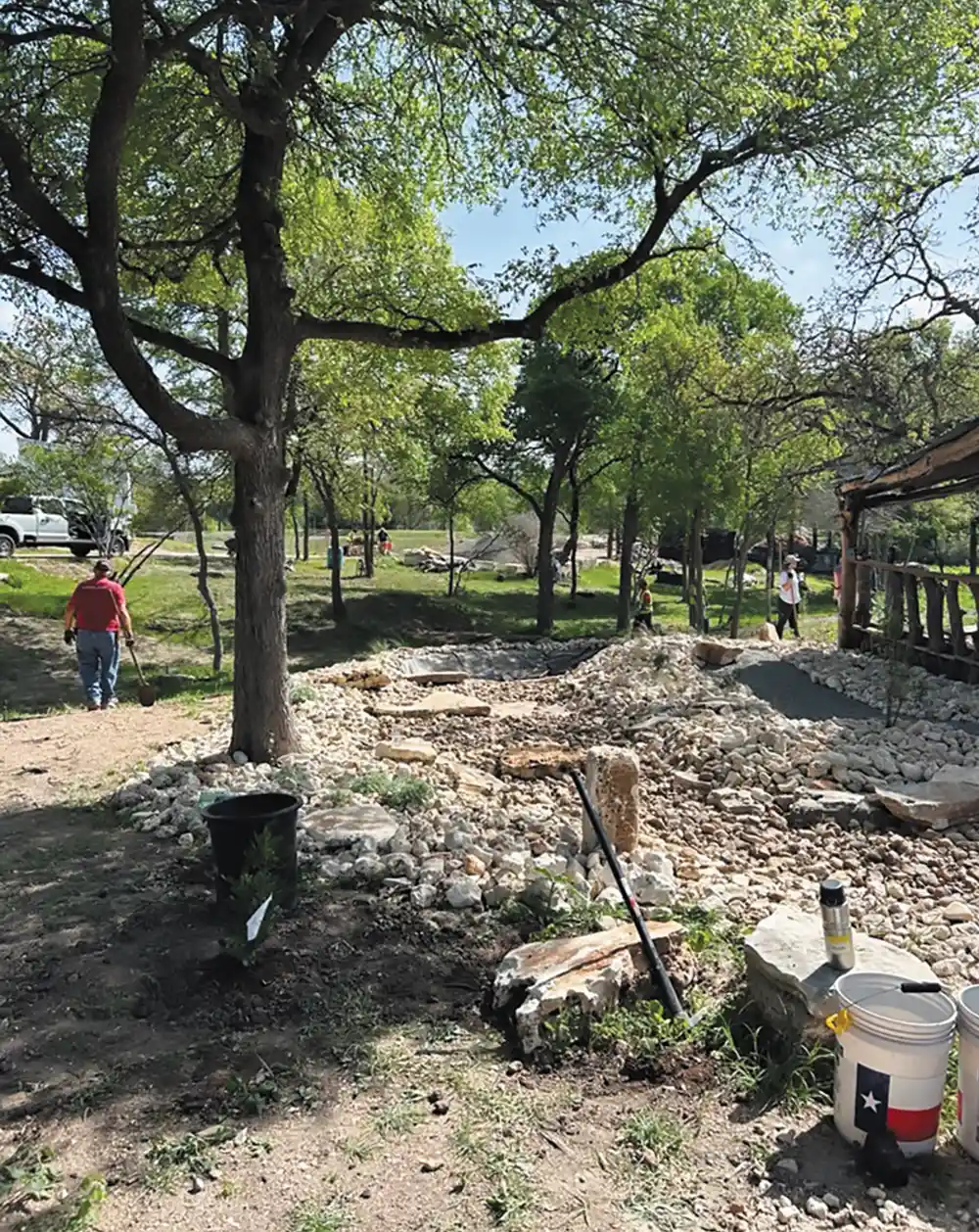
A landscaping crew working on a habitat restoration project, featuring a newly constructed rock garden and drainage area under a canopy of oak trees on a sunny day
Community First! Village Tree Planting
Photo: Katia Grenaille

Growing CommuniTrees

Partnering with neighbors and nonprofits to plant trees for bats
By Lindsay Lee Wallace
On a sunny spring day, a group gathered in Austin, Texas, to beautify a community, restore land impacted by severe weather, support a healthy bat population, and for some, earn a day’s wages—all by planting trees. The group was made up of local corporate and nonprofit volunteers, including members of BCI, TreeFolks, Mobile Loaves & Fishes, and neighbors living in Community First! Village where the trees were planted. The trees (as well as a few shrubs) were native species selected to support the insect populations eaten by local bats and provide roosting habitat.

Created by Mobile Loaves & Fishes, Community First! Village is a planned neighborhood that provides affordable, permanent housing and a supportive community for people who are coming out of chronic homelessness. After starting out small, the Village has grown to 170 acres, and it just celebrated its 10-year anniversary. It hopes to house about 1,900 people over the next eight to 10 years.

field notes
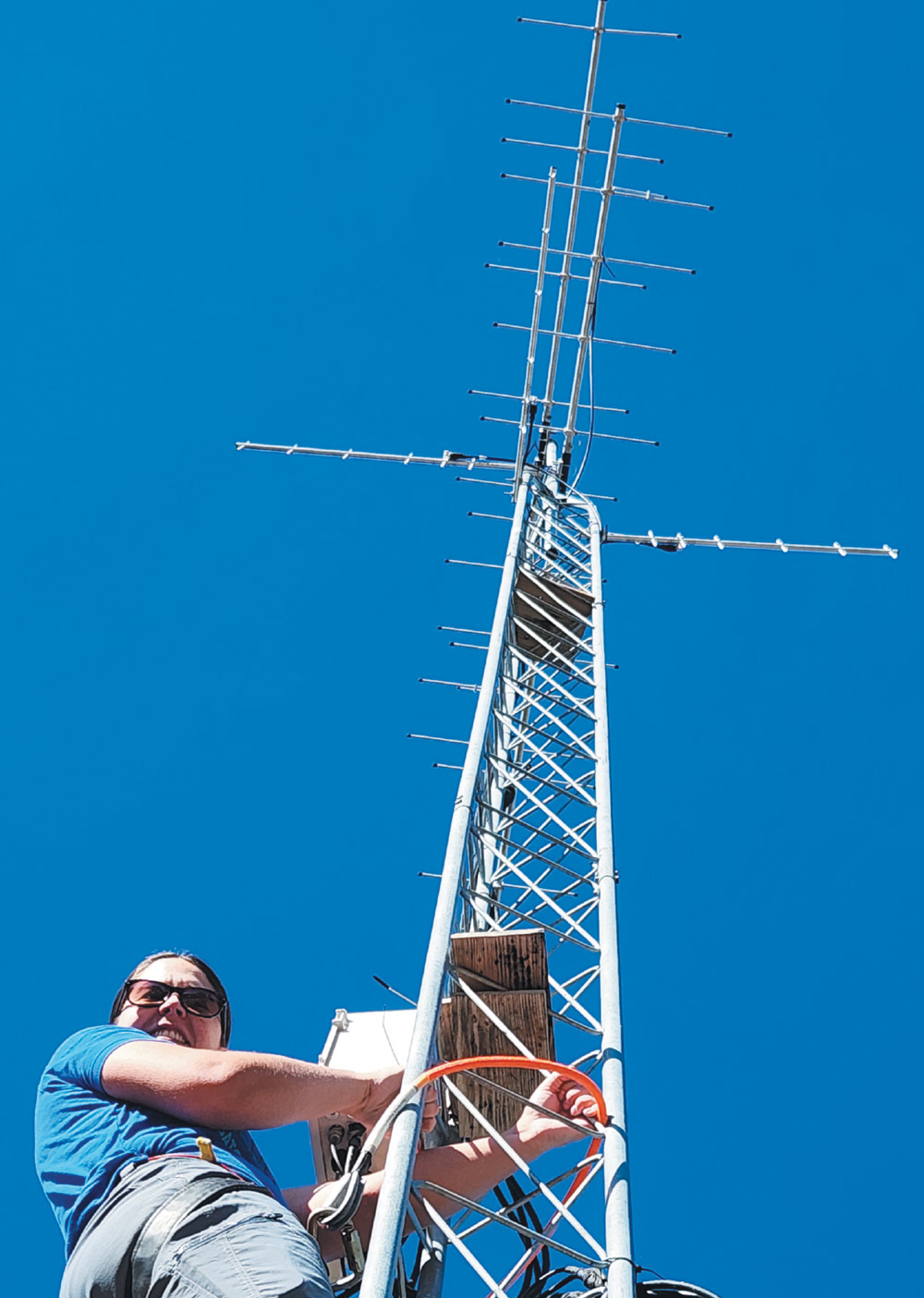
A person wearing sunglasses and climbing gear works on a tall, silver lattice telemetry tower. The metal tower is topped with multiple antenna arrays against a clear, bright blue sky.
Photo: Fran Hutchins

From Birds to Bats

Tracking bats via Motus towers across North America
By Stefanie Waldek
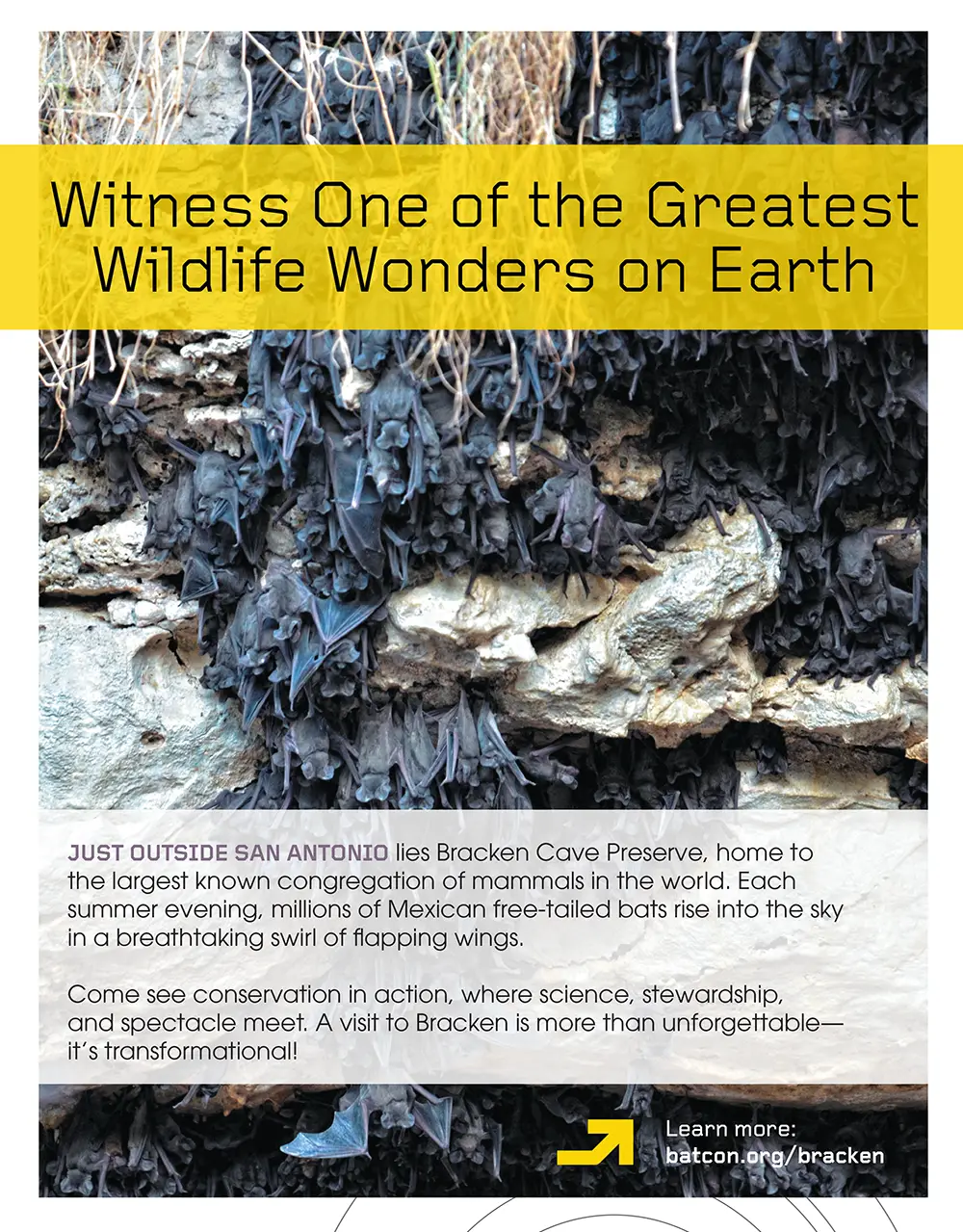
Every summer evening at BCI’s Bracken Cave Preserve near San Antonio, the sky churns with life. Millions of Mexican free-tailed bats (Tadarida brasiliensis) stream out of the cave in a rushing spiral at dusk to feed.

But come fall, Bracken—which is the largest known bat colony on Earth and the largest known gathering of mammals on Earth (with 20 million animals during peak season)—empties out. While scientists know that many of the bats, like birds, fly south for the winter, their precise migratory routes and winter roosting sites aren’t well known. A newly installed tower perched on the Bracken Cave Preserve landscape might contribute to solving the mystery.

field notes
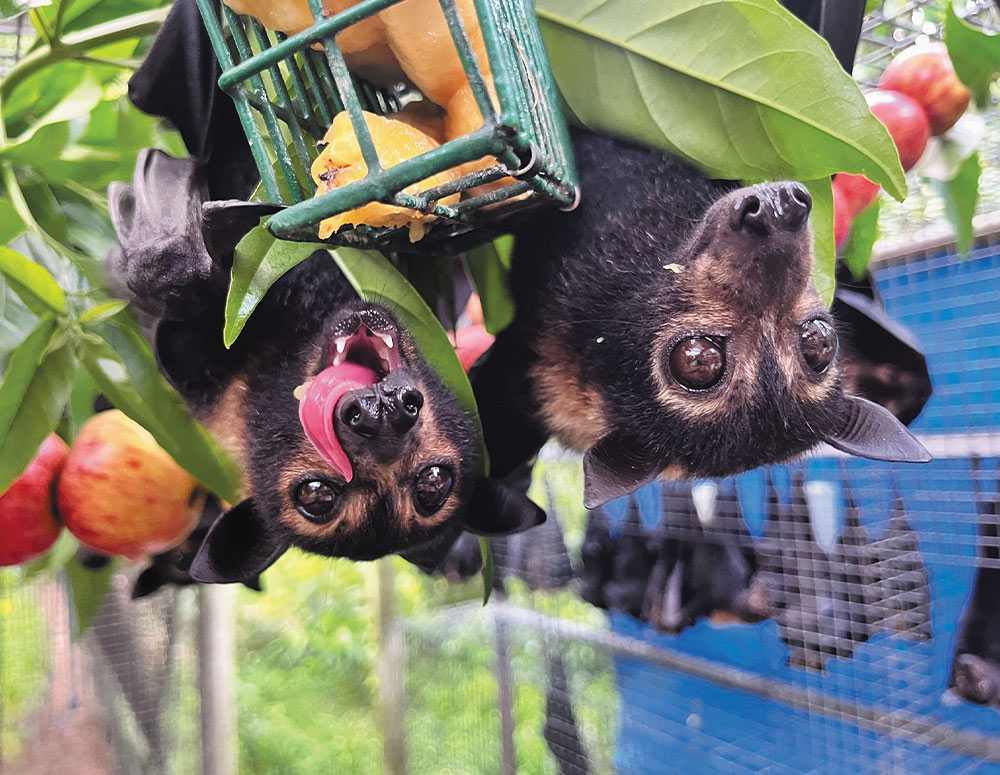
Two young spectacled flying foxes hang upside down while eating fruit from a green wire feeder. One bat has its pink tongue extended. They are surrounded by green leaves and red fruit in an outdoor enclosure with a blue mesh background.
Dinner time for two young spectacled flying foxes (Pteropus conspicillatus).
Photo: Vivvy Hsieh

Tolga Bat Hospital

Take a peek inside one of the longest-running bat rescue and rehabilitation centers in the world
By Stefanie Waldek

Australia is famous for its wildlife, from kangaroos to koalas to kookaburras. But perhaps the country should have another ambassador, one with expressive brown eyes, velvety wings, and a talent for pollinating the rainforest—the Endangered spectacled flying fox (Pteropus conspicillatus). In the Atherton Tablelands of Queensland, the Tolga Bat Hospital makes this case every day.

Founder Jenny Mclean wasn’t originally a wildlife expert—she was a physical therapist—but felt compelled to support Australia’s native wildlife. An article in the local newspaper called for volunteers to care for baby flying foxes orphaned when their mothers succumbed to tick paralysis, and Mclean jumped at the opportunity. Armed with simple bat care instructions printed on a single sheet of paper, Mclean took two pups under her wing. The next year, she took four pups. The year after, six.

field notes

State of India’s Bats

New report shares the wonders of India’s 135+ species and highlights conservation priorities
I

ndia’s 1.27 million square miles are home to 1.43 billion people–and are also home to 135 described species of bats, including 16 endemic species found nowhere else on Earth. Though the country has fewer than 50 bat researchers, this community, led by BCI and the Nature Conservation Foundation, teamed up to produce the first-ever State of India’s Bats (SoIBats) report, which will be released this year.

The report brings together researchers from 23 institutions to review the knowledge on India’s bats, assess threats, identify opportunities for research, and create a roadmap for bat conservation over the next decade. This is the first time this type of prioritization exercise has been conducted in India, following the North America State of the Bats Report that was released in 2023. Here are a few of India’s incredible bats.

Bat Chat A Conversation with a noted expert

Predicting Bat Bridge Roosting Sites

BCI’s Luz de Wit, Ph.D., explains new predictive tool to locate roosts
By Fiona Tapp
B

ridges across the U.S. can host massive colonies of Mexican free-tailed bats (Tadarida brasiliensis), yet monitoring these roosts is a daunting task. With thousands of bridges and limited resources, it’s impossible to survey every structure. To address this, BCI, in collaboration with Montana State University and the North American Bat Monitoring Program (NABat), developed an open-access predictive tool to identify which bridges are less likely to host bats so managers can focus their surveys on bridges that matter most. We asked BCI’s Director of One Health, Luz de Wit, Ph.D., about this tool.

Black digital custom vector minimalistic icon graphic of a book
Read the findings in Global Ecology and Conservation: doi.org/10.1016/j.gecco.2025.e03551

Why is it critical for BCI to accurately locate and monitor Mexican free-tailed bat colonies?

Monitoring helps anticipate human-bat interactions and allows managers to protect colonies and reduce stress. Mexican free-tailed bats play a key role in controlling agricultural insect pests, so protecting their roosts helps maintain this ecosystem service, which benefits farmers, influences pesticide use, and can ultimately benefit consumers.
Bat Squad For the young conservationist
Louisville Bats mascot Buddy Bat
Louisville Bats mascot Buddy Bat has been delighting crowds at Louisville Slugger Field for more than 20 years.
Photo: Cam Anderson/Louisville Bats

Going to Bat for Conservation

Animal-themed mascots can be a win for science and sports
By Jill Robbins
S

ports teams love mascots that roar, run, or soar—like lions, jaguars, raptors, and sometimes even bats. A recent article in Frontiers in Ecology and the Environment looks at how sports and wildlife can actually be teammates by using the enthusiasm teams and fans have for their emblems and mascots to boost conservation efforts. The article’s authors suggest that fans who love their team mascots might also start caring about the real animals behind them. When sports fans become conservation champions, everyone wins.

Even though bats aren’t the most common mascots, they do show up in some pretty cool places. The Austin Ice Bats, a Texas hockey team, leans into bat speak, calling themselves a colony. In Spain, the Valencia Fire Bats hit the football field in bold yellow and black uniforms with a bat logo. While “fire bats” and “ice bats” aren’t actual species, they encourage fans to appreciate and learn about bats and cheer for them.

Bats Magazine logo
Thanks for reading our latest issue!