

leaf iconFeature: The Bat Kit of Peru
Educational initiative informs and inspires children and adults
By Annika Hipple

The Bat Kit of Peru

The Bat Kit of Peru
Yunkawasi and the Ministry of the Environment present the Bat Kit of Peru.
Photo: ©Gerson Ferrer-Yunkawasi
The Bat Kit of Peru
Yunkawasi and the Ministry of the Environment present the Bat Kit of Peru.
Photo: ©Gerson Ferrer-Yunkawasi
Educational initiative informs and inspires children and adults
By Annika Hipple
“B

ats in the air, fewer pests on the ground.”
“Bats: nocturnal allies.”
“Discover the power of bat friends.”
“Bats are not what you think!”

These are messages that BCI and Peruvian partners are spreading to children and adults alike, through an innovative new curriculum that is already changing attitudes towards bats and improving how people see them and the important ecosystem services they provide.

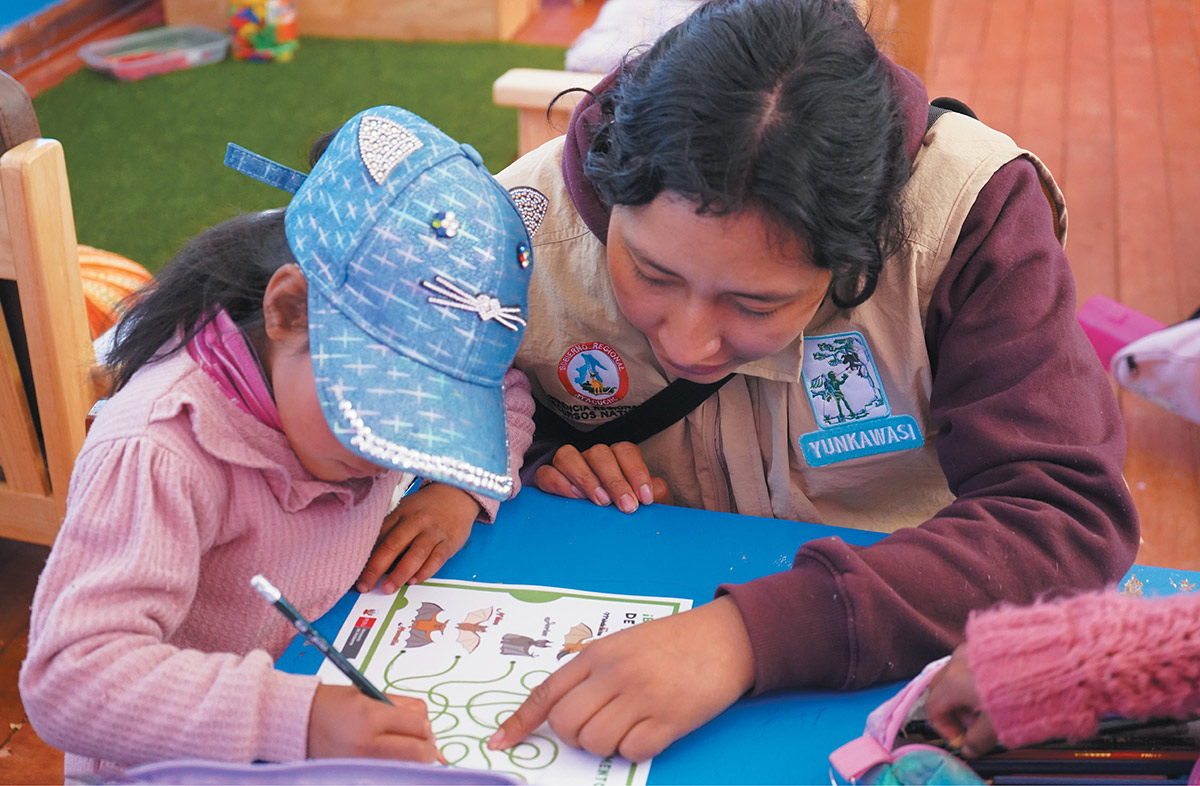
female Yunkawasi team member helping child with workshop
The Yunkawasi team leads a Bat Kit of Peru implementation workshop for students, young people, and adults.
Photo: ©Renee Vilchez – Yunkawasi
We’ve addressed the diversity of bats in Peru and the diverse roles they play. The kit’s main objective is to reduce the negative perception people have of bats.
—Michela Olaya
digital illustration of branch with leaves
Called the “Bat Kit of Peru,” this educational endeavor is now integrated into Peru’s national environmental education program. It consists of resources that anyone can download for free directly from the Peruvian Ministry of the Environment’s website via Google Drive.

The collaborative effort was developed by the Peruvian nongovernmental conservation organization Yunkawasi, with support from BCI and in collaboration with the Ministry. The Ministry’s website states: “This campaign’s goal is for all Peruvians to stop being afraid of bats and start seeing them as what they really are: allies! With this new educational kit, you will learn why these incredible animals are important for the health of forests, agriculture, and our own lives.”

Bringing awareness through accessible resources

Michela Olaya, Project Coordinator for Yunkawasi, describes the kit as a “digital briefcase” that contains materials aimed at various age groups, from young children to adults.

“The main appeal of this kit is its accessibility and the fact that it can be implemented in municipalities throughout Peru,” Olaya says. The kit includes everything from posters, signs, games, and puzzles to coloring books, flip charts, postcards, infographics, PowerPoint presentations, stickers, and other materials that can be printed or used in any way educators see fit.

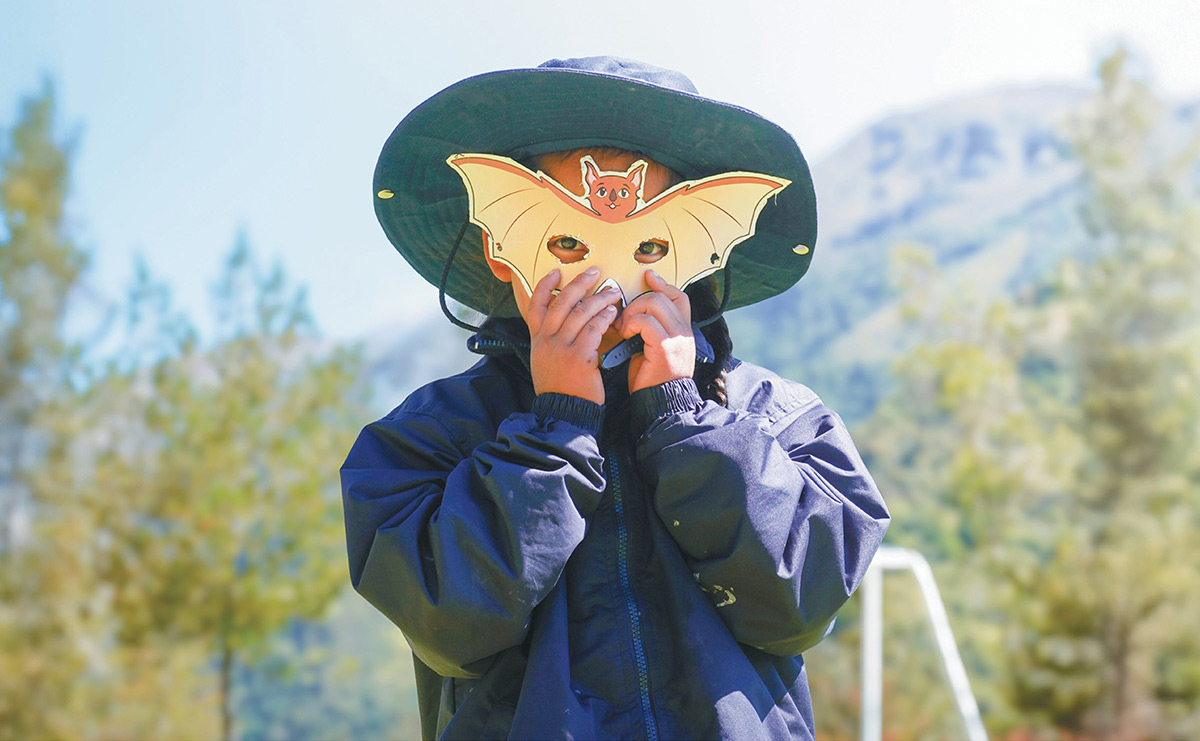
girl holding mask from the Bat Kit of Peru up to her face
High in the Central Andes of Peru, a girl plays with a mask from the Bat Kit of Peru. It is a symbolic moment that shows how environmental education can awaken love for a fauna too often misunderstood.
Photo: ©Archivo Yunkawasi
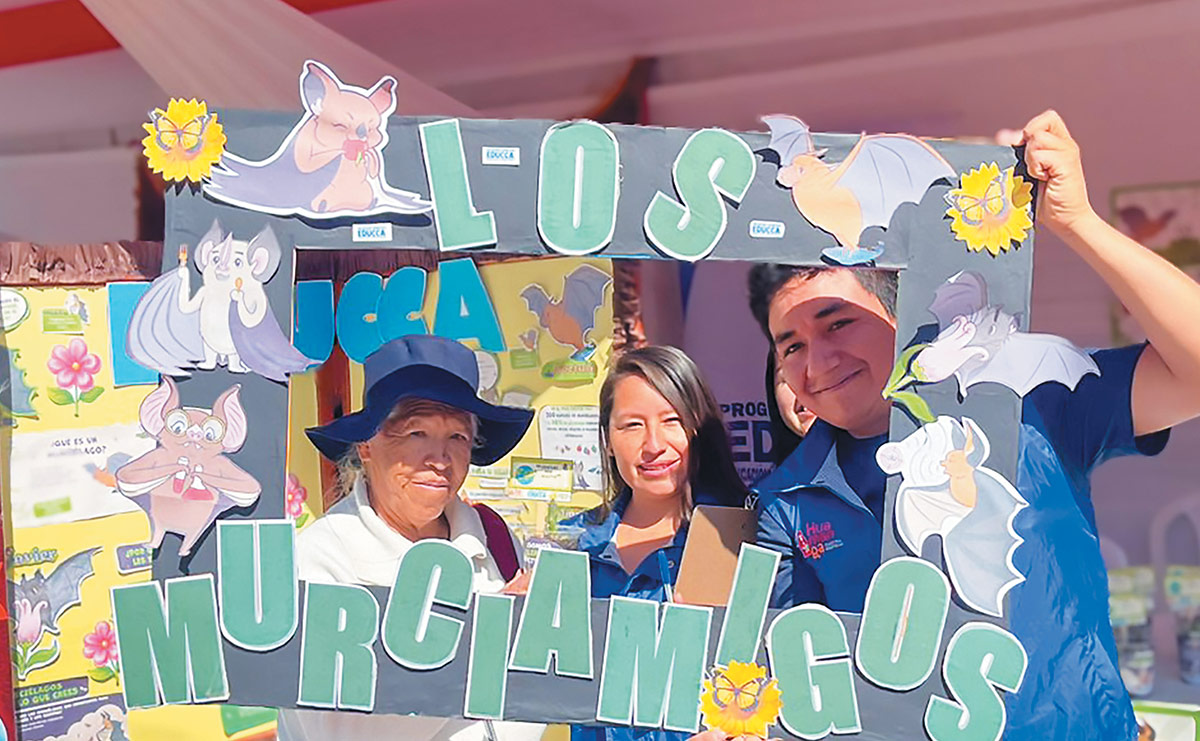
community members from Peru’s Central Andes holding up sign from the Bat Kit of Peru event
Implementing the Bat Kit of Peru with Quechua communities in Peru’s Central Andes.
Photo: ©MPHuamanga
“We’ve addressed the diversity of bats in Peru and the diverse roles they play,” Olaya says. “We’ve also strategically used characters to represent their different roles as seed dispersers and pollinators, so that the message reaches all audiences. The kit’s main objective is to reduce the negative perception people have of bats.”

Another goal of the Bat Kit of Peru is to encourage Peruvians to become more aware of their country’s incredible bat diversity. According to Milagros Tazza of the Ministry of the Environment’s Directorate of Education and Environmental Citizenship, there is a widespread misconception that all bats are the same species, when in reality, Peru is home to almost 200 different species.

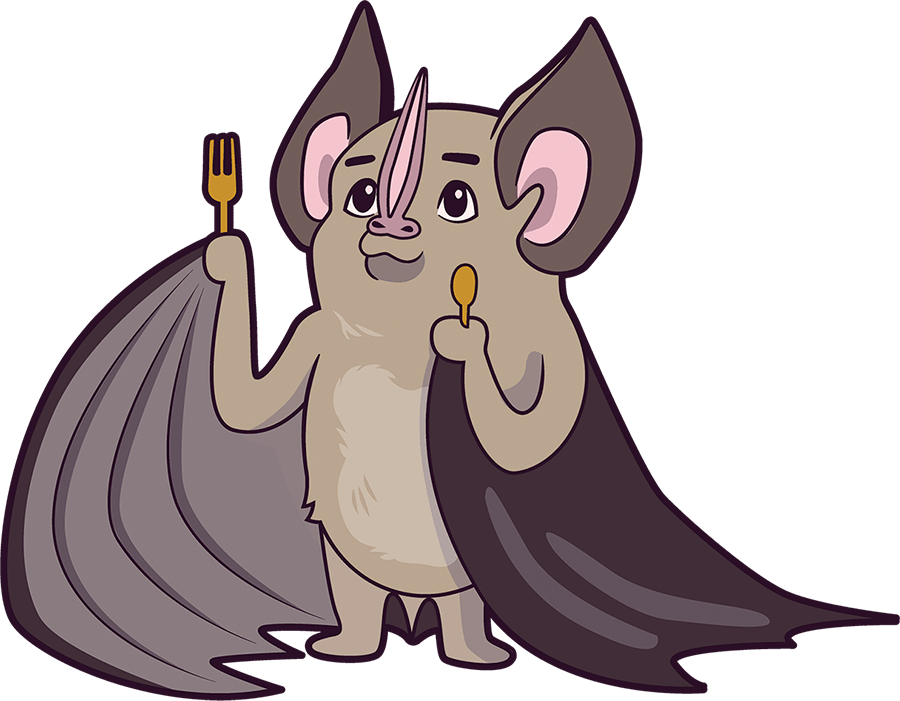
digitally drawn bat holding a fork and spoon

Inside the Bat Kit of Peru

The Bat Kit of Peru lives on a Google Drive on the Peruvian Ministry of Environment’s website, where it is available for anyone to download, adapt, and brand with their own logos. All the information it contains has been verified by Peruvian bat expert Paúl Velazco from Arcadia University and the American Museum of Natural History.

The kit includes:

  • Workshop plans for teaching adults about the role of bats in pollinating food crops.
  • Slides and talking points for presentations.
  • Prewritten text for social media posts about the importance of bat conservation.
  • Posters, postcards, stickers, and simple presentations featuring cute cartoon bats and themes such as “Bats: Nocturnal allies?” and “More bats, fewer pests.”
  • Bat-themed games and puzzles for children, including printable jigsaw puzzles and word searches.
  • Coloring books with cartoons of different bat species with messages such as: “This bat eats many insects every night. In this way it helps plants and farmers. Bats are our friends!”

Reducing the cost of outreach

Community outreach is critical to conservation, but it’s typically costly, time-consuming, and limited in scope, according to Melquisedec Gamba-Rios, Ph.D., BCI’s Regional Director for Latin America and the Caribbean. The idea behind the Bat Kit of Peru is to make outreach more cost-effective and have an impact on a greater number of people. The goal is to reach about 200,000 people in the program’s first year.

During the Bat Kit of Peru’s pilot program, Yunkawasi worked with five municipalities in the Ayacucho region of south-central Peru to introduce the kit into local schools. To do this, they utilized the Ministry of the Environment’s established municipal education framework, which promotes environmental awareness and stewardship on multiple levels.

Partnering with Yunkawasi has given the Ministry new educational tools that will be incorporated into Peru’s National Biodiversity Strategy for 2050.
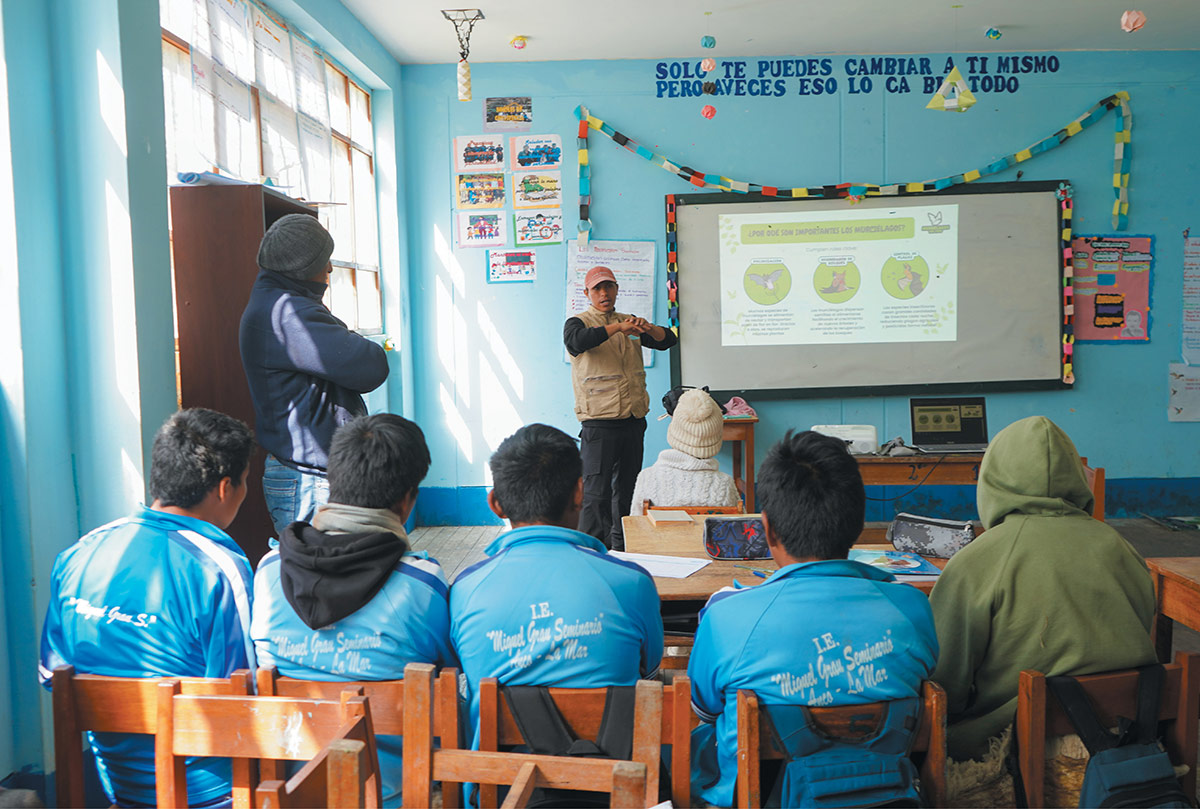
Ayacucho youth in classroom during lesson
Ayacucho youth learning why bats are vital allies for ecosystems and agriculture during a Bat Kit of Peru session.
Photo: ©Renee Vilchez
“We are a megadiverse country,” Tazza says. “Failing to address biodiversity from an educational perspective would be a huge gap. Thanks to BCI and Yunkawasi, we have been able to establish a way to develop a municipal educational program with biodiversity components.”

Engaging people of all ages

Yunkawasi developed the Bat Kit of Peru materials to be easy to print and distribute. “In some cases, municipalities don’t have many financial resources, but these materials have been designed to be printed with a computer and a basic printer,” Olaya says.
bat silhouette
Peru is home to almost 200 different bat species.
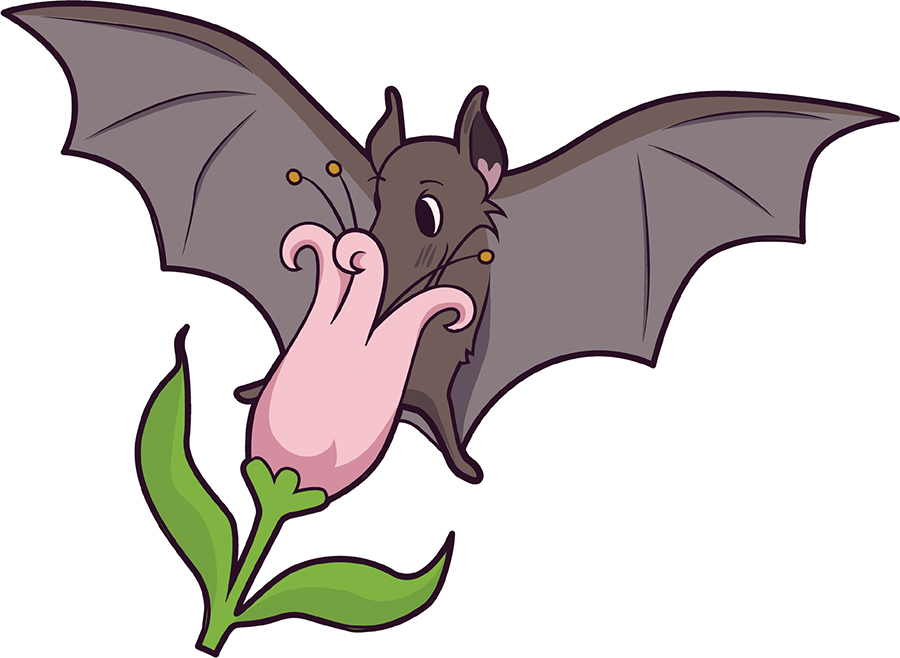
digital illustration of a bat with its face to a pink flower
Yunkawasi is also working to develop more activities for the future. “We’ve even proposed workshops where they’re actively creating things; for example, making a dish using local products that could have been grown thanks to the bats,” Olaya says.

In addition to schools, Yunkawasi is working with local municipalities on programs designed to correct misinformation about bats and make adult audiences aware of the ecosystem benefits they provide, such as keeping crops healthy through pollination and pest control.

The curriculum can significantly help us shape current and future generations, and it’s a tool they can continue to use in the long term.
—Melquisedec Gamba-Rios, Ph.D.
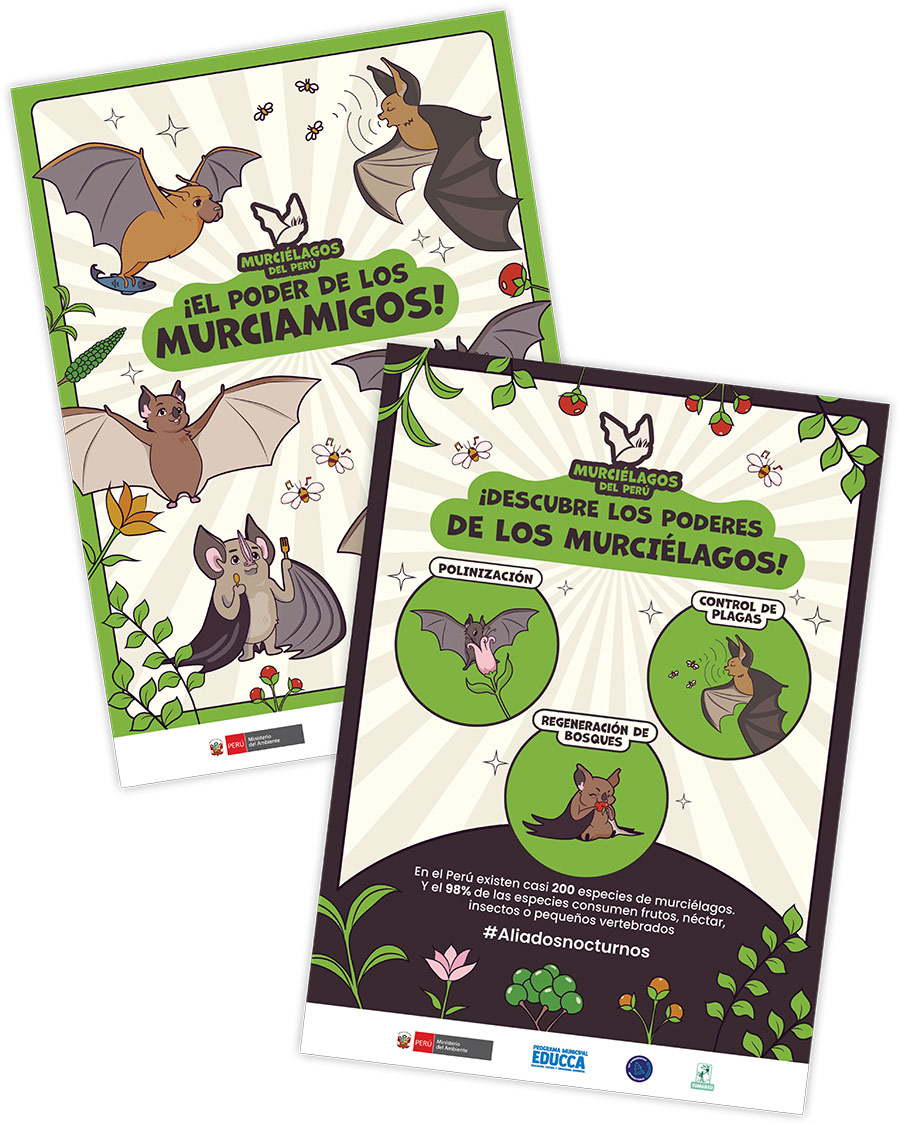
posters from the Bat Kit of Peru
Posters from the Bat Kit of Peru have illustrations showing the different roles that bats play in the environment.
“We developed graphic materials to share on social media, reinforcing that message: ‘They are allies for your crops. They help reduce the use of pesticides for pest control,’” Olaya says. That message has resonated with local communities. “Some people even ask a lot more questions; it really sparks their curiosity,” Olaya adds.

Thanks to its versatility, the Bat Kit of Peru has become a valuable tool for educating Peruvians of all ages, leading to a new appreciation for bats and their roles in pollination, pest control, and ecosystem health.

Even some municipal staff members, tasked with educating others, started out with a negative view of bats. “Sometimes we found that they would say, ‘No, they’re ugly, they cause diseases, they scare me.’ These were the same people who were going to be doing the environmental education,” Olaya says. “It was wonderful to see the change and the value they were able to grasp simply through explanations, by showing them numbers about how many bat species pollinate and helping them realize that they had never stopped to think about what bats do at night.”

Expanding to other countries

Based on the strong interest the Bat Kit of Peru has garnered in schools and communities in the pilot region, both Yunkawasi and the Ministry of the Environment look forward to expanding the program to other parts of Peru.

“We already have the educational resource. Now, we need to look at what other places need strengthening in this area,” Tazza says. “We’ll address it territorially, coordinating with Yunkawasi to see which municipalities could adopt it and implement it.” Some municipalities have already begun using the Bat Kit of Peru on their own.

Overall, Gamba-Rios says the Bat Kit of Peru curriculum “can significantly help us shape current and future generations, and it’s a tool they can continue to use in the long term. I think it’s an excellent strategy to maximize resources and have a large, broader impact, and we hope it’s a strategy we can start implementing in other countries.”

BCI looks forward to replicating the success of the Bat Kit of Peru program beyond Peru and is considering Colombia as a potential opportunity for a similar initiative.

bat silhouette
The goal for the Bat Kit of Peru is to reach about 200,000 people in the program’s first year.