

bat signals

Share Your Space with Bats

Revamped web pages provide tips and tricks
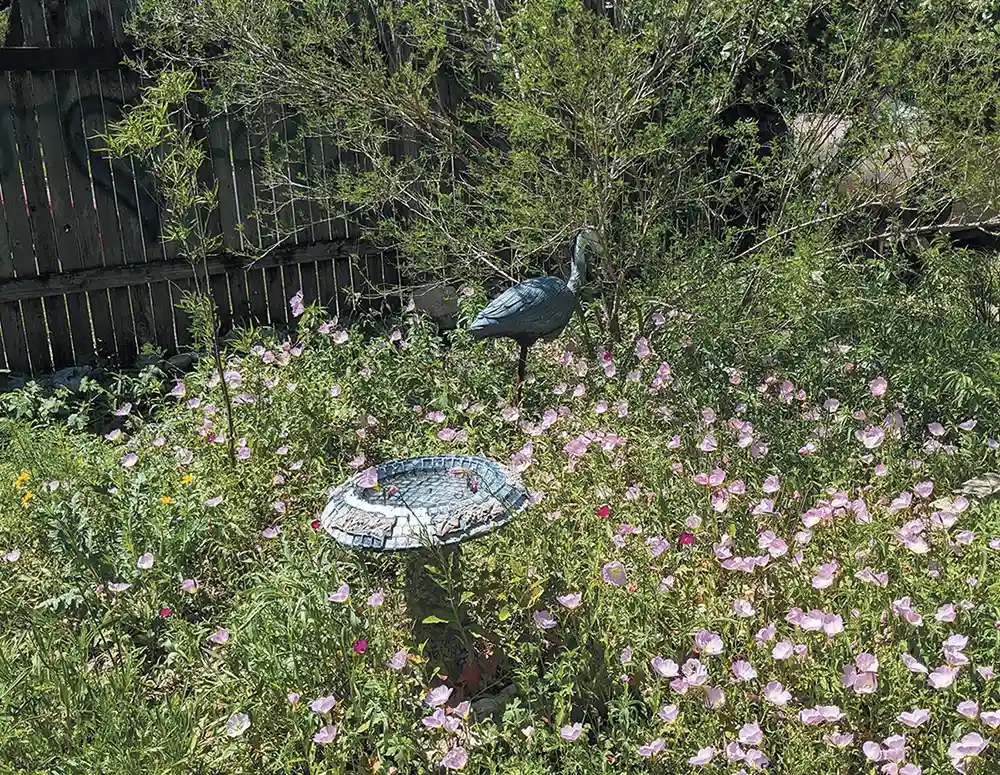
A stone birdbath stands surrounded by a patch of light pink wildflowers. In the background, a blue heron statue is nestled among green bushes in front of a weathered wooden fence.
Bat gardens attract bugs that bats love to eat.
Photo: Erin Cord
Learn how to make your backyard a bat paradise by exploring BCI’s content on bat gardens and bat houses.

Check out these pages for tips on fine-tuning your garden for bats, like planting native vegetation, adding roosting habitat, and incorporating vegetation that draws in a variety of insects to create a bat smorgasbord. The Bat Gardens page also features bat-enticing plant lists for a number of regions, including parts of California, Colorado, Kentucky, Oregon, and Texas.

It can be a challenge to get bat houses right, so BCI recently updated the Bat Houses page to include detailed information on construction, placement, and maintenance, as well as tips on safety principles to protect bats from dangers like overheating, predators, and other hazards. The page also explores bat houses around the world, from Australia to China to Ghana.

Check out the newly revamped sections of BCI’s website at batcon.org/gardening and batcon.org/bathouse

Reducing Bat Fatalities at Wind Energy Facilities

BCI scientists publish paper highlighting decision framework to reduce fatalities

Several large, white wind turbines stand across a dry, golden grassy hill under a clear blue sky.
Research that informs mitigation practices helps reduce bat fatalities at wind farms.
Photo: Ed Arnett
Globally, millions of bats are killed by wind turbines each year. BCI and partners are working to make this form of green energy more sustainable by decreasing its impact on biodiversity.

A team led by BCI’s Chief Scientist Winifred Frick, Ph.D., recently published a paper in the journal Ecological Solutions and Evidence that presented a decision framework to reduce bat fatalities at wind facilities. A key outcome of this research is the ability to calculate how many bats can be killed without threatening the population at each wind project, even when there is uncertainty about local bat populations. This framework can be used to plan for bat-compatible turbine operations and set regulatory guidelines.

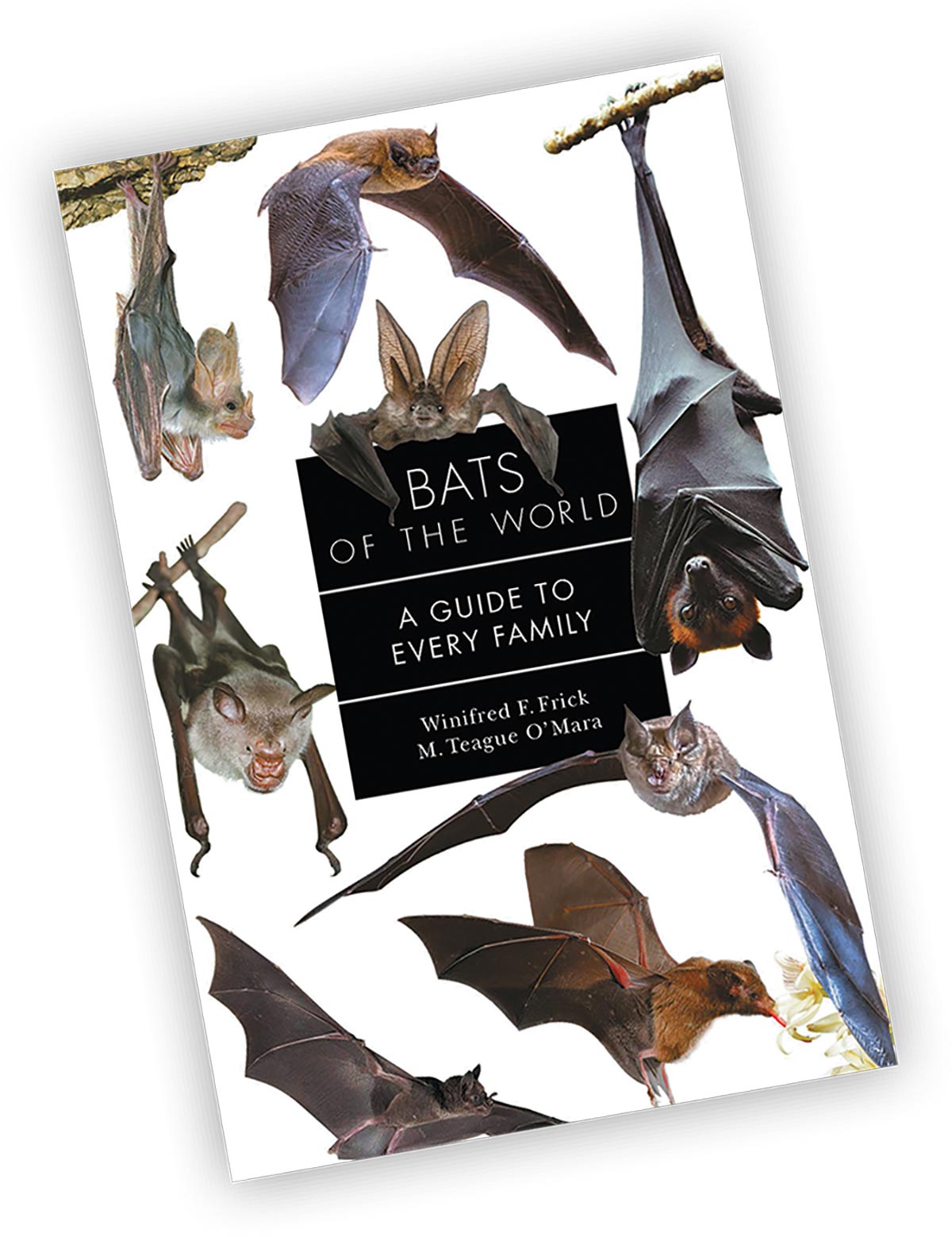
Bats of the World: A Guide to Every Family

BCI scientists release new book
Book cover for "Bats of the World: A Guide to Every Family" by Winifred F. Frick and M. Teague O'Mara, featuring illustrations of various bat species around a central black title block.
BCI’s Chief Scientist Winifred Frick, Ph.D., and Director of Conservation Evidence Teague O’Mara, Ph.D., have teamed up to create an illustrated guide to bats. Bats of the World: A Guide to Every Family describes all 21 recognized families of bats around the world and features profiles of selected species, from carnivores to nectar feeders, as well as the conservation threats each species faces. The guide, published by Princeton University Press, includes photos, infographics, and more for species ranging from the tiny, 2-gram bumblebee bat (Craseonycteris thonglongyai) to the giant 2-pound golden-crowned flying fox (Acerodon jubatus).

Remembering a Conservation Legend

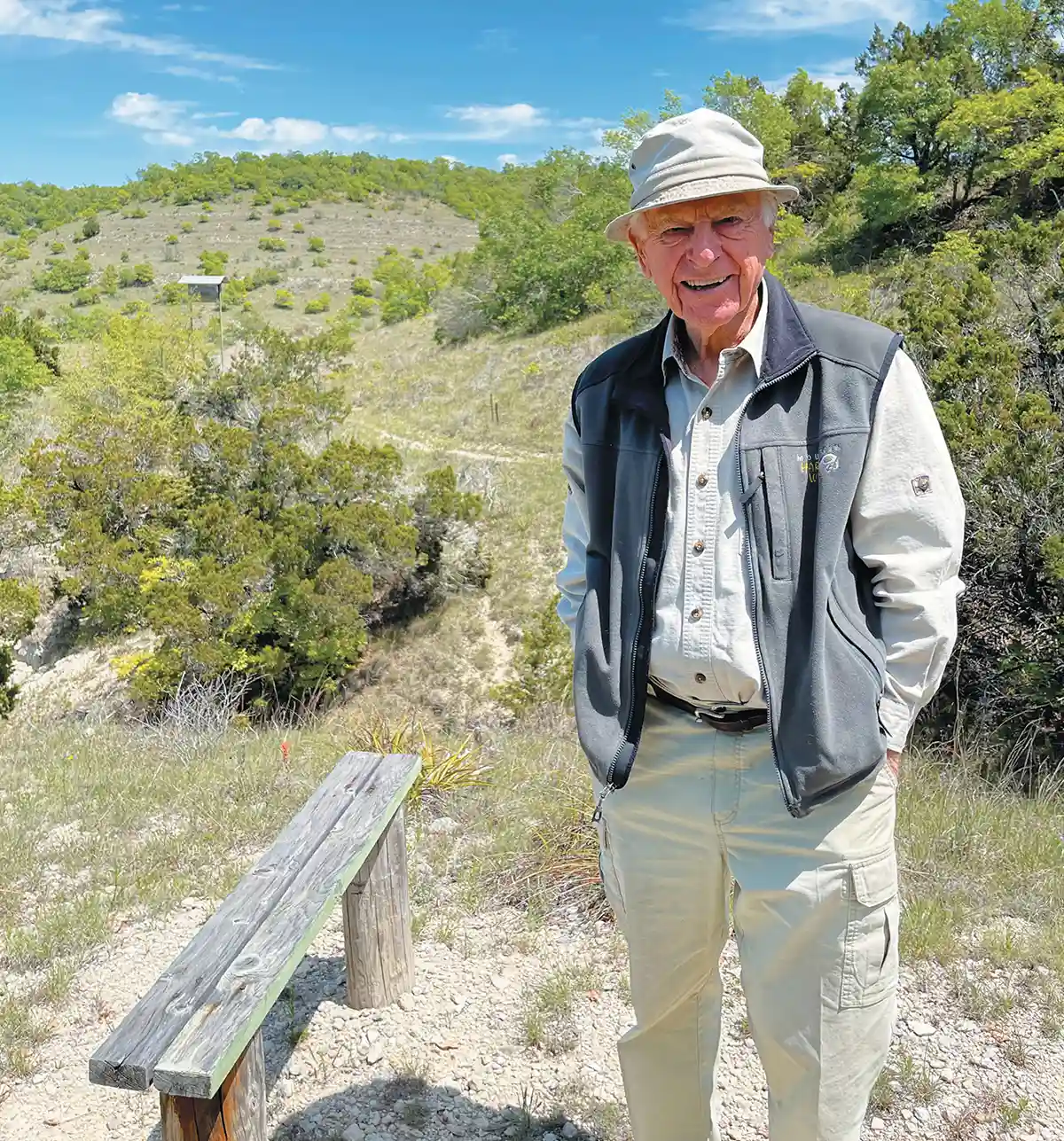
In memory of J. David Bamberger
A smiling elderly man wearing a bucket hat and grey vest stands next to a rustic wooden bench on a sunny hillside trail.
J. David Bamberger.
Photo: April Sansom
In January 2026, conservation legend J. David Bamberger passed away at the age of 97. Bamberger served on BCI’s Board of Directors and was instrumental in securing the original five acres for Bracken Cave. He worked with the family that previously owned Bracken Cave to arrange for BCI to purchase it and paid to build trails and infrastructure to make the property accessible to visitors.

Bamberger worked his way up from being a door-to-door vacuum cleaner salesman to a founder and CEO of Church’s Fried Chicken. As the company’s largest shareholder, he invested his earnings in conservation projects. Inspired by Louis Bromfield’s book Pleasant Valley, Bamberger sought out parcels of land that were in need of restoration. In 1969, he purchased 3,000 acres in Blanco County, Texas, and eventually expanded the property to encompass 5,500 acres, naming it Selah (“pause and reflect”), Bamberger Ranch Preserve. There, he spent decades restoring the land and instilling ethical land stewardship principles in visitors. He also created the Chiroptorium, an artificial bat cave that is now home to hundreds of thousands of Mexican free-tailed bats (Tadarida brasiliensis). Bamberger’s conservation legacy lives on at Selah.

Enhance Your Bat Education

Hundreds of resources offer learning opportunities for all ages
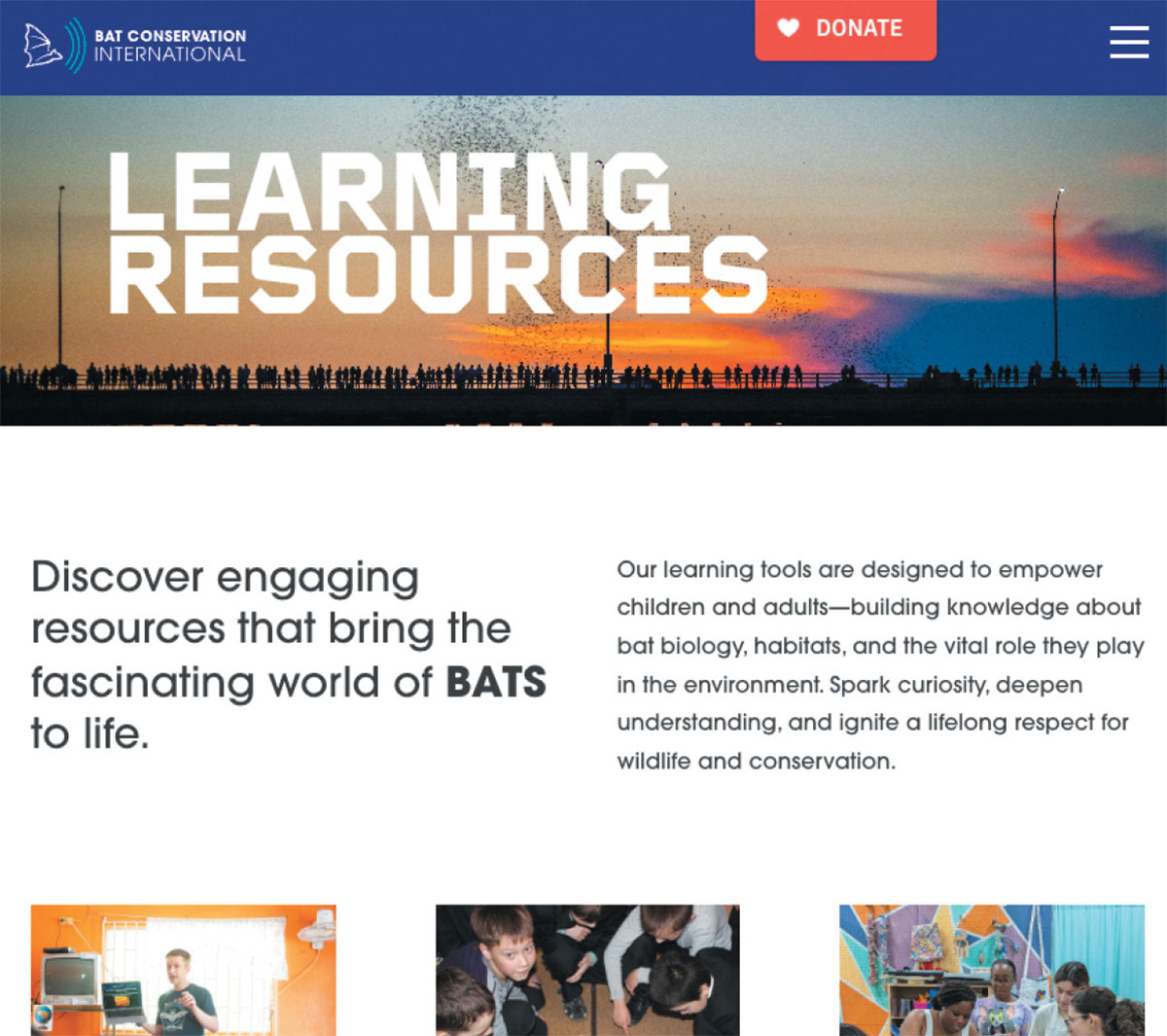
Screenshot of the Bat Conservation International "Learning Resources" webpage. The main banner displays a crowd on a bridge watching a swarm of bats at sunset, with introductory text and educational thumbnails below.
The revamped BCI Learning Resources page adds more accessible features.
BCI’s extensive library of learning resources is now more accessible than ever. It brings together hundreds of materials for all ages, with content available in both English and Spanish. Intuitive filters make it easy to find age- and grade-appropriate lessons, including many designed specifically for educators. Readers can explore a wide range of offerings, from lesson plans and videos to activity pages and recipes, featuring curricula such as “Back Yard Bativists” and “Discover Bats.”
Explore BCI’s learning resources: batcon.org/about-bats/learning-resources

Agave Restoration Initiative in the Spotlight

BCI featured on United Nations “Decade on Ecosystem Restoration Hub”
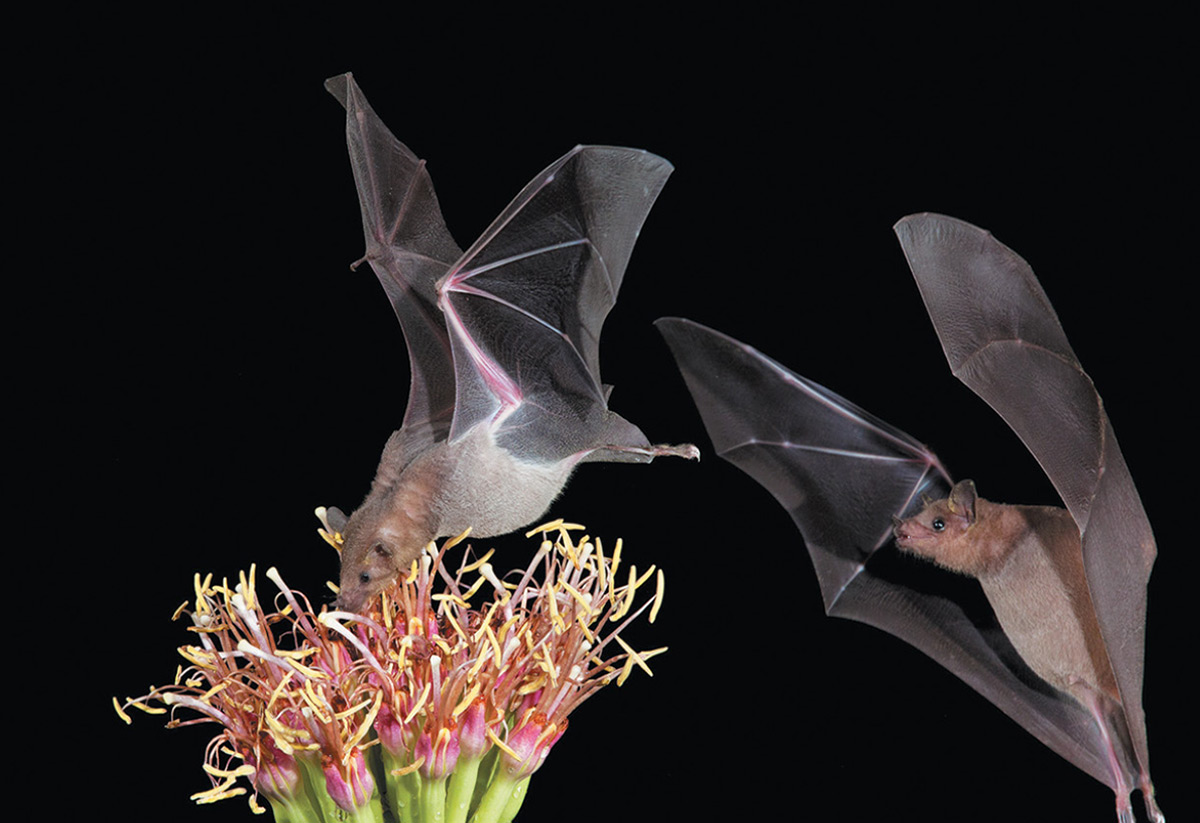
Two brown bats with outstretched wings against a black background. One bat feeds from a cluster of pink and yellow flowers, while the second bat flies close by.
Lesser long-nosed bats (Leptonycteris yerbabuenae)
Photo: Bruce D Taubert
BCI’s Agave Restoration Initiative is now featured on the United Nations (UN) Decade on Ecosystem Restoration Hub. Used by those who are implementing restoration projects, the platform increases visibility for the agave initiative and signals global recognition of its impacts.

The Agave Restoration Initiative was also featured as Restoration Implementor of the Month in the Ecosystem Restoration Hub’s February newsletter.

Explore BCI’s Agave Restoration Initiative on the UN Decade on Ecosystem Restoration Hub: hub.decadeonrestoration.org/initiatives/agave-restoration-initiative