










Bat Conservation International Bats Magazine

Bats Magazine logo
Protecting
the bats of
Kenya’s
Coastal
Caves
Projects safeguard caves while providing community benefits
Bat Conservation International logo
Volume 45 • Issue 2
Photo: Horizonline Pictures
Free Will Advertisement
Issue 2 2026

Inside this Issue

Bats magazine logo
08
Photo: Jon Flanders, Ph.D.

Features

08Protecting the bats of Kenya’s coastal caves

Projects safeguard caves while providing community benefits
12Strategic plan success: 5 years of impact

Looking at BCI’s 2020–2025 accomplishments

Departments

02Off the Bat

BCI Board Chair Andy Sansom on ending bat extinctions worldwide with help from the conservation community
06Species Study

Peruvian project aims to create artificial roosts for smoky bats
24Bat Chat

Bracken Cave volunteer Steph Dodson shares her conservation journey
25Bat Squad

New discoveries into the world of bat guano
Read past issues of Bats Magazine at batcon.org/batsmag

news & updates

Photo: Steve Gettle Minden Pictures
20
3Bat Signals

Conservation news and updates
  • State of India’s Bats report
  • Revamped web pages for bat gardens and houses
  • Reducing bat fatalities at wind facilities
  • Remembering J. David Bamberger
  • Agave Restoration Initiative featured on UN ecosystem restoration hub
  • BCI scientists release new book
18Field Notes

Research news from around the globe
  • Studying bats in Cameroon
  • A Guinea community embraces bats
  • Connecting Bracken Cave bats with sister roosts in Mexico
  • Studying bat acoustics in northern Minnesota
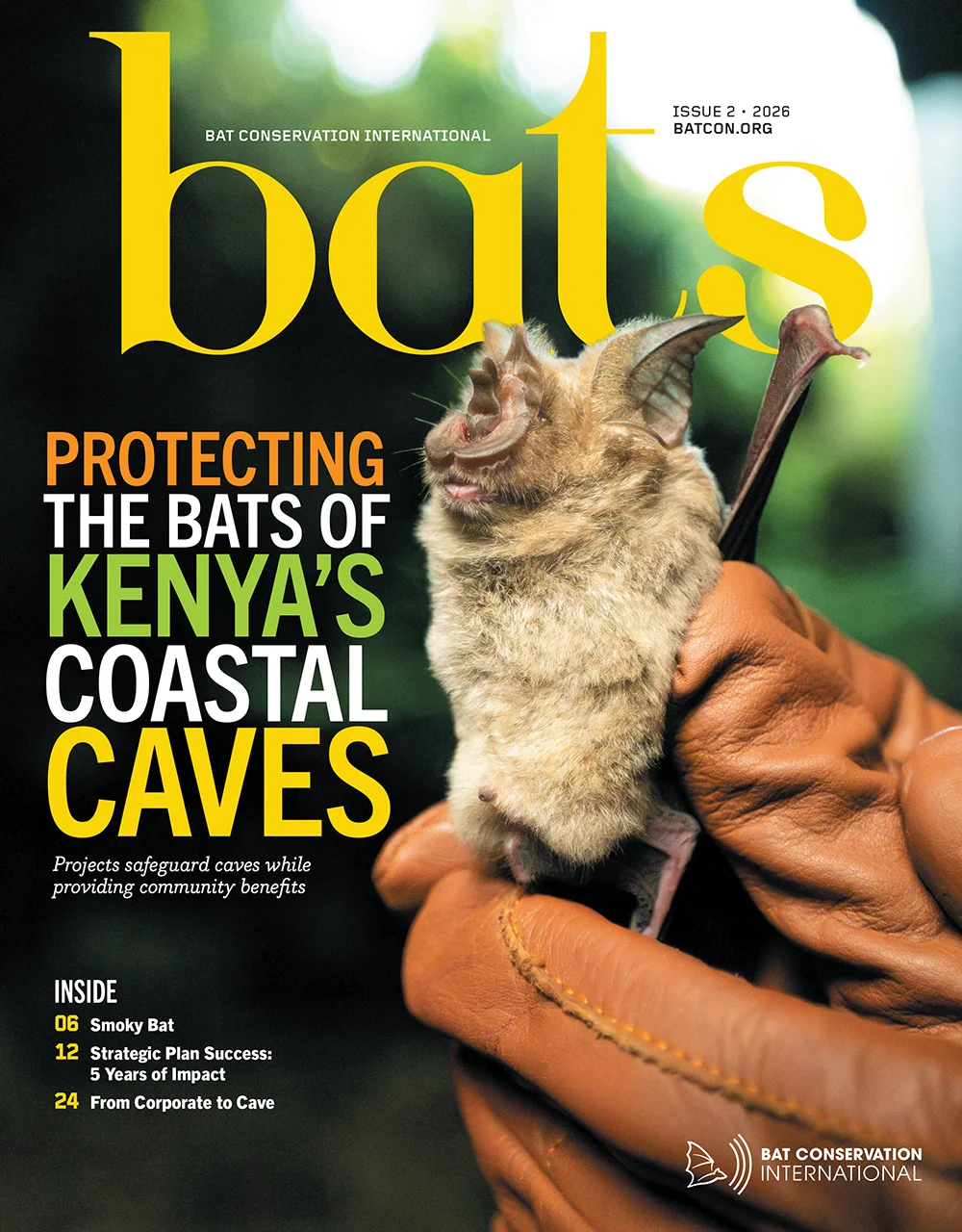
Bats Magazine Volume 45, Issue 2 cover
ON THE COVER:
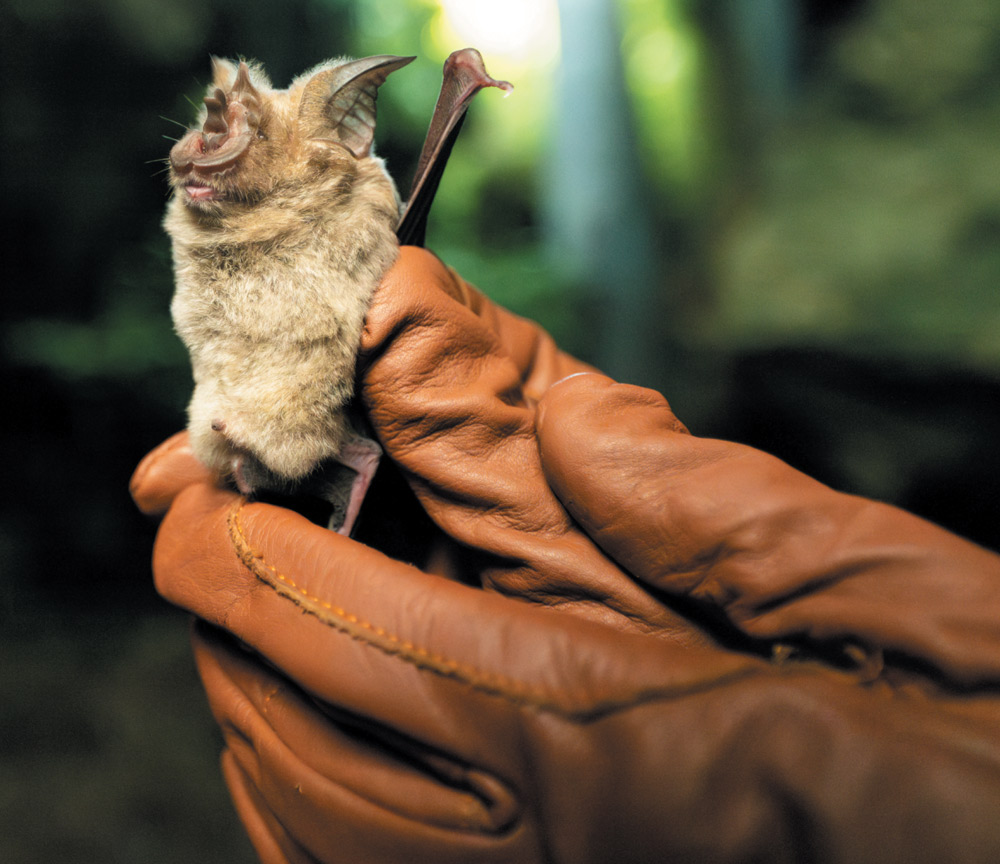
This horseshoe bat shares coastal Kenyan habitat with Hildegarde’s tomb bat (Taphozous hildegardeae), and it is one of many species benefitting from BCI’s conservation work in the country.
Image: Horizonline Pictures
off the bat
A few words of introduction from your friends at Bat Conservation International

Furthering Our Mission to End Bat Extinctions Worldwide

T

his issue of Bats comes off the press at a bittersweet time for Bat Conservation International (BCI). This Spring, we lost one of America’s leading champions of bat conservation, J. David Bamberger, who passed away at the age of 97 on his beloved Selah Ranch in the Hill Country of Texas. He was Founder and Chairman of Church’s Fried Chicken, served for many years on the BCI Board, and was instrumental in the acquisition and stewardship of Bracken Bat Cave, the largest concentration of wild mammals on Earth. Like so many of us, he dedicated himself to the protection of these amazing creatures and, remarkably, created on Selah the world’s first human-made bat cave. Initially called “Bamberger’s Folly” by the press, it is now home to more than 1.5 million Mexican free-tailed bats (Tadarida brasiliensis) and is known by the name he coined for it, “The Chiroptorium.”

As we celebrate the Bamberger legacy, we commence a transformational era in the life of BCI with the development of a bold and visionary strategic path to 2030. The plan, now in its final stages, will surely be a beacon of hope for bat conservation throughout the world.

Masthead

Bat Conservation International logo
Bat Conservation International (BCI) is a 501(c)(3) organization dedicated to protecting bats and their essential habitats around the world. A copy of our current financial statement and registration filed by the organization may be obtained by contacting our office in Austin, Texas, address below, or by visiting batcon.org.

Main Office

500 N Capital of TX Hwy, Bldg 8, Suite 225
Austin, TX 78746, USA
512-327-9721

Managing Editor

Kristen Pope

Editor-in-Chief

Kathryn Slater

Contributors

Michelle Donahue / Proofreader

Publication Management BackPocket Agency

Bats Magazine welcomes queries from writers. Send your article proposal in a brief outline form and a description of any photos, charts, or other graphics to the Editor at pubs@batcon.org.

Members: We welcome your feedback. Please send letters to the Editor to pubs@batcon.org. Changes of address may be sent to members@batcon.org or to BCI at our Austin, Texas, address above. Please allow four weeks for the change of address to take effect.
Board of Directors
Andrew Sansom, Ph.D., Chair
Ann George, Secretary
Gerald Carter, Ph.D.
Gary Dreyzin
Brock Fenton, Ph.D.
Danielle Gustafson
Alison Greenberg
Shahroukh Mistry, Ph.D.
Cecily Read
Sandy Read
Nancy Simmons, Ph.D.
Jenn Stephens
Science Advisory Committee
Luis Aguirre, Ph.D.
Enrico Bernard, Ph.D.
Sara Bumrungsri, Ph.D.
Gerald Carter, Ph.D.
Liliana Dávalos, Ph.D.
Brock Fenton, Ph.D.
Tigga Kingston, Ph.D.
Gary McCracken, Ph.D.
Stuart Parsons, Ph.D.
Paul Racey, Ph.D.
Danilo Russo, Ph.D.
Nancy Simmons, Ph.D.
Paul Webala, Ph.D.
Senior Staff

Mylea Bayless, Chief of Strategic Partnerships
Winifred Frick, Ph.D., Chief Scientist
Kevin Pierson, Chief of Conservation and Global Strategy
Gift Venezio, Chief Operating Officer

Visit BCI’s website at batcon.org and the following social media sites:

Bat Signals BCI updates and conservation news

State of India’s Bats

Durga Das’s leaf-nosed bat (Hipposideros durgadasi) is one of the species included in the first State of India’s Bats report.
Photo: Rajesh Puttaswamaiah
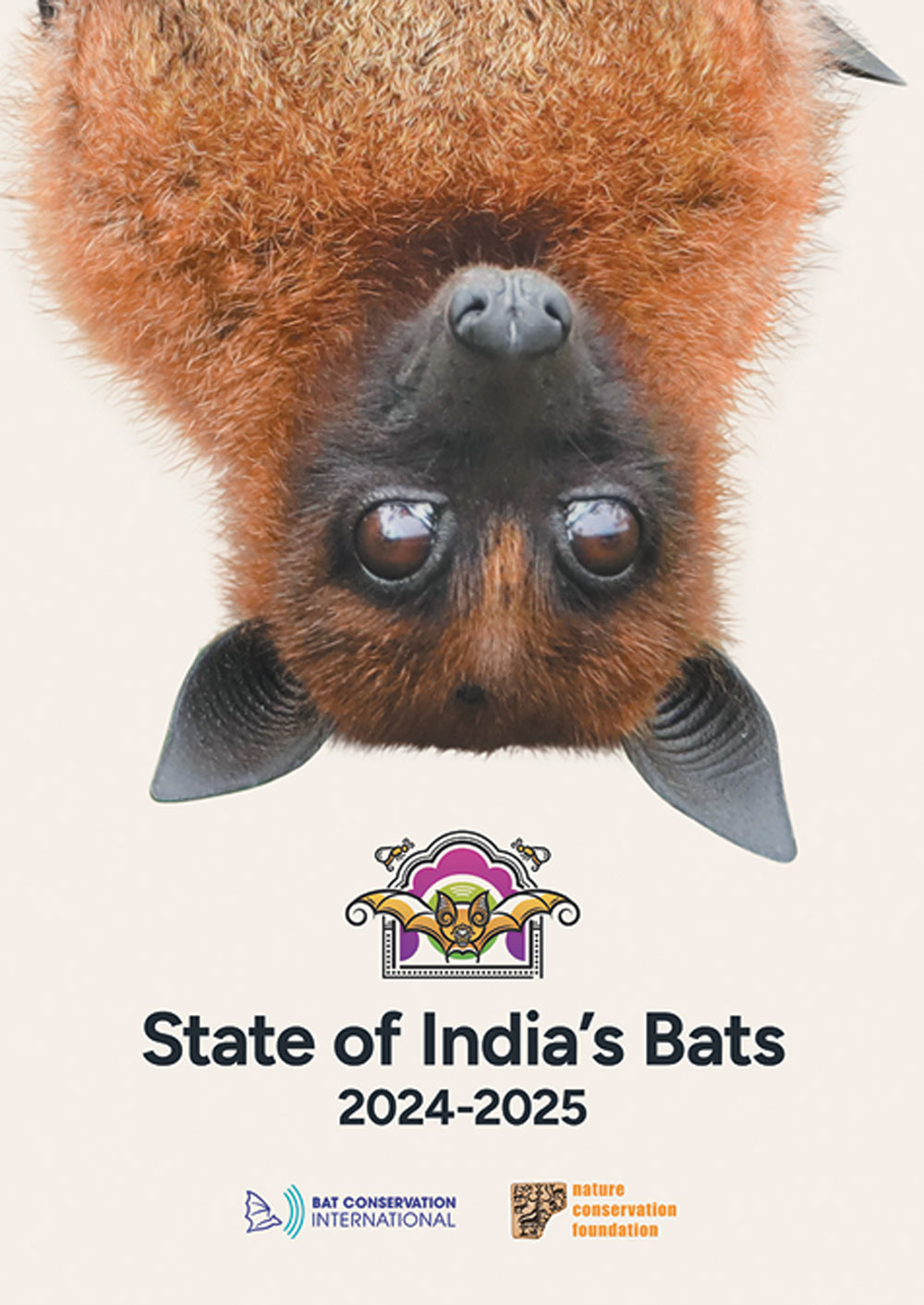
Report cover for State of India’s Bats 2024-2025 featuring a close-up of an orange and black flying fox bat.
Read the report: batcon.org/soi
New report highlights conservation opportunities and challenges
T

his spring, BCI and partners released the first State of India’s Bats report. It focuses on identifying what researchers know about India’s 135 bat species, along with opportunities to advance the scientifically guided conservation of India’s bats over the next decade.

The report highlights wins, including 12 new species being described over the past 20 years and increased protections for certain bat species, while also identifying threats to species survival, such as deforestation, urban development, unsustainable agricultural expansion, mining, and quarrying.

It also includes a list of priority activities the authors recommend to promote species protection across the nation, such as creating echolocation call libraries, curating molecular resources to help with taxonomic studies, establishing comprehensive networks of partners, and prioritizing bats in biodiversity action plans.

To share findings with stakeholders following the spring release, BCI and partners held publicity events in Shillong, Meghalaya, in northeast India, as well as in Delhi.

bat signals

Share Your Space with Bats

Revamped web pages provide tips and tricks
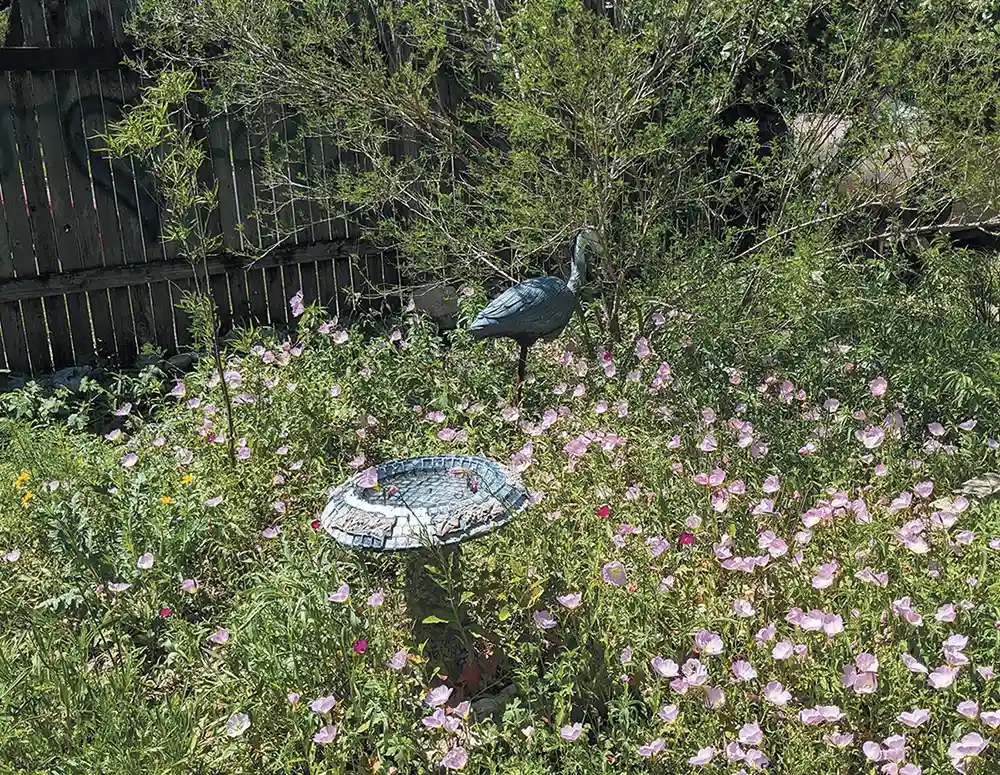
A stone birdbath stands surrounded by a patch of light pink wildflowers. In the background, a blue heron statue is nestled among green bushes in front of a weathered wooden fence.
Bat gardens attract bugs that bats love to eat.
Photo: Erin Cord
Learn how to make your backyard a bat paradise by exploring BCI’s content on bat gardens and bat houses.

Check out these pages for tips on fine-tuning your garden for bats, like planting native vegetation, adding roosting habitat, and incorporating vegetation that draws in a variety of insects to create a bat smorgasbord. The Bat Gardens page also features bat-enticing plant lists for a number of regions, including parts of California, Colorado, Kentucky, Oregon, and Texas.

It can be a challenge to get bat houses right, so BCI recently updated the Bat Houses page to include detailed information on construction, placement, and maintenance, as well as tips on safety principles to protect bats from dangers like overheating, predators, and other hazards. The page also explores bat houses around the world, from Australia to China to Ghana.

Species Study
There are 1,500+ species of bats in the world. This is one of them.

Smoky Bat

Peruvian project aims to create artificial roosts for distinctive bat
By Lindsay Lee Wallace
bat stats
Bat icon
Binomial

Amorphochilus schnablii
Two bats icon
Family

Furipteridae
Bat Globe icon
Colony Size

Found in colonies of up to 300 bats

Scale icon
Weight

3 to 5 grams
Bug icon
Diet

Insectivorous
Exclamation Point icon
Status

Endangered
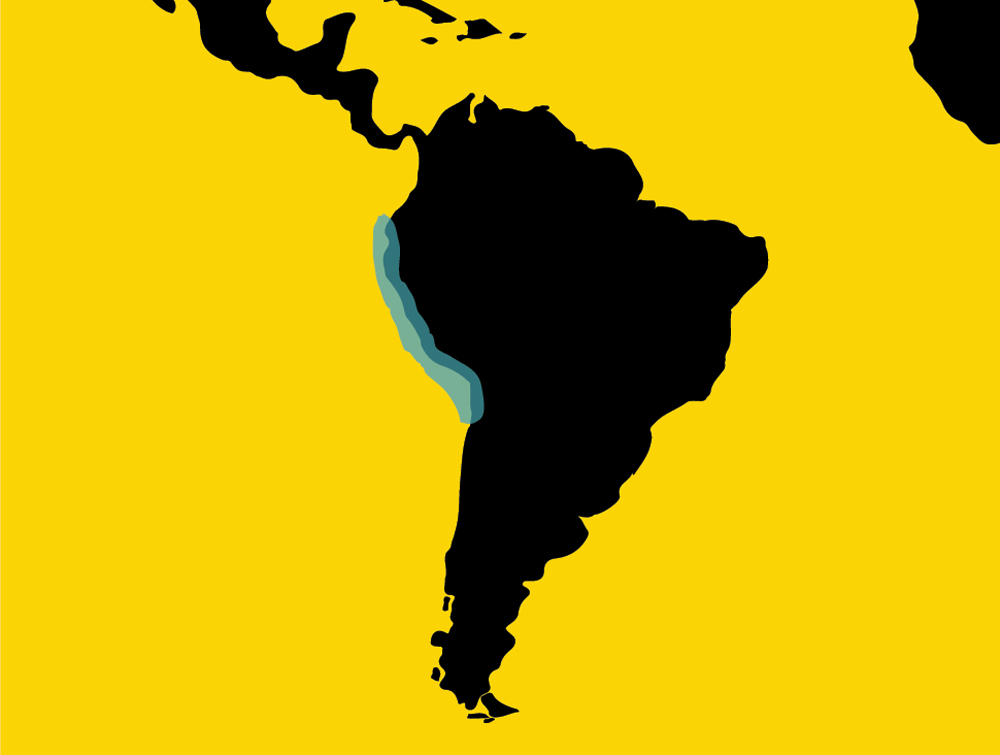
Region

In the extreme south of Ecuador, the extreme north of Chile, and along the coast of Peru
A minimalist map of South America highlighting a light-blue habitat range along the western coast.
A smoky bat (Amorphochilus schnablii) flying out of an abandoned mine in Peru’s Huancarqui District.
Photo: MGambaRios
W

ith tiny thumbs that are barely visible, the smoky bat (Amorphochilus schnablii) is a distinctive-looking and memorable bat, according to Melquisedec Gamba-Rios, Ph.D., BCI’s Regional Director, Latin America & Caribbean.

“It made me smile when I saw it for the first time. It’s a hilarious bat,” he says. “The thumbs are very reduced, so they’re barely visible.”

This rare bat is a member of an extremely small family with just two members, both Endangered insectivores native to South America. The smoky bat and its relative, the thumbless bat (Furipterus horrens), are both known to tuck their small thumbs into the front wing-edge, which is believed to make them more aerodynamic.

backpack iconFeature: Kenya
BCI’s work in Kenya protects Endangered Hildegarde’s tomb bats (Taphozous hildegardeae) and other species.
Photo: Horizonline Pictures

Protecting the Bats of Kenya’s Coastal Caves

Protecting the Bats of
Kenya’s Coastal Caves

Close-up of a small, fluffy bat being held gently in a person's hand wearing thick brown leather gloves.
A horseshoe bat at the Three Giant Sisters Caves near Fikirini.
Photo: Horizonline Pictures
S

eventy percent of the Endangered Hildegarde’s tomb bat (Taphozous hildegardeae) population in Kenya is concentrated in just two locations: the Kaboga and Makuruhu caves that are located near Watamu, a rapidly developing tourist destination, and the Tswaka Three Giant Sisters Caves outside rural Fikirini Village.

In these locations, as well as throughout coastal Kenya, Endangered bats are threatened by habitat loss, deforestation, and urban expansion, as well as disturbance of cave roosts. To protect these bats, BCI has spent the last three years building relationships with local partners and community members to create positive change for bats and people.

plant iconFeature: Looking Back
Hiledgarde’s tomb bat (Taphozous hildegardeae).
Photo: Dr. Paul Webala

Strategic Plan Success: 5 Years of Impact

A bat in mid-flight with extended wings over the teal text "STRATEGIC PLAN SUCCESS"
Bracken Cave Preserve is an integral part of BCI’s work.
Photo: Jonathan Alonzo
5 Years of Impact
Student Scholar Angélica Yantén in the field.
Photo: Marcelo Martins
An agave near flowering.
Photo: Horizonline Pictures

Strategic Plan Success: 5 Years of Impact

Hiledgarde’s tomb bat (Taphozous hildegardeae).
Photo: Dr. Paul Webala
A bat in mid-flight with extended wings over the teal text "STRATEGIC PLAN SUCCESS"
5 Years of Impact
A woman wearing a headscarf mounts a small wildlife camera onto a tree trunk in a grassy field at dusk.
Student Scholar Angélica Yantén in the field.
Photo: Marcelo Martins
A man in boots stands on a rocky cliff overlooking a winding river valley under an orange-tinted sky.
Bracken Cave Preserve is an integral part of BCI’s work.
Photo: Jonathan Alonzo
Top-down, close-up view of a symmetrical green agave plant showing its spiked rosette pattern.
An agave near flowering.
Photo: Horizonline Pictures
Looking at BCI’s 2020–2025 accomplishments
By Fiona Tapp

A

s dusk settles over rolling hills, quiet valleys, and remote landscapes, countless bats take flight, navigating the night sky with astonishing precision. For BCI and partners, each wingbeat represents years of dedicated research, careful planning, and hands-on conservation. Over the past five years, BCI’s 2020–2025 strategic plan has guided initiatives that not only protect bats and their habitats but also generate new scientific insights and cultivate communities as long-term stewards of the environment.

From protecting critical roosts to restoring degraded landscapes, advancing research, tackling emerging threats, and inspiring global audiences, BCI’s recent work showcases the power of long-term strategy, rigorous science, and community-driven conservation.

Field notes Research news from around the globe
Santa Eulalia is one of the sites sharing a migratory connection with Bracken Cave.
Photo: UACH

Sister Roosts

Researchers find migratory connection between Bracken Cave and two former mines in Mexico
By Annika Hipple
E

very summer evening at dusk, roughly 15 million Mexican free-tailed bats (Tadarida brasiliensis) rush out of Bracken Cave near San Antonio, Texas, to feed on insects. Bracken Cave is home to the world’s largest known bat colony, and it has been owned and managed by BCI since 1992. Now, researchers have discovered a migratory connection between this cave and two abandoned mines inhabited by bats in the northeastern Mexican states of Chihuahua and Nuevo León.

Researchers used data from a network of automated radio telemetry towers for tracking wildlife, known as Motus towers, to track a bat that was recorded at Bracken Cave all the way to Las Cavernas de Santa Eulalia in Chihuahua. Bats that visit both sites are also believed to visit another cave, La Cueva de la Boca in Nuevo León. While researchers are working to learn more about the bats’ movement patterns, BCI scientists say that conservation efforts must be designed to consider a migratory landscape that includes Bracken Cave, as well as its two “sister” roosts in Mexico.
field notes
Lake Vermillion After Dark
BCI studied bat acoustics at Lake Vermilion.
Photo: Ryan O’leary

Lake Vermillion After Dark

Study examines nocturnal activity at northern Minnesota lake
By Fiona Tapp
At sunset on northern Minnesota’s Lake Vermilion, the islands stand like fragments of forest set adrift. In early 2025, BCI began listening for what happens there after dark, tracking the bats that might be using these isolated patches of habitat.

“We wanted to find out if there were any significant bat colonies, especially Threatened or Endangered species, using those islands,” says BCI Senior Restoration Specialist Dan Taylor.

The work, commissioned by the Bureau of Land Management (BLM), focused on a chain of small, federally managed islands scattered across Lake Vermilion. The islands have mature trees, minimal disturbance, and just enough isolation to make them intriguing as potential bat habitat. More than 300 islands are located within the 30-mile-long lake.

field notes
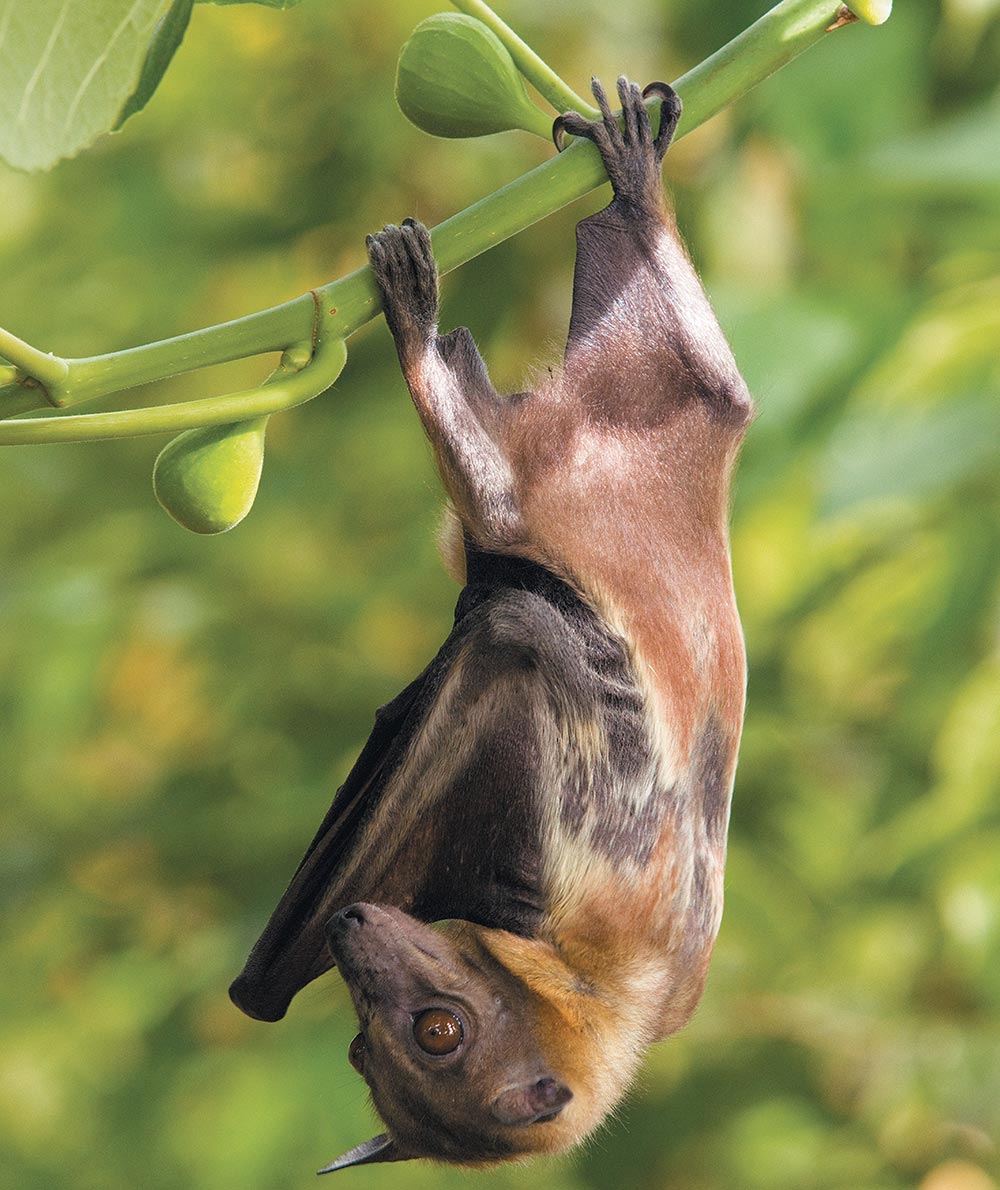
A fruit bat hanging upside down from a green branch with unripe figs.
A straw-colored fruit bat (Eidolon helvum) roosting.
Photo: Steve Gettle Minden Pictures

Seeds of Change

A Guinea community’s understanding of fruit bats evolves
By Stefanie Waldek
In N’Zérékoré, Guinea, a sudden influx of straw-colored fruit bats (Eidolon helvum) once sparked fear, suspicion, and even plans for eradication. Today, that same colony is helping reshape how the community understands bats.

The shift in attitude didn’t happen overnight, but the bats’ arrival did. “There had been no previous records of large aggregations of Eidolon in this town until last year,” says Natalie Weber, BCI Strategic Advisor for Endangered Species in Africa. She notes that the species is migratory but typically returns to the same seasonal roosts each year. The community was not only surprised, but also wary of their new neighbors.

field notes

Studying Bats in the Forests of Cameroon

BCI Student Scholar builds capacity for research and conservation
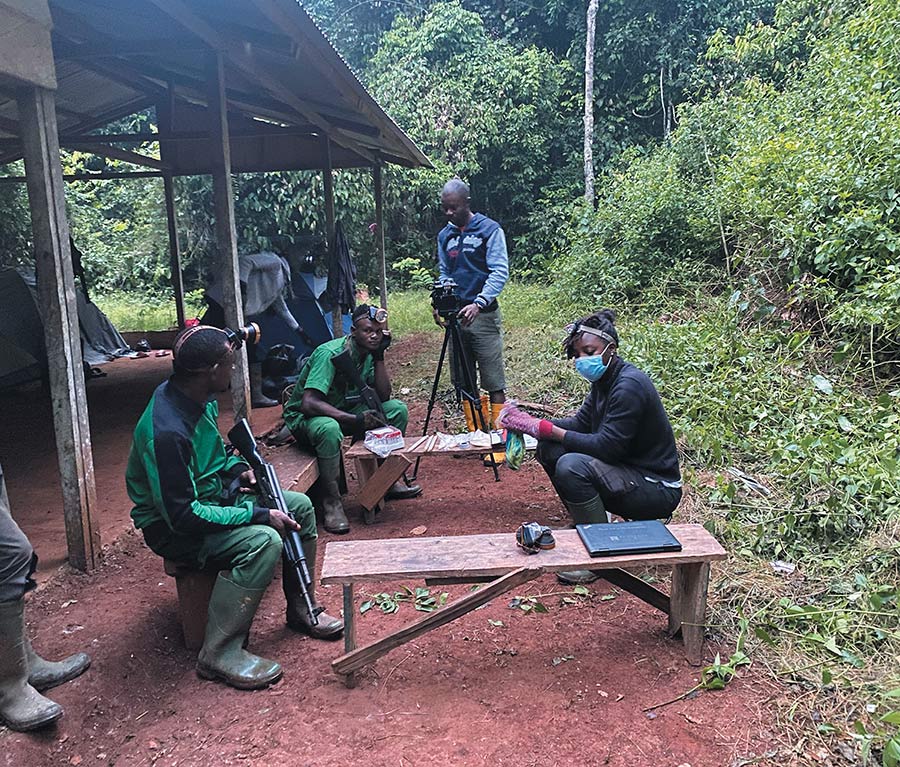
By Annika Hipple
BCI Student Scholar Aïcha Gomeh-Djame and eco-guards from Lobéké National Park processing bats in the early morning that were captured the night before.
Photo: Aïcha Gomeh-Djame
Deep in the lowland forest of her native Cameroon, BCI Student Scholar and doctoral student Aïcha Gomeh-Djame is breaking new ground as the first person to study bats in Lobéké National Park. The park is part of a biologically rich transborder UNESCO World Heritage Site that also includes protected areas in the Republic of Congo and the Central African Republic.

Data on bats in Lobéké were virtually nonexistent prior to Gomeh-Djame’s research, which involved catching about 350 bats in Lobéké that represented a potential 36 different species. She also succeeded in making the first recordings of bat echolocation in the park. “The primary aim of the project was to quantify the impact of roads on the bat diversity, relative abundance, and functional guilds of bats in Lobéké National Park,” she says.

field notes

Brazil’s Caves

BCI dives deep into subterranean protections
B

razil has more than 30,000 known caves, and many of these underground caverns are home to bats, including Endangered species and large colonies. To learn more about these subterranean bat homes and find out how to protect particularly important ones, BCI and partners took inventory of 113 caves, including 52 that were undergoing this process for the first time. The team recorded 33 bat species from seven bat families and confirmed six new hot caves. They also identified threats, including deforestation, unregulated tourism, and vampire bat control efforts impacting other species.

BCI and partners are working with the National Center for Cave Research and Conservation (CECAV/ICMBio) within the National Action Plan for Cave Conservation (PAN Cavernas) to implement actions focused on protecting bats, including testing the first bat gate installed in a Brazilian cave, and to update Brazil’s Red List of Endangered Species. The aim now is to support the creation of protected areas, and the development of protocols to minimize negative impacts on bat populations.

Bat Chat A Conversation with a noted expert

From Corporate to Cave

Bracken Cave volunteer Steph Dodson shares her conservation journey
By Stefanie Waldek
S

teph Dodson didn’t start out in conservation. Her first career was in corporate live events, but by her mid-30s, she found herself burned out and searching for something more meaningful. Today, she volunteers at Bracken Cave while pursuing a degree in conservation and wildlife biology, with plans to focus on education and outreach. We spoke with Dodson about her path to conservation and her work at Bracken Cave.

What inspired your interest in conservation?

Growing up, I loved Steve Irwin and wildlife, but I ended up owning a business doing corporate live events. By the beginning of 2024, I was miserable. I was very successful and making good money but needed to make a change. I realized I had been traveling the world to do wildlife stuff and thought to myself, “Well, what if I just made that a career?”
Bat Squad For the young conservationist
A extreme close-up profile view of a bat's face showing its large ears.
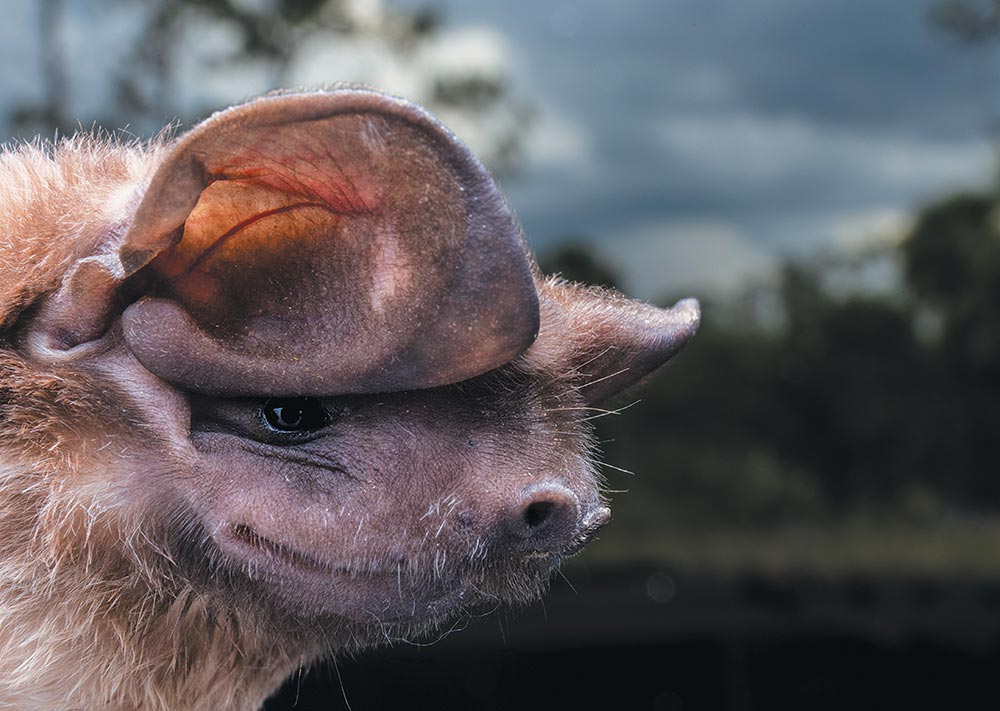
Studying the guano of the Endangered Florida bonneted bat (Eumops floridanus) helps researchers learn more about the species.
Photo: MGambaRios

What’s in a Pile of Guano?
A Lot, Actually

New discoveries from bat poop science
By Jill Robbins
F

rom the forests of Pennsylvania to urban South Florida, researchers are using guano (bat poop) to unlock new insights about what bats eat, where they hunt, and how to better protect them.

Bat guano offers a workaround to one major challenge: Bats are incredibly difficult to observe while feeding.

“Watching a bat forage naturally and being able to identify the insect it just ate is, for most people, impossible,” says BCI Research Scientist Brandi Christiano, Ph.D.

Photo: Horizonline Pictures
Half My DAF Advertisement
Bats Magazine logo
Thanks for reading our latest issue!