

Bat Chat A Conversation with a noted expert

From Corporate to Cave

Bracken Cave volunteer Steph Dodson shares her conservation journey
By Stefanie Waldek
S

teph Dodson didn’t start out in conservation. Her first career was in corporate live events, but by her mid-30s, she found herself burned out and searching for something more meaningful. Today, she volunteers at Bracken Cave while pursuing a degree in conservation and wildlife biology, with plans to focus on education and outreach. We spoke with Dodson about her path to conservation and her work at Bracken Cave.
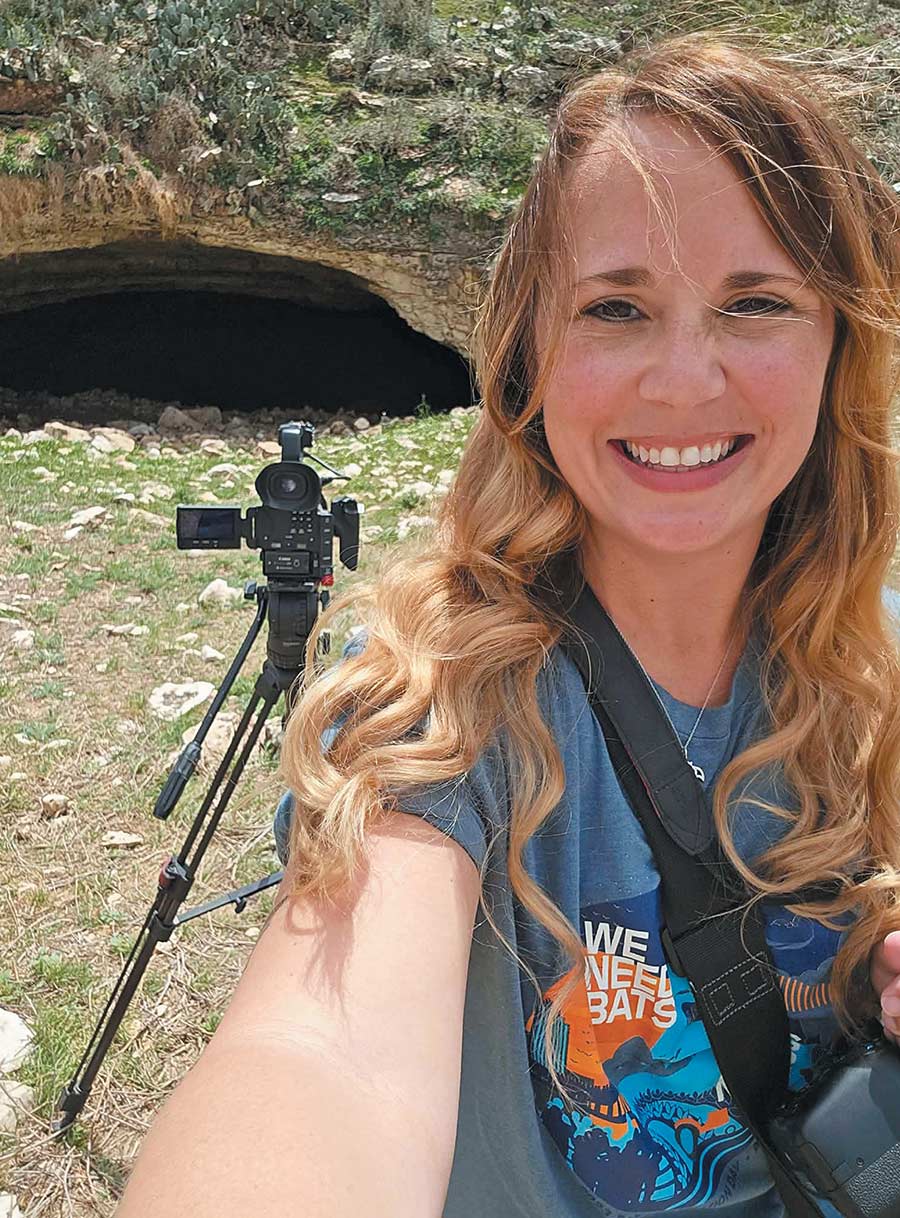
Volunteer Steph Dodson at Bracken Cave.
Photo: Steph Dodson

What inspired your interest in conservation?

Growing up, I loved Steve Irwin and wildlife, but I ended up owning a business doing corporate live events. By the beginning of 2024, I was miserable. I was very successful and making good money but needed to make a change. I realized I had been traveling the world to do wildlife stuff and thought to myself, “Well, what if I just made that a career?”

How did you make the transition from corporate events to conservation?

I went back to school in the summer of 2024—in my mid 30s—and graduated with my Associates of Applied Science in conservation and wildlife management. I’ll graduate this December with my Bachelor of Applied Science with a focus in conservation and wildlife biology, and then I’m starting my master’s next year. My master’s will be in conservation education and outreach, because that is where my passion is. I love making personal connections with people about nature.

How did you get involved with bats and Bracken Cave? What does your work at Bracken look like now?

I had seen the bats come out from Austin’s Congress Bridge when I was a kid, because that’s a thing you do when you grow up in Central Texas. I say this sadly: I was not enamored with the bats. In the fall of 2024, I was in a wildlife identification class, and I volunteered through the Texas Master Naturalists program and learned even more about bats. On a field trip to Bracken Cave, I was blown away, and I immediately decided to start volunteering there.

For my degree’s practicum, I approached Fran Hutchins, Director of Bracken Cave Preserve, and Krystie Miner, Project Coordinator for Bracken Cave Preserve, to do research. So far, I have conducted a species richness project, collected dark sky data and guano, and even caught bats with Ph.D. candidate Kristin Dyer from the University of Oklahoma, who uses Bracken as one of her main research sites. I’m also looking at how drought, weather patterns, and moon illumination and phase affect bat emergence from the cave, and I am cowriting a scientific paper about those findings. I’m also the unofficial videographer of Bracken Cave, using equipment from my past career.

What advice would you give to others who want to get involved in conservation?

Start with the community science platform iNaturalist on your own, then find a conservation organization near you—they always need dedicated volunteers. If you have a Master Naturalist program near you, that’s a really great place to get started. And you can further your education with free resources like webinars. The bottom line: Talk to everyone you know about the things you love in conservation.