field notes
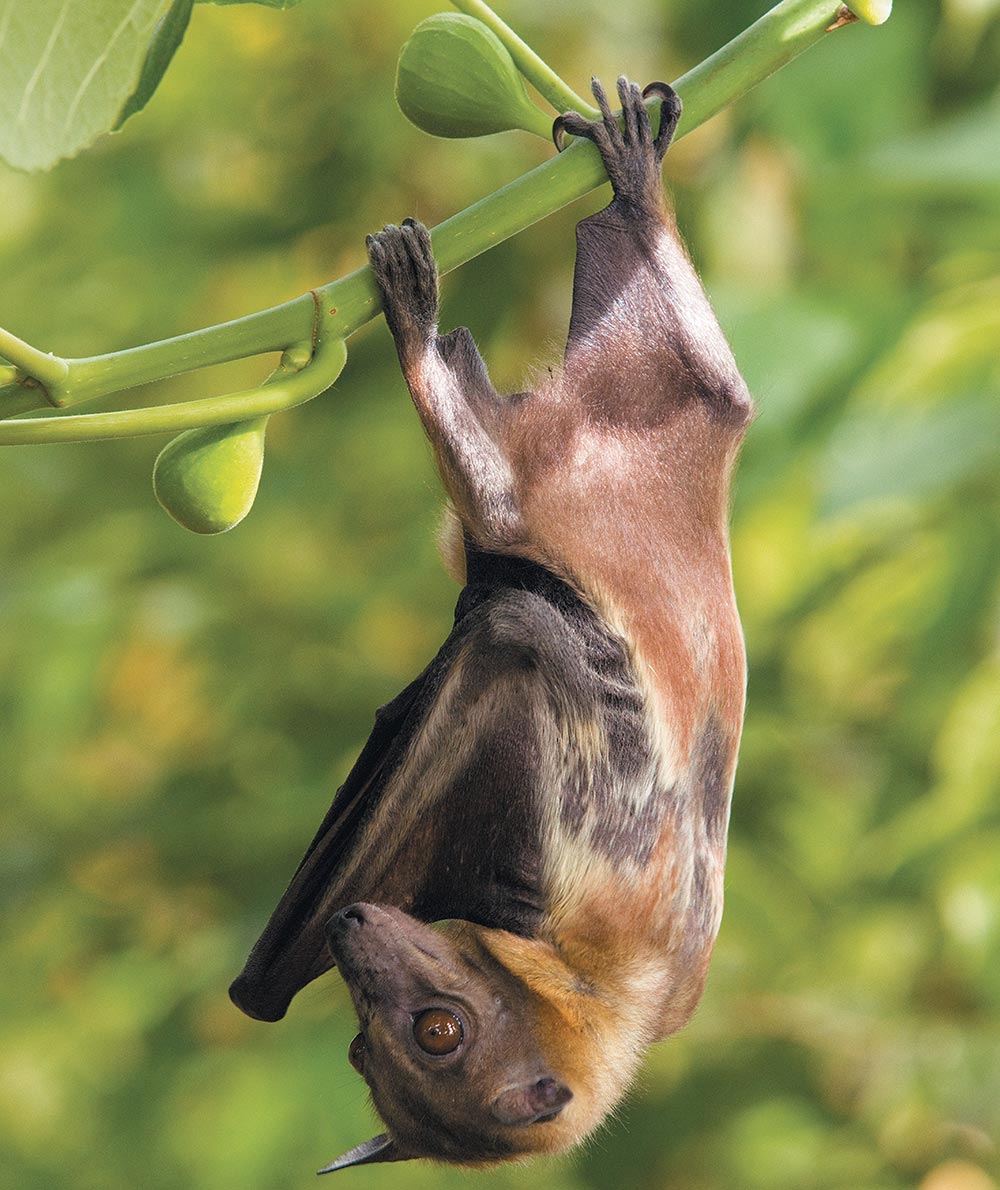
A fruit bat hanging upside down from a green branch with unripe figs.
A straw-colored fruit bat (Eidolon helvum) roosting.
Photo: Steve Gettle Minden Pictures

Seeds of Change

A Guinea community’s understanding of fruit bats evolves
By Stefanie Waldek
In N’Zérékoré, Guinea, a sudden influx of straw-colored fruit bats (Eidolon helvum) once sparked fear, suspicion, and even plans for eradication. Today, that same colony is helping reshape how the community understands bats.

The shift in attitude didn’t happen overnight, but the bats’ arrival did. “There had been no previous records of large aggregations of Eidolon in this town until last year,” says Natalie Weber, BCI Strategic Advisor for Endangered Species in Africa. She notes that the species is migratory but typically returns to the same seasonal roosts each year. The community was not only surprised, but also wary of their new neighbors.

“Initially, the fruit-eating bats were largely viewed negatively by local communities in N’Zérékoré,” says Mamadou Diawara, Executive Director of nongovernmental organization Guinée Ecologie. “They were associated with negative cultural beliefs, health risks linked to certain diseases, and damage to fruit crops.”


Environmental education campaigns have helped debunk certain myths by reducing fear and prejudice toward bats. Bats are increasingly viewed as species beneficial to the ecosystem rather than as pests.
—Mamadou Diawara
To repair the relationship between humans and bats, Weber and her colleagues, working as part of a broader Eidolon monitoring initiative, partnered with Guinée Ecologie to engage directly with the community. They organized a workshop that brought together stakeholders, government officials, and residents to discuss the bats’ ecological role in seed dispersal and pollination and how they can even benefit the community.

Those benefits soon became observable. In the weeks after the bats departed, forestry officials discovered saplings of iroko (Milicia excelsa), a highly valued hardwood tree sometimes referred to as African teak, beneath the bats’ former roosts. “The community had desperately been trying to plant iroko, but it didn’t work,” Weber said. “So now they realize bats can help replant this important tree.”

Equally important in helping shape the community’s evolving opinion about the bats was building trust in Weber and her colleagues. In the workshop, Weber told the community that the bats were migratory and would leave seasonally. When they did, it reinforced confidence in the information being shared. That credibility helped shift attitudes more broadly.

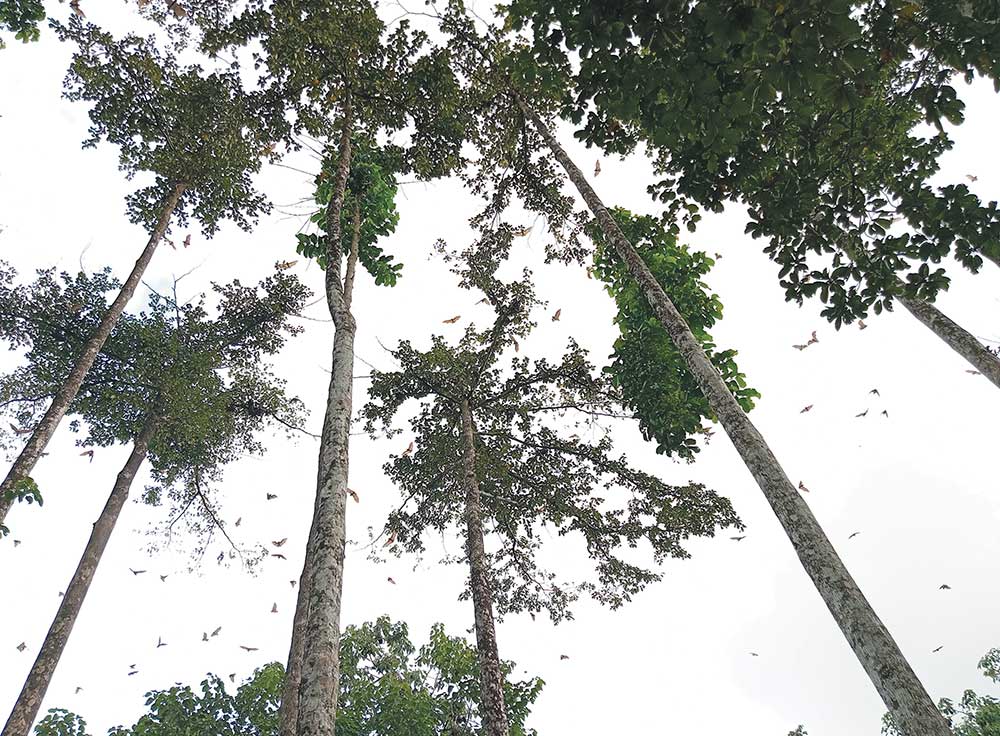
Looking up at tall forest trees with numerous bats flying across a bright sky.
A sudden influx of straw-colored fruit bats (Eidolon helvum) initially caused concern in a Guinea community.
Photo: Faya Jeannot Simbiano and Guinée Écologie
“Environmental education campaigns have helped debunk certain myths by reducing fear and prejudice toward bats,” Diawara says. “Bats are increasingly viewed as species beneficial to the ecosystem rather than as pests.”

But the work is ongoing. Eidolon have returned this year and the community’s stance on the bats has regressed to some degree, in part due to recent elections that changed local leadership. “We have to redo something like the workshop to refresh memories,” Weber says. Eventually, however, she hopes that the team’s messages will not only stick in N’Zérékoré but also grow across the country.

The stakes remain high for Eidolon. Their arrival in N’Zérékoré may be linked to the loss of roosting sites elsewhere in the region, a growing challenge across West Africa. “The bats came here because they were threatened by humans. Now, humans feel threatened by the bats,” says Weber.

That complicated relationship underscores the need for education, experience, and engagement in the communities across Guinea to ensure the bats’ protection and continued coexistence with humans.