Species Study
There are 1,500+ species of bats in the world. This is one of them.

Smoky Bat

Peruvian project aims to create artificial roosts for distinctive bat
By Lindsay Lee Wallace
bat stats
Bat icon
Binomial

Amorphochilus schnablii
Two bats icon
Family

Furipteridae
Bat Globe icon
Colony Size

Found in colonies of up to 300 bats
Scale icon
Weight

3 to 5 grams
Bug icon
Diet

Insectivorous
Exclamation Point icon
Status

Endangered
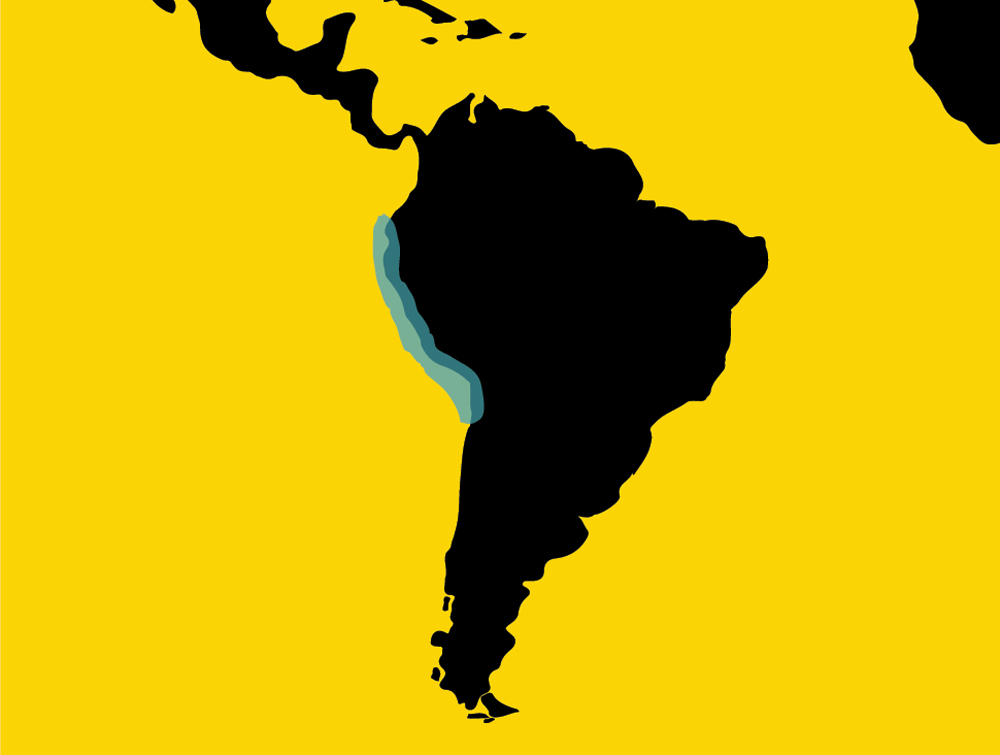
Region

In the extreme south of Ecuador, the extreme north of Chile, and along the coast of Peru
A minimalist map of South America highlighting a light-blue habitat range along the western coast.
A smoky bat (Amorphochilus schnablii) flying out of an abandoned mine in Peru’s Huancarqui District.
Photo: MGambaRios
W

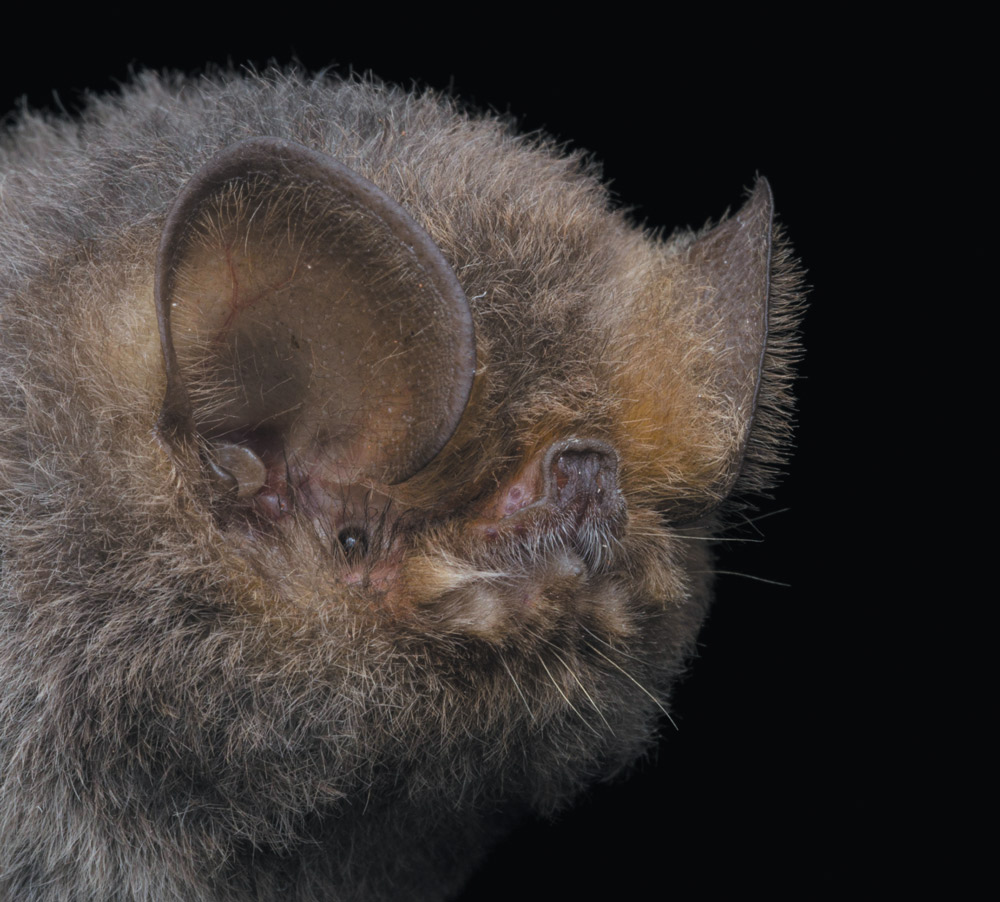
ith tiny thumbs that are barely visible, the smoky bat (Amorphochilus schnablii) is a distinctive-looking and memorable bat, according to Melquisedec Gamba-Rios, Ph.D., BCI’s Regional Director, Latin America & Caribbean.

“It made me smile when I saw it for the first time. It’s a hilarious bat,” he says. “The thumbs are very reduced, so they’re barely visible.”

This rare bat is a member of an extremely small family with just two members, both Endangered insectivores native to South America. The smoky bat and its relative, the thumbless bat (Furipterus horrens), are both known to tuck their small thumbs into the front wing-edge, which is believed to make them more aerodynamic.

“They are very fast,” says BCI’s Brazil Program Manager Jennifer Barros, Ph.D. “You just see a tiny ball of fur flying around.”

But the smoky bat isn’t just a pretty, tiny face—it’s also a crucial part of the ecosystem in coastal Peru, where the majority of species live in caves and former mining tunnels that date back more than 200 years to Spanish colonial rule.

Extreme close-up profile of a small bat’s head, showing its thick gray-brown fur, round ears, and distinct nose.
The smoky bat (Amorphochilus schnablii) is listed as Vulnerable on the IUCN Red List.
Photo: Jennifer Barros, Ph.D.

Getting the community involved

Smoky bats are very effective insect hunters that help reduce the need for pesticide use in crops and control insect vectors of disease. But over the last decade, renewed mining efforts have disturbed the bat’s habitat, reducing reproductive success and putting the current population in peril. The smoky bat’s population has declined by more than 50% in the last 10 years.

Today, BCI is partnering with Peruvian conservation and sustainable development organization Sallqa Perú, led by Director Joaquín Ugarte-Núñez, and community members who live throughout the smoky bat’s territory. Together, they are working to compensate for the lost habitat with carefully designed artificial roosts.

Getting community buy-in on conservation plans can be challenging at times. Some people may find certain interventions burdensome, while others may have negative sentiments or superstitions about bats. However, when BCI’s team took their first trip to Peru to visit one of the mining tunnels the smoky bat calls home, they captured photos and videos of the species and used the footage to turn bat skeptics into eager collaborators.

“We were coming back late at night and praying for a place to have any kind of food because we were starving,” Gamba-Rios says. When they finally found a rural restaurant that was open late, they started a conversation and shared videos and images of the bat. “They were really into it,” Gamba-Rios says.

Soon enough, the restaurant’s staff members were telling BCI’s team about another local cave where they had seen the bats. They also expressed interest in hosting the artificial roosts that BCI and Sallqa Perú were planning to construct. “People grow up going into and climbing up these hills, so they have a connection with the habitat and its biodiversity,” Barros says.


We’re always trying to find how we can benefit the community and help them take ownership of the work, because that’s the best strategy for the long term.
—Melquisedec Gamba-Rios, Ph.D.

Building artificial roosts

Made from bamboo and clay, the artificial roosts are modeled after traditional local structures called quinchas. Ugarte-Núñez says the design was inspired in part by the fact that smoky bats were already living in the abandoned human-constructed tunnels. Two other species of bats are also roosting in the artificial quinchas, including the Endangered Atacama myotis (Myotis atacamensis). BCI is also working with the Peruvian government to create tax incentives for property owners who agree to host an artificial roost on their land.

Ugarte-Núñez says that by encouraging more community members to host the artificial roosts, “We can protect the sustainability of these reproductive colonies, so we can see the size of the population grow.”

Gamba-Rios emphasizes that working together with the community is vital when establishing conservation efforts. “We’re always trying to find how we can benefit the community and help them take ownership of the work, because that’s the best strategy for the long term,” he says.