plant iconFeature: Looking Back
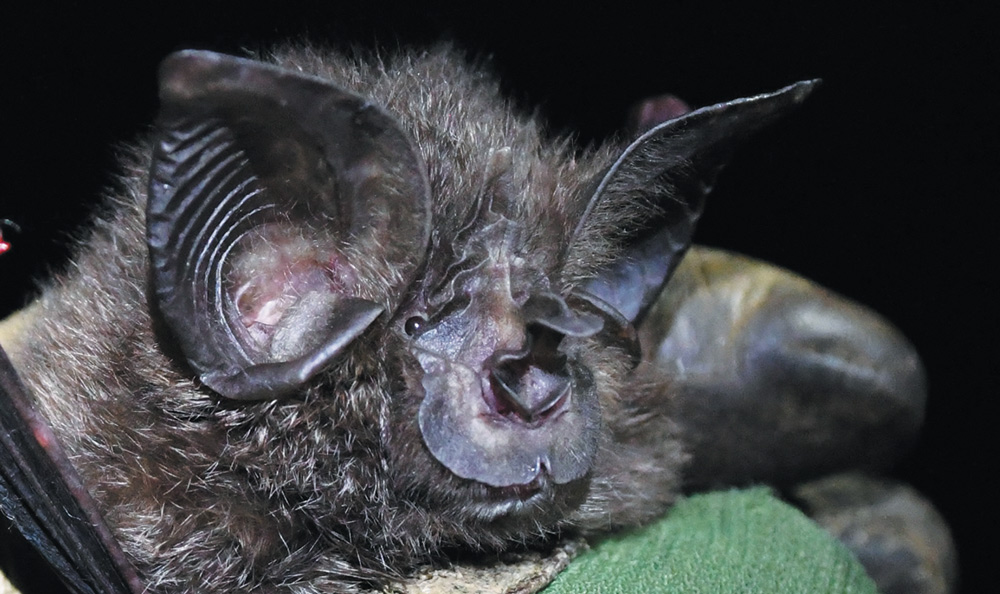
Hiledgarde’s tomb bat (Taphozous hildegardeae).
Photo: Dr. Paul Webala

Strategic Plan Success: 5 Years of Impact

A bat in mid-flight with extended wings over the teal text "STRATEGIC PLAN SUCCESS"
Bracken Cave Preserve is an integral part of BCI’s work.
Photo: Jonathan Alonzo
5 Years of Impact
Student Scholar Angélica Yantén in the field.
Photo: Marcelo Martins
An agave near flowering.
Photo: Horizonline Pictures

Strategic Plan Success: 5 Years of Impact

Hiledgarde’s tomb bat (Taphozous hildegardeae).
Photo: Dr. Paul Webala
A bat in mid-flight with extended wings over the teal text "STRATEGIC PLAN SUCCESS"
5 Years of Impact
A woman wearing a headscarf mounts a small wildlife camera onto a tree trunk in a grassy field at dusk.
Student Scholar Angélica Yantén in the field.
Photo: Marcelo Martins
A man in boots stands on a rocky cliff overlooking a winding river valley under an orange-tinted sky.
Bracken Cave Preserve is an integral part of BCI’s work.
Photo: Jonathan Alonzo
Top-down, close-up view of a symmetrical green agave plant showing its spiked rosette pattern.
An agave near flowering.
Photo: Horizonline Pictures
Looking at BCI’s 2020–2025 accomplishments
By Fiona Tapp
A

s dusk settles over rolling hills, quiet valleys, and remote landscapes, countless bats take flight, navigating the night sky with astonishing precision. For BCI and partners, each wingbeat represents years of dedicated research, careful planning, and hands-on conservation. Over the past five years, BCI’s 2020–2025 strategic plan has guided initiatives that not only protect bats and their habitats but also generate new scientific insights and cultivate communities as long-term stewards of the environment.

From protecting critical roosts to restoring degraded landscapes, advancing research, tackling emerging threats, and inspiring global audiences, BCI’s recent work showcases the power of long-term strategy, rigorous science, and community-driven conservation.

Here are just a few of BCI’s accomplishments during the 2020–2025 strategic plan period.

A researcher stands at the base of a massive, ancient tree with dense, curtain-like hanging roots in a forest cave.
Endangered Species Interventions Director Jon Flanders, Ph.D., stands at the entrance to St. Clair Cave in Jamaica.
Photo: Horizonline Pictures

Mission 1

Endangered species initiatives

Protecting Endangered bat species lies at the heart of BCI’s work. Over the last five years, BCI has secured vital caves and worked on millions of acres of forests and grasslands essential to bats’ survival.

At Stony Hill Cave in Jamaica, BCI intervened to purchase land before it could be sold to a developer, averting the irreversible loss of the last known maternity roost for the IUCN Critically Endangered Jamaican flower bat (Phyllonycteris aphylla). The land is now permanently protected by Jamaica’s National Environment and Planning Agency (NEPA).

Jamaica’s St. Clair Cave is the only known maternity roost for the IUCN Critically Endangered Jamaican greater funnel-eared bat (Natalus jamaicensis), and BCI has taken a number of steps to protect the cave, including installing a predator-proof fence to protect bats.

By working with local partners and the global bat research community, we have real hope to deliver on our mission of protecting bats around the world.
—Winifred Frick, Ph.D.
“That cave is home to around 2 million bats of at least 10 different species, so it’s really a mega roost, and obviously has this Critically Endangered population in it as well,” says Director of Endangered Species Interventions Jon Flanders, Ph.D., who notes that protecting these sites safeguards entire ecosystems.

In Fiji, BCI, partners, and residents protected Nakanacagi Cave, the only known maternity colony of IUCN Endangered Fijian free-tailed bats (Mops bregullae). Together with partners, BCI purchased the cave and transferred it to the National Trust of Fiji, and it is now Fiji’s first-ever protected area for bats.

Extreme close-up of a dark, furry bat's face highlighting its prominent, wrinkled nose leaf structure and large ears.
Hill’s horseshoe bat (Rhinolophus hilli) in Rwanda.
Photo: Drew Bantlin
“Local people are the true custodians of the land,” Flanders says. “They are the long-term solution for the protection of the bats and their habitat.”

In Kenya, BCI purchased Kaboga Cave, one of the two main roosts for the IUCN Endangered Hildegarde’s tomb bat (Taphozous hildegardae), and local partner Angaza Vijiji now manages the land. In Florida, BCI saved the largest known population of Federally Endangered Florida bonneted bats (Eumops floridanus) and saved a key foraging area for the species from a water park development.

One of BCI’s most incredible successes over the last few years was the rediscovery of Hill’s horseshoe bat (Rhinolophus hilli) in Rwanda. The IUCN Critically Endangered species had not been seen in 40 years and was believed to be extinct before BCI rediscovered it, underscoring the importance of persistent fieldwork.

“Discovering the lost species of Hill’s horseshoe bat in Rwanda’s Nyungwe National Park was one of the major wins for bat conservation in the past five years,” says BCI Chief Scientist Winifred Frick, Ph.D. A 2022 BCI expedition to radio-track the species also discovered the first known maternity colony for the species, pointing toward a hopeful future.

Endangered Species Interventions (2020–2025):

  • 5 caves under permanent protection
  • 5 countries with new protected areas established
  • 2 Critically Endangered bats and 3 Endangered bats saved from imminent extinction
  • 1 Critically Endangered bat, Livingstone’s fruit bat (Pteropus livingstonii), downlisted to Endangered
  • 1 species new to science identified: Nimba myotis (Myotis nimbaensis)
  • 15 countries with active work

Mission 2

An underground researcher wearing a helmet, headlamp, and backpack stands near thick wooden support beams inside a mine.
BCI works underground to protect bats in caves and abandoned mines.
Photo: Josh Hydeman

Protect and restore landscapes

BCI’s conservation work is underpinned by science-backed strategies to address threats and protect and restore landscapes ranging from ranch lands to fire-damaged forests, subterranean caves, and mines.

From 2020–2025, the Habitat Protection and Restoration (HP&R) Program’s Subterranean Team surveyed 5,639 abandoned mine features across the United States and conserved and protected 475,900 square feet of underground roosting space. HP&R’s Restoration Team completed more than 100 miles of watershed assessments, hundreds of spring assessments and restorations, planted thousands of native cottonwood and willow trees, restored dozens of miles of perennial streams, and restored 50 miles of linear and edge habitat along U.S. Forest Service roads.

The team also saved hundreds of millions of tons of topsoil from being lost and clogging up and burying watersheds impacted by the Black Fire. To do this, they aerially reseeded 7,600 acres of land with extreme burn severity located at the headwaters of 10 watersheds. In total, the Restoration Team worked on more than 1.5 million acres of burned National Forest lands to ensure a balanced recovery optimized for bats and their habitat needs. The HP&R Program also invested more than $5 million dollars in local communities by partnering with local organizations and contractors.

From 2020–2025, BCI assessed and implemented habitat recommendations at more than 2,500 sites.
Three people inspecting rows of young green grass seedlings growing in yellow tubes inside a shaded greenhouse nursery.
A nursery helps grow plants for restoration efforts.
Photo: Dan Taylor
Close-up of hands gently planting a small, spiked green agave plant into loose desert soil.
Agave planting in Tucson, Arizona.
Photo: Horizonline Pictures
BCI’s Agave Restoration Initiative exemplifies BCI’s science-driven approach to landscape protection and restoration. Migratory bats, including the Endangered Mexican long-nosed bat (Leptonycteris nivalis), rely on nectar corridors stretching across swaths of the southwestern U.S. and Mexico. From 2020–2025, BCI protected seven critical roosts within the migratory range of pollinating bats and restored significant agave foraging grounds. To further these efforts, scientists and community members planted more than 177,000 agave seedlings, monitored bat activity, and tested restoration techniques to improve agave survival and recruitment.

Cross-border collaboration is central to success. “We’ve created regional networks to bring people together across these big landscapes,” says Agave Restoration Program Director Kristen Lear, Ph.D. “That sort of connection across borders is really what powers landscape-scale restoration for migratory species.” Exchanges between protected area managers, nurseries, and local communities foster shared knowledge, strengthen regional coordination, and build capacity to address conservation challenges at a continental scale.

Mission 2 also demonstrates how research informs broader conservation strategies. BCI tracks bat populations, analyzes habitat use, and evaluates restoration success to refine methods, ensuring that lessons learned are applied across other landscapes. By linking rigorous science, hands-on restoration, and community engagement, BCI helps to conserve species, maintain ecosystem health, and sustain human livelihoods.


A small, light brown bat with a pinkish snout hanging upside down from a textured, rocky cave ceiling.
BCI’s work involves surveying for white-nose syndrome.
Photo: Rachel Harper

Mission 3

Conduct high-priority research and develop scalable solutions

Mission 3 confronts urgent threats to bats, from disease and habitat loss to human-induced risks, turning research into action with measurable outcomes. BCI is an established global leader in bat conservation science, working to improve the scientific knowledge that fuels the fight against threats to bats.

White-nose syndrome (WNS), a deadly fungal disease, is a significant threat, and BCI has successfully developed and implemented multiple innovative strategies, including a “Fat Bat” concept that provides bats with efficient foraging opportunities before and after hibernation to help them survive winter and reproduce.

“We made real progress by testing our ‘Fat Bat’ strategy and focusing on improving resilience and recovery of remnant populations,” Frick says. “The solution will involve systems-level approaches to improve survival and reproductive success of bats endangered by WNS.”

Two new research directions were established under the 2020–2025 strategic plan: One Health and Conservation Evidence.
Global collaboration amplifies BCI’s impact. The MENTOR-Bat program trained early-career professionals from Cameroon, Colombia, and Indonesia on bat conservation with a One Health focus, emphasizing connections between bats, people, and ecosystems. One Health is one of BCI’s two new research directions established under the 2020–2025 strategic plan, in addition to Conservation Evidence.

BCI’s Student Scholars program fosters a worldwide network of bat researchers whose work represents the future of bat conservation. Over the past five years, BCI funded 71 student research scholarships around the globe, with a total of 80 countries benefiting from the scholarship program since it began in the 1980s.

Researchers using headlamps to set up a bat mist net at night next to a banana plant and orchard trees.
MENTOR-Bat participants set up a mist-net in Colombia.
Photo: Emily Ronis_USFWS
“The success of this program inspires confidence that the future of bat conservation will continue to expand as research capacity grows around the world,” Frick says.

BCI’s science also informs policy. The North American State of the Bats Report utilized international expertise to identify conservation priorities, and collaborations like the North American Bat Monitoring Program (NABat) helped inform federal protections for bats under the Endangered Species Act. The Bats and Wind program generates and disseminates evidence of solutions that can reduce bat fatalities at wind facilities around the globe.

“With 1,500 species of bats and counting and the myriad threats they face worldwide, there won’t be one single solution,” Frick says. “But by working with local partners and the global bat research community, we have real hope to deliver on our mission of protecting bats around the world.”

massive swarm of bats flying across a bright blue and white sky above the tops of green trees.
Mexican free-tailed bats (Tadarida brasiliensis) fly near Bracken Cave.
Photo: Jonathan Alonzo

Mission 4

Inspire through experience

Mission 4 recognizes that lasting bat conservation depends on people caring deeply and personally about bats. These efforts focus on networking, advocacy, education, and creating meaningful connections between humans and bats, turning curiosity into commitment.

“People, while they love to learn, really respond emotionally when they have a personal experience with bats in their community,” says BCI Chief of Strategic Partnerships Mylea Bayless. “That’s the experience people have when they realize there are bats literally in the night sky in their neighborhood. You can never unsee it once you’ve seen it.” These moments spark advocacy and foster a deeper understanding of bats’ ecological importance.

There’s a very important role for everyone who cares about bats to play, whether in their community or beyond.
—Mylea Bayless
Part of BCI’s educational work focuses on an enhanced K–12 educational curriculum that aligns with national standards to increase next-generation understanding and appreciation of bats. BCI scientists also participated in the “I am a Scientist” program, which fosters educational achievement by encouraging high school students to envision themselves in scientific careers and plan their futures.
A person climbs a tall metal antenna tower against a cloudy sky to service wildlife monitoring equipment.
Motus towers help researchers learn about bat movement patterns.
Photo: Fran Hutchins
Over the past five years, BCI launched a program to train partner organizations to host bat nature walks, focused on piloting three community science bat monitoring efforts, and cultivated volunteer opportunities to help people engage directly with conservation while building knowledge, skills, and ownership. The Gardening for Bats program also created 17 native plant lists, two regional garden guides, and 18 bat gardens in four states, in addition to piloting a native seed packet.

Experiences like Bracken Cave flights leave visitors awestruck and foster a long-term commitment to conservation. During the 2020–2025 strategic plan period, BCI enhanced Bracken Cave Preserve by expanding accessibility, capacity, and durability, including partnering with Explore.org to incorporate livestreaming of bat flights, adding a Motus wildlife tracking tower, incorporating solar-powered pavilion lighting, enhancing roads, trails, signage, and more. There are also additional opportunities to learn by watching the Deep in the Heart film.

By combining personal connection, hands-on learning, and inclusive engagement, Mission 4 ensures that people become active partners in bat conservation. “Essentially, we can’t deliver bat conservation on our own. It’s going to take all of us,” Bayless says. “There’s a very important role for everyone who cares about bats to play, whether in their community or beyond.”

It’s amazing watching the ripple effect from these projects and the impact that has on individuals and communities. It’s all linked.
—Mylea Bayless

Lessons learned and looking forward

The 2020–2025 strategic plan illustrates that conservation is a long game. “We never stop talking, we never stop searching,” Flanders notes. Flexibility, long-term investment, and genuine partnerships were key to surpassing goals.

Looking ahead, BCI will continue expanding habitat protections, deepening research, mitigating emerging threats, and inspiring communities globally. “It’s amazing watching the ripple effect from these projects and the impact that has on individuals and communities,” Flanders says. “It’s all linked.”