That information is especially important in Pennsylvania, where bat populations are recovering from white-nose syndrome, a disease that has devastated colonies across North America. Christiano and her research team are collecting guano here during key times of year to understand what bats eat before hibernation, when building fat reserves is critical for survival.
The project is a collaboration with the Pennsylvania Game Commission that aims to better understand how bats use their environment. By analyzing guano alongside available insect populations, the team can pinpoint which prey species matter most.
“If we can identify which insects are important, and which ones are high in fat, we can help bats have the resources they need to survive the winter,” Christiano says. Those insights can shape conservation strategies, from planting vegetation that attracts key insects to managing habitats so bats have access to the foods they need to survive.
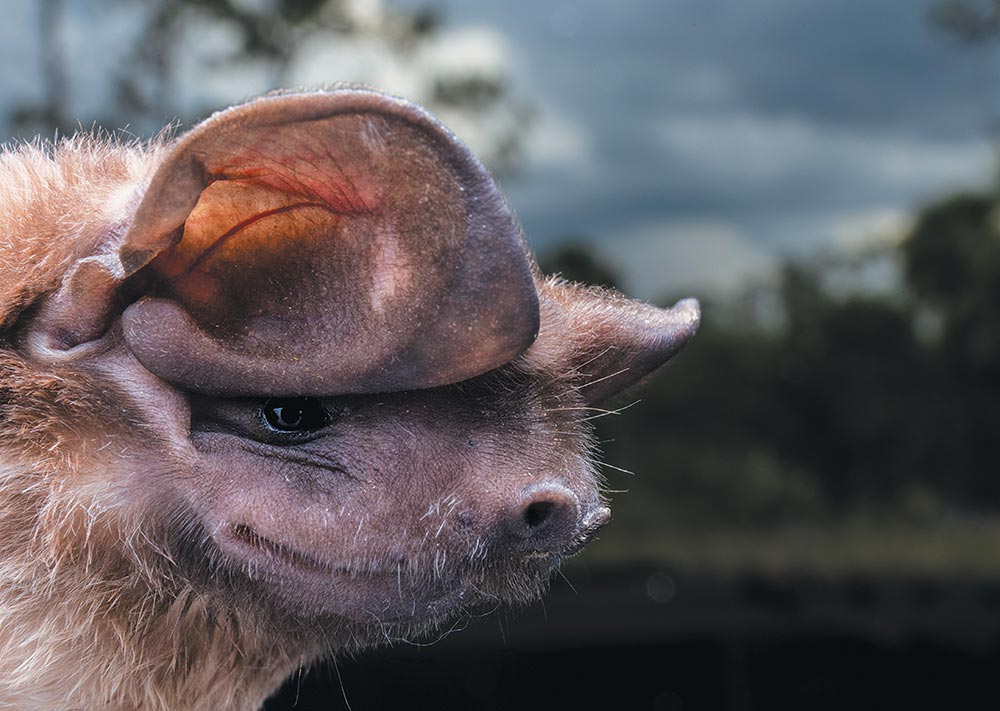
Further south, guano is helping scientists support one of the country’s rarest bats: the Endangered Florida bonneted bat (Eumops floridanus). Found only in South Florida, this species faces unique challenges as it navigates a mix of natural and urban environments.
“By studying guano, researchers can better understand what these bats are eating and how they’re using the landscape around them,” says Melquisedec Gamba-Rios, Ph.D., BCI’s Regional Director for Latin America and the Caribbean.
Identifying the insects Florida bonneted bats rely on can help guide habitat restoration efforts, inform where to place bat houses, and shape recommendations for native plants that attract their prey. It also highlights bats’ role in controlling insect populations, including agricultural pests.
This research shows how bat guano can connect the dots between diet, habitat, and survival. Getting more accurate information about what bats eat and where they find their food gives scientists a roadmap for protecting bats and the ecosystems that depend on them.