










Bat Conservation International Bats Magazine

Bats Magazine logo
Conservation
victory in Miami
A major conservation collaboration protects the Endangered Florida bonneted bat—and 22 other federally Endangered species
Bat Conservation International logo
Volume 44 • Issue 1
Photo: Jonathan Alonzo
Visit Bracken Advertisement
Issue 1 • 2025

Inside this Issue

Bats magazine logo
14
Photo: Rachel Harper

Features

08A Conservation victory in miami

A major conservation collaboration protects the Endangered Florida bonneted bat—and 22 other federally Endangered species
14A promising potential solution to white-nose syndrome

RNA interference technology shows promise, but hurdles include reluctance to test this new strategy

Departments

02Off the Bat

BCI Executive Director Mike Daulton on innovation
06Species Study

Brazilian funnel-eared bat
24Bat Chat

MENTOR-Bat fellow Maria Suhatri develops a bat conservation program in Indonesia
25Bat Squad

Teaming up with Discovery Education and the LEGO Group to “Build the Change” for bats
Read past issues of Bats Magazine at batcon.org/batsmag

news & updates

Photo: Horizonline Pictures
23
3Bat Signals

Conservation news and updates
  • Conservation workshop in Central Africa
  • Studying power line corridor habitat
  • BCI annual report
  • Bat pins for a cause
  • Bracken Cave flight schedule update
18Field Notes

Research news from around the globe
  • BCI international meetings
  • Making bat art out of reused materials
  • Gardening for bats with Calscape
  • New Endangered species film series
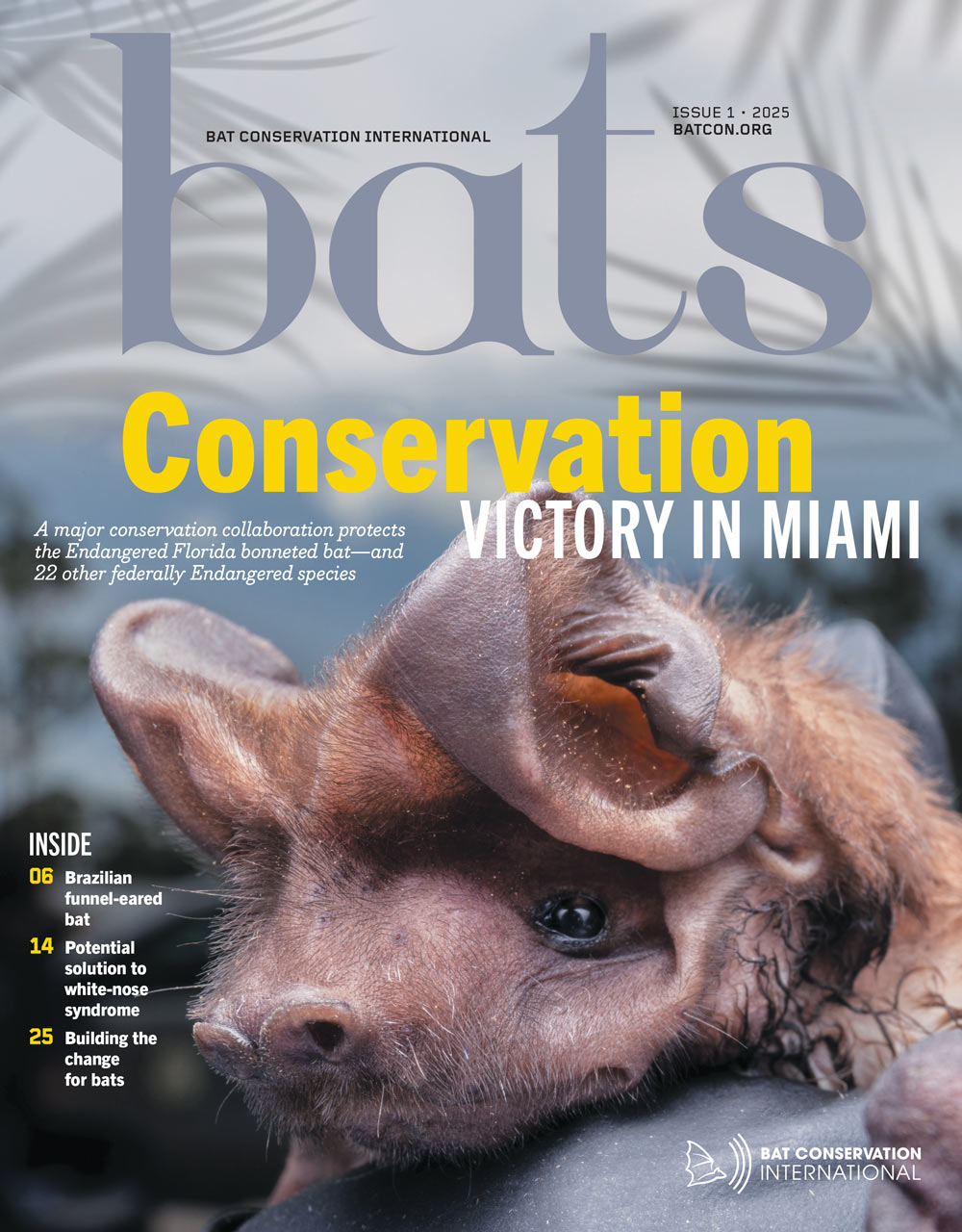
Bats Magazine Volume 44, Issue 1 cover
ON THE COVER: The Florida bonneted bat (Eumops floridanus) is the rarest bat in the U.S., and BCI and partners recently celebrated a major conservation victory to protect the species.
Image: MGambaRios
off the bat
A few words of introduction from your friends at Bat Conservation International

Using Innovation and Collaboration to Save Bats in 2025

by Mike Daulton
A

s we launch into 2025, we are advancing conservation for bats through innovation and collaboration. In this issue, we look back on our recent accomplishments and focus on the partnerships and technological advances that are paving the way to protect the world’s bats.

We celebrate our historic victory against the misguided Miami Wilds theme park development that was proposed in core habitat for the highly Endangered Florida bonneted bat. This victory was only possible due to the fortitude and tenacity of Bat Conservation International (BCI), our supporters, and steadfast partners, including the Tropical Audubon Society, Center for Biological Diversity, and Miami Blue Chapter of the North American Butterfly Association, as well as the local community in Miami-Dade County. We are also immensely grateful for the pro bono legal services of the law firm Carlton Fields. Without their assistance, this victory would not have been possible.

Masthead

Bat Conservation International logo
Bat Conservation International (BCI) is a 501(c)(3) organization dedicated to protecting bats and their essential habitats around the world. A copy of our current financial statement and registration filed by the organization may be obtained by contacting our office in Austin, Texas, below, or by visiting batcon.org.

Main Office

500 N Capital of TX Hwy, Bldg 8, Suite 225
Austin, TX 78746, USA
512-327-9721

Managing Editor

Kristen Pope

Chief Editor

Javier Folgar

Contributors

Michelle Donahue / Proofreader

Publication Management BackPocket Agency

Bats Magazine welcomes queries from writers. Send your article proposal in a brief outline form and a description of any photos, charts, or other graphics to the Editor at pubs@batcon.org.

Members: We welcome your feedback. Please send letters to the Editor to pubs@batcon.org. Changes of address may be sent to members@batcon.org or to BCI at our Austin, Texas, address above. Please allow four weeks for the change of address to take effect.
Board of Directors
Dr. Andrew Sansom, Chair
Eileen Arbues, Vice Chair
Ann George, Secretary
Dr. Gerald Carter
Gary Dreyzin
Dr. Brock Fenton
Danielle Gustafson
Alison Greenberg
Cecily Read
Dr. Shahroukh Mistry
Sandy Read
Dr. Nancy Simmons
Jenn Stephens
Science Advisory Committee
Dr. Luis Aguirre
Dr. Enrico Bernard
Dr. Sara Bumrungsri
Dr. Gerald Carter
Dr. Liliana Dávalos
Dr. Brock Fenton
Dr. Tigga Kingston
Dr. Gary McCracken
Dr. Stuart Parsons
Dr. Paul Racey
Dr. Danilo Russo
Dr. Nancy Simmons
Dr. Paul Webala
Senior Staff

Mike Daulton, Executive Director
Mylea Bayless, Chief of Strategic Partnerships
Dr. Winifred Frick, Chief Scientist
Michael Nakamoto, Chief Operations Officer
Kevin Pierson, Chief of Conservation and Global Strategy

Visit BCI’s website at batcon.org and the following social media sites:

Bat Signals BCI updates and conservation news
In August 2024, a workshop in the Democratic Republic of Congo enabled 15 participants from around Central Africa to get hands-on experience in bat conservation techniques.
Photo: Eric Fils Bakwo

Propelling Future Bat Conservation in Central Africa

Workshop builds capacity for bat research in understudied region
C

entral Africa is home to at least 150 species of bats, but many areas are understudied or have not been studied at all. To build the capacity for bat research in the region, Bat Conservation International partnered with Rufford Small Grant Foundation to fund a seven-day workshop in August 2024.

Paul Webala, Ph.D., professor at Maasai Mara University in Kenya, joined workshop organizers Eric Bakwo Fils, Ph.D., a Cameroonian researcher, and Prince Kaleme, Ph.D., from the Democratic Republic of Congo (DRC), to host the training. The immersive workshop was held at the Centre de Recherche en Science Naturelles (CRSN), Lwiro, DRC. The field course was held at a ranger training camp in DRC’s Kahuzi-Blega National Park. The trainings included 15 participants from Cameroon, Chad, Congo Republic, Democratic Republic of Congo, Gabon, and Kenya.

The workshop trained participants in bat identification, taxonomy, roosting, habitat, and monitoring. Participants learned how to safely capture bats using mist nets and harp traps, and practiced handling techniques. They also used bat detectors to collect acoustic data and use the recordings of echolocation to identify species. This training laid the groundwork for conservationists to conduct future bat research in the region.

bat signals

Studying Power Line Corridor Habitat

Managing vegetation for bats and humans
A field of yellow flowers with electricity pylons under a partly cloudy sky.
A study by BCI researchers explores the importance of power line corridor habitat for bats and how these areas can be best managed to benefit bats.
Photo: Ashley Bennett, EPRI
Vegetation around power line corridors—the strips of land alongside electric transmission lines—is regularly managed to ensure the lines are safe and effective. Bat Conservation International Research Scientist CJ Campbell, Ph.D., and a number of other BCI scientists joined collaborators to study how power line corridors can best be managed to benefit bats. Many species, including bats, use the small strips of land around power lines, which can include forest edge, prairie, scrub, and early successional habitat. The researchers focused on analyzing how vegetation management could impact bats’ roosting, foraging, and commuting in these corridors.

Campbell and colleagues published their recommendations for best management practices in the journal Ecological Solutions and Evidence in late 2024. They noted that it was important to avoid disturbing roosting bats when conducting vegetation management and that an integrated approach is best, with a focus on maximizing native plant diversity. They also explored the potential for targeted intervention strategies like creating artificial roosts and ponds, as well as highlighting topics for future research, including how vegetative management treatments may increase bat fitness.

Species Study
There are 1,400+ species of bats in the world. This is one of them.
Brazilian funnel-eared bat with its wings spread

Brazilian Funnel-eared Bat

Cave conservation key to protecting species
By Lindsay Lee Wallace
bat stats
Bat icon
Binomial

Natalus macrourus
Two bats icon
Family

Natalidae
Bat Globe icon
Colony Size

Usually, these bats live in colonies of 10 to 20, although in some ideal habitats—such as one Brazilian cave that’s home to a river—they have been observed in much larger numbers.

Scale icon
Weight

Six grams
Bug icon
Diet

Insectivorous
Exclamation Point icon
Status

Near Threatened on the IUCN Red List, considered Threatened in Brazil
Region

In South America south of the Amazon River in the countries of Bolivia, Brazil, and Paraguay
Black silhouette of South America and parts of North America on a yellow background.
Photo: Jennifer Barros, Ph.D.
S

ometimes people have negative sentiments about bats that arise from stereotypes and misinformation, which can breed fear. But when Bat Conservation International (BCI) Brazil Program Manager Jennifer Barros, Ph.D., is talking about bats with people, she knows how to break down some of these barriers.

Her secret weapon is Natalus macrourus, or the Brazilian funnel-eared bat. Orange, yellow, or white in color, weighing in at just six grams and adorned with a unique nasal ridge called a natalid organ, this bat is a star of Barros’s outreach.

“When you’re showing pictures of Natalus, because it’s a really cute bat, this starts to change people’s fear and negative views about bats, and it’s an interesting thing to see,” Barros says.

leaf iconFeature: Miami Wilds
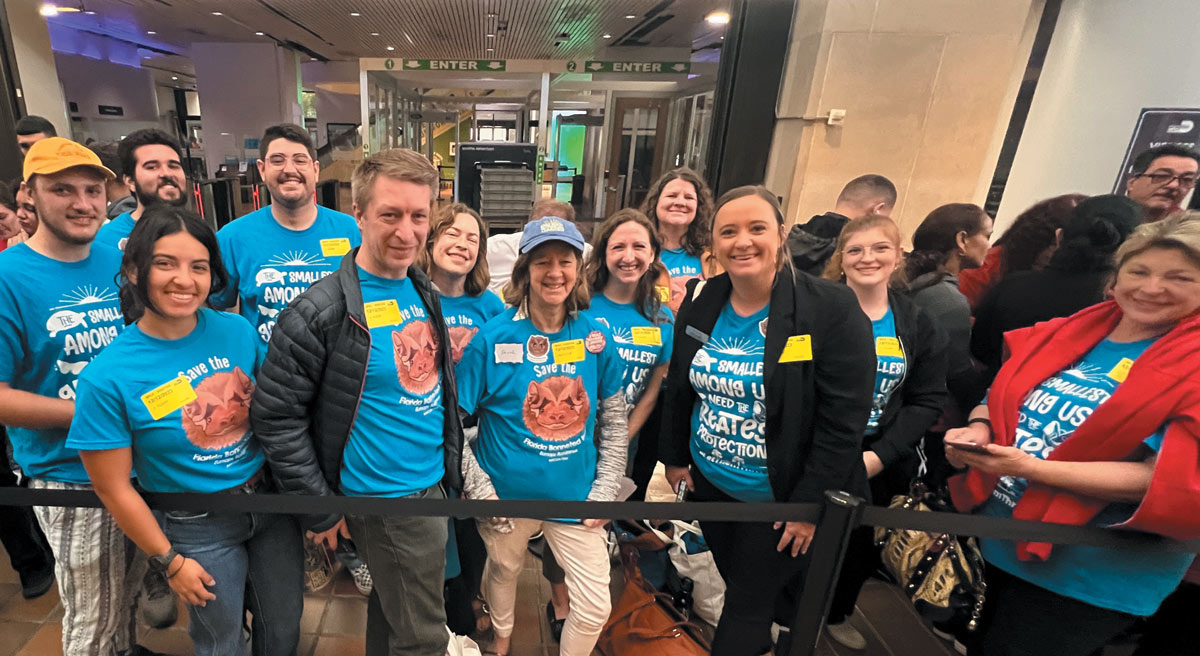
BCI staff and partners attend Miami-Dade county commission meetings to advocate for protecting Florida bonneted bats and the Richmond Tract of the Pine Rocklands at Zoo Miami.
Photo: Jon Flanders, Ph.D.

A Conservation Victory in Miami

A Conservation Victory in Miami
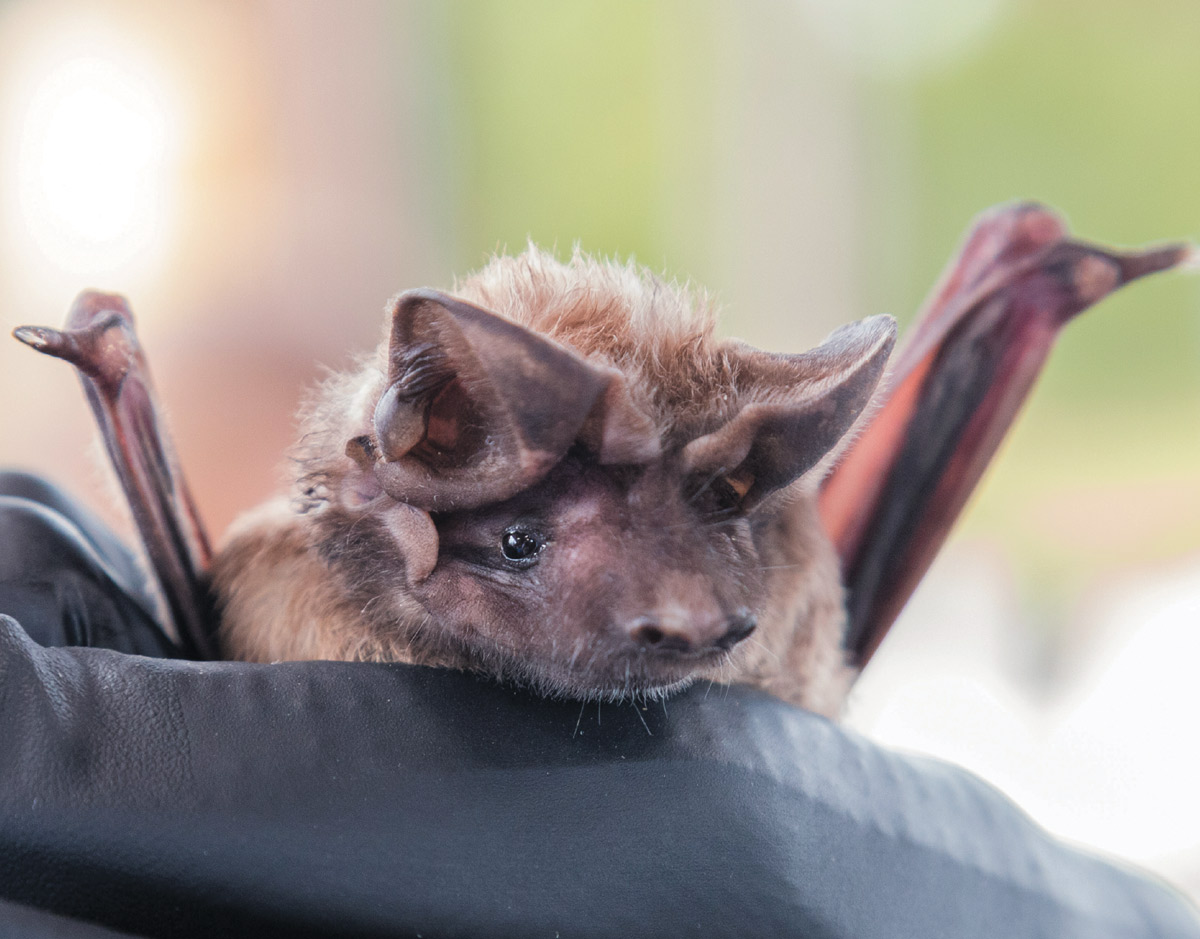
Close-up of a bat with large ears and dark eyes being held by a gloved hand.
Florida bonneted bat
Photo: MGambaRios
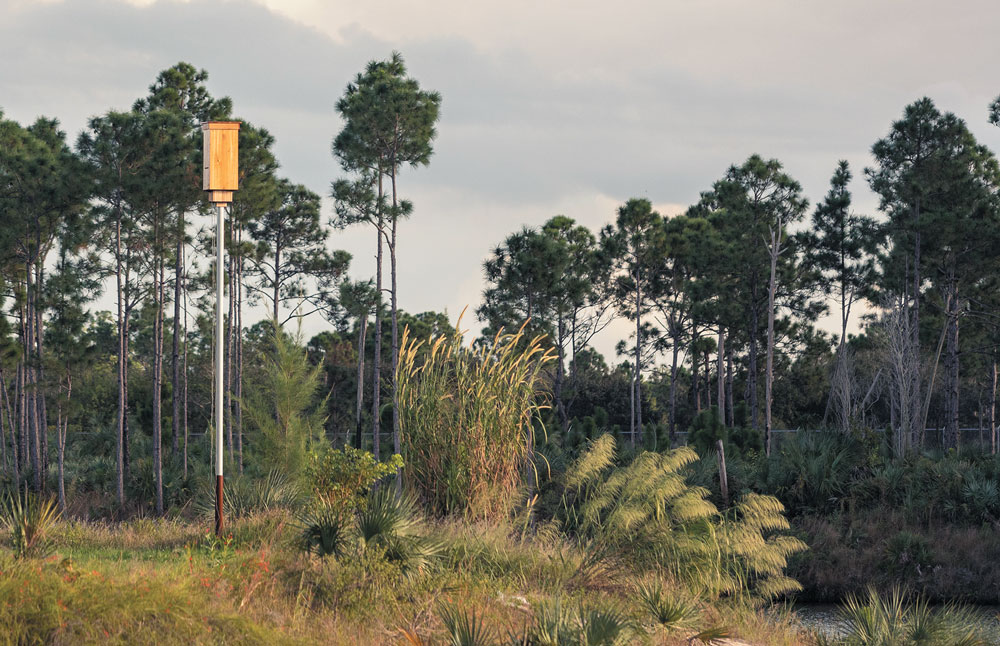
A wooden bat box on a tall pole amidst pine trees and wild grasses in an overcast landscape.
A bat house for Florida bonneted bats.
Photo: MGambaRios
Photo: MGambaRios

A Conservation Victory in Miami

A Conservation Victory in Miami
A major conservation collaboration protects the Endangered Florida bonneted bat—and 22 other federally Endangered species
By Stefanie Waldek
W

hen it comes to wildlife in Florida, the alligator might come to mind far sooner than the Florida bonneted bat (Eumops floridanus). It’s understandable. Scientists estimate there are 1.3 million alligators in the state, and Florida bonneted bats are rare. But this Endangered bat recently entered the spotlight in a years-long conservation battle that included legal challenges against development in Miami-Dade County—and the bats won.

The Florida bonneted bats’ habitat includes the Pine Rocklands, a critically imperiled ecosystem found within the urban sprawl of Miami. This sparse pine forest that grows atop limestone once covered more than 180,000 continuous acres in South Florida. Today, only 10% of that area remains, mostly within Everglades National Park.

leaf iconFeature: WNS and RNAi

A Promising Potential Solution to White-Nose Syndrome

Researchers swab a bat for signs of the fungus that causes white-nose syndrome in a Texas cave.
Photo: Rachel Harper
A Promising Potential Solution to White-Nose Syndrome
The northern long-eared bat (Myotis septentrionalis) was once common throughout the northeastern U.S. and Canada. Today, up to 99% of its population in this area has been killed by WNS. It has also killed 90% of the little brown bat (Myotis lucifugus) and tricolored bat (Perimyotis subflavus) populations.
Researchers swab a bat for signs of the fungus that causes white-nose syndrome in a Texas cave.
Photo: Rachel Harper
RNA interference technology shows promise, but hurdles include reluctance to test strategy
By Lindsay Lee Wallace

D

isease ecologist Tina Cheng, Ph.D., has seen fungal pathogens kill entire species. Today she is Bat Conservation International’s (BCI’s) Director of White-Nose Syndrome (WNS) Research and she’s working alongside scientists Jenny Urbina, Ph.D., and Emily Dziedzic, Ph.D. student, at Oregon State University with the goal of preventing North America’s bat populations from meeting the same fate. Pseudogymnoascus destructans (Pd), the fungus that causes WNS, is frustratingly hardy, and has become well-established in North America. For these reasons, it’s unlikely that the fungus will ever be entirely eradicated.

BCI is part of a network of researchers attempting to find and implement solutions that can reduce the spread of the fungus and treat bats after they’re infected. The team is using a technique that involves ribonucleic acid (abbreviated as RNA), which essentially converts information from DNA in order to carry out important cellular functions, like building proteins.

RNA interference (RNAi) technology is being used to combat Pd’s increasing prevalence. RNAi can stop cells from producing certain proteins, including ones the cell needs to survive. RNAi is already in use to treat human disease and manage agricultural pests, and the team behind the project has proven it can destroy Pd in a lab setting. Their research strongly suggests RNAi can also destroy Pd in the wild, which could mean far fewer bats infected with and killed by WNS each season.

Now all they have to do is convince people to try it.

Field notes Research news from around the globe
BCI staff including Luz de Wit, Ph.D., Winifred Frick, Ph.D., Kevin Pierson, Mylea Bayless, and Teague O’Mara, Ph.D. (left to right) at the 16th Conference of the Parties to the United Nations Convention on Biological Diversity.
Photo: Winifred Frick, Ph.D.

Making a Splash on the International Stage

BCI has strong presence at global meetings
By Fiona Tapp
B

at Conservation International (BCI) continues to make its mark on the global conservation landscape with a strong commitment to addressing critical biodiversity challenges. This fall, BCI’s participation in international scientific meetings like the UN Biodiversity Summit (COP16) in Colombia; the 52nd Symposium of the North American Society for Bat Research (NASBR) in Guadalajara, Mexico; and the European Bat Research Symposium (EBRS) in Spain has highlighted BCI’s dedication to leveraging science, collaboration, and advocacy to protect bats and their ecosystems.

field notes
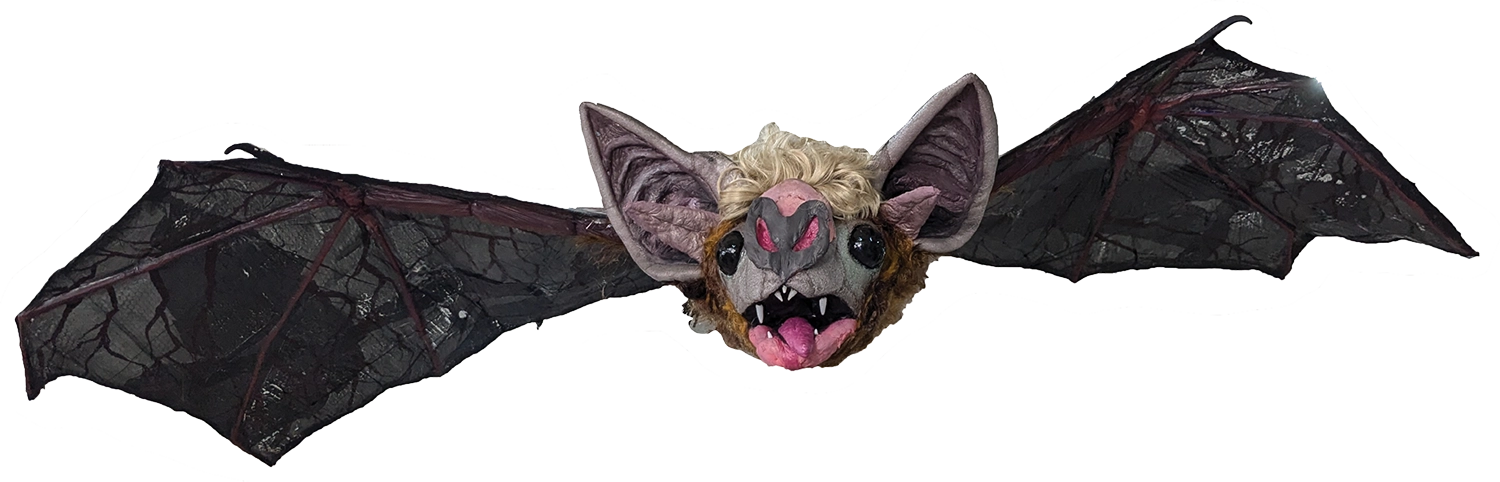
A stylized bat with large ears, a pink nose, and outstretched webbed wings.
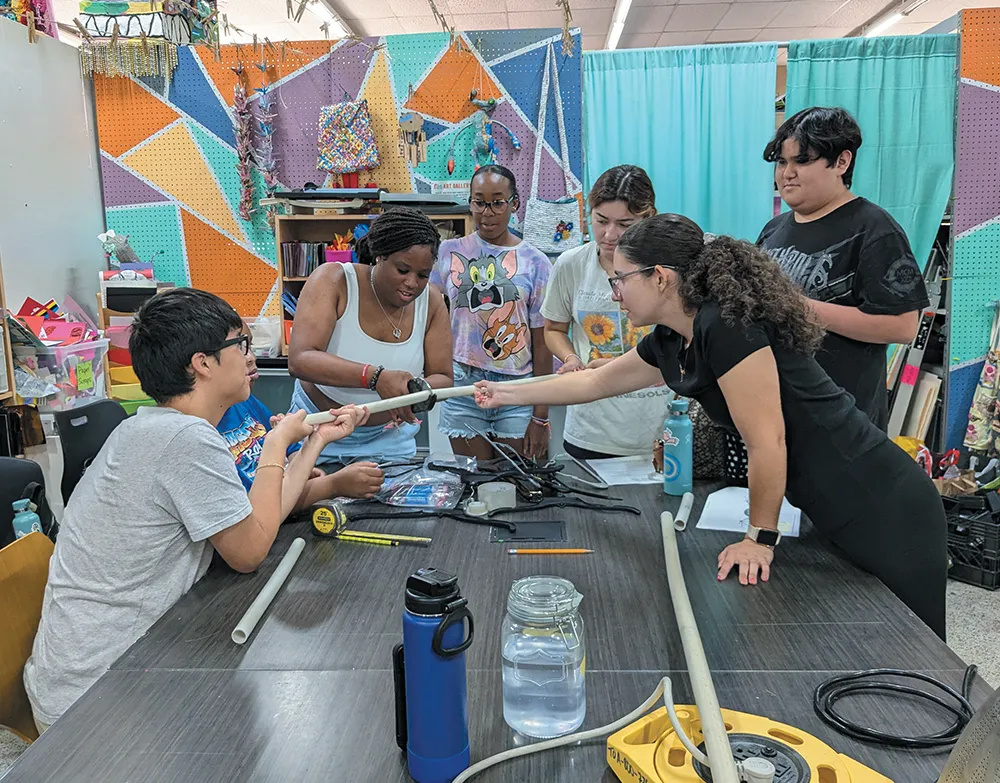
A group of people working together at a table in a colorful creative workspace.
Austin Youth River Watch students and staff work on the wings for Mrs. Batreuse.
Photo: Erin Cord

Trash Bat

Crafting bat art out of reused materials
By Jill Robbins
What do bats, recycling, and art all have in common? While that might seem like a bit of a head-scratcher, a group of Austin creatives are pairing bat education with a bit of whimsy: meet Mrs. Batreuse, a sustainable sculpture made of recycled materials. The 9-foot-wide, 5-foot-tall Mrs. Batreuse is more than just a cool piece of art greeting all who enter Austin Creative Reuse (ACR)—she’s the culmination of nearly two years of collaboration between Bat Conservation International (BCI) and the Austin community.

The idea to craft a larger-than-life bat sculpture out of trash stemmed from a 2022 partnership between BCI and the Austin Youth River Watch (AYRW). The nonprofit organization combines peer mentoring with environmental education, providing immersive nature-based learning programs via after-school and summer programs. The partners came together when the River Watchers expressed interest in a bat-themed week for their summer camp.

field notes
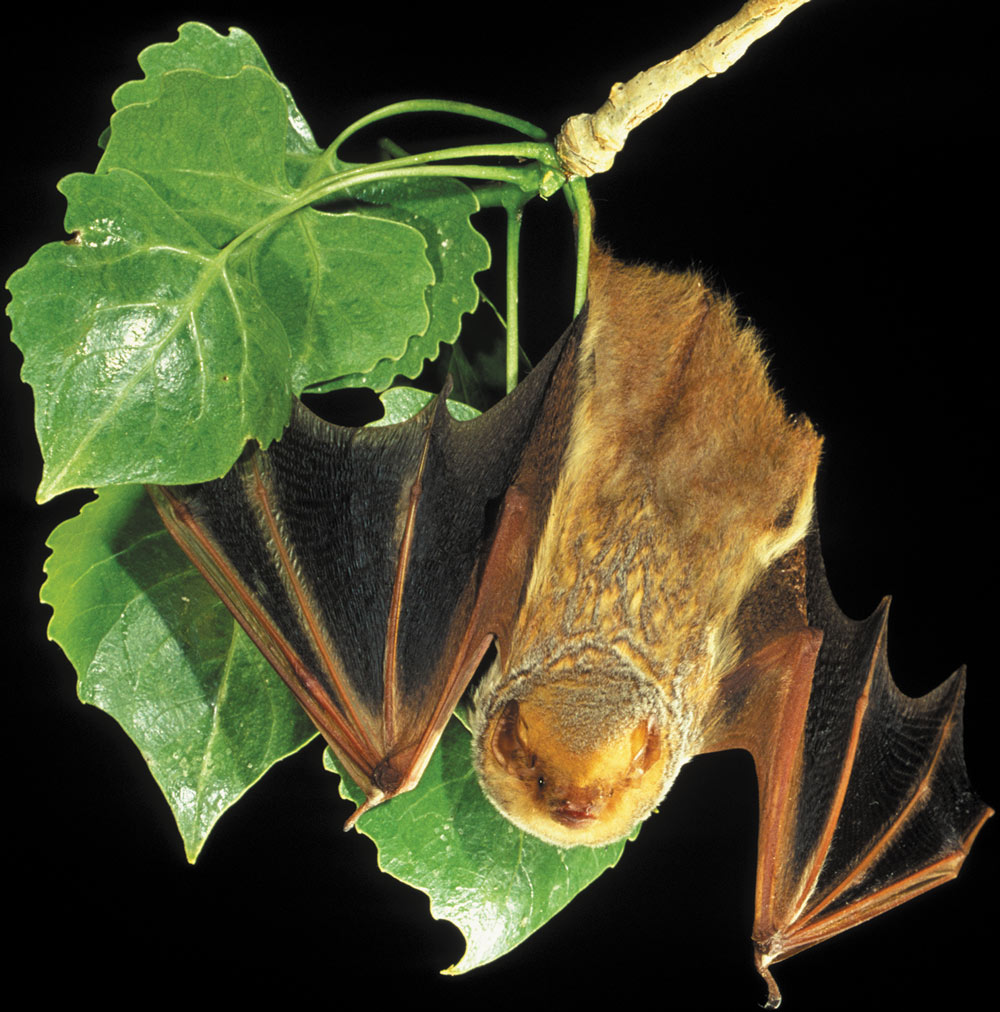
A bat hanging upside down from a branch with green leaves.
A western red bat (Lasiurus blossevillii) perched in green foliage.
Photo: J. Scott Altenbach

Gardening for Bats

Calscape website helps people plan their gardens with bats in mind
By Jill Robbins
In recent years, bee and butterfly-friendly gardening has grown in popularity. Now, bats are getting their moment in the gardening spotlight thanks to Bat Conservation International’s (BCI’s) new partner, Calscape.

Operating under the umbrella of the California Native Plant Society (CNPS), Calscape is an online hub for people who want to plant native gardens in California. Its database contains over 8,000 native plants and trees.

“BCI was seeking to expand its list of plants that are good for bats, and we were enormously impressed with Calscape’s extensive database,” says BCI’s Community Engagement Manager Erin Cord. “They already made it easy for gardeners to access bee and butterfly-friendly plants, and we thought, ‘Why not add bats?’”

field notes

Night Watch: A Worldwide Mission

New film series highlights Endangered species intervention projects in Fiji, Jamaica, and Kenya
Photos by Horizonline Pictures
I
Children in a classroom wearing checkered school uniforms with an orange wall and drawings in the background.
Children from Polly Ground Junior School listen to a bat talk.
I
n late 2024, Bat Conservation International (BCI) and Horizonline Pictures rolled out a film series, “Night Watch: A Worldwide Mission,” focusing on BCI’s vital conservation work in Fiji, Jamaica, and Kenya. The series of short films highlights the work BCI is developing with local communities to protect Endangered bats and the ecosystems they rely on.

“To be really lasting and successful, our work has to go beyond the caves and reach into the local communities that surround them,” BCI’s Endangered Species Interventions Director Jon Flanders, Ph.D., says.

Watch the films and learn more about “Night Watch: A Worldwide Mission” at batcon.org/nightwatch
Bat Chat A Conversation with a noted expert

A Budding Bat Conservationist

MENTOR-Bat fellow Maria Suhatri develops a bat conservation program in Indonesia
By Stefanie Waldek
T

he Critically Endangered Sumatran orangutan is one of Indonesia’s flagship species, and environmental educator Maria Suhatri is doing her part to protect them. She serves as Education Manager at Orangutan Haven in Medan, Indonesia, a protected wildlife ecopark and education center housing rescued orangutans that can’t be released back into the wild.

A person with short dark hair smiling in an outdoor setting with blurred greenery in the background.
Maria Suhatri
Photo: MGambaRios
Maria is also a fellow in the Indonesia cohort of MENTOR-Bat, Bat Conservation International’s program dedicated to supporting the next generation of global conservation leaders. So how does an orangutan conservationist fit into the picture of bat conservation? Read on to find out.

Your background is in orangutan conservation—how did you get interested in bats?

I’m working for an organization called Yayasan Ekosistem Lestari (Foundation for Sustainable Ecosystem), which focuses on Sumatra. I specifically work at Orangutan Haven, where you can see rescued orangutans in a natural forest setting that are unreleasable because they have physical and mental trauma.

But here, it’s not just about orangutans. We plan to create a fruit bat enclosure to share the important role of bats in the ecosystem, but no one in our organization has experience working with bats. That’s why I joined MENTOR-Bat—to learn more about bat conservation and be able to lead and manage our bat conservation program at Orangutan Haven.

Bat Squad For the young conservationist
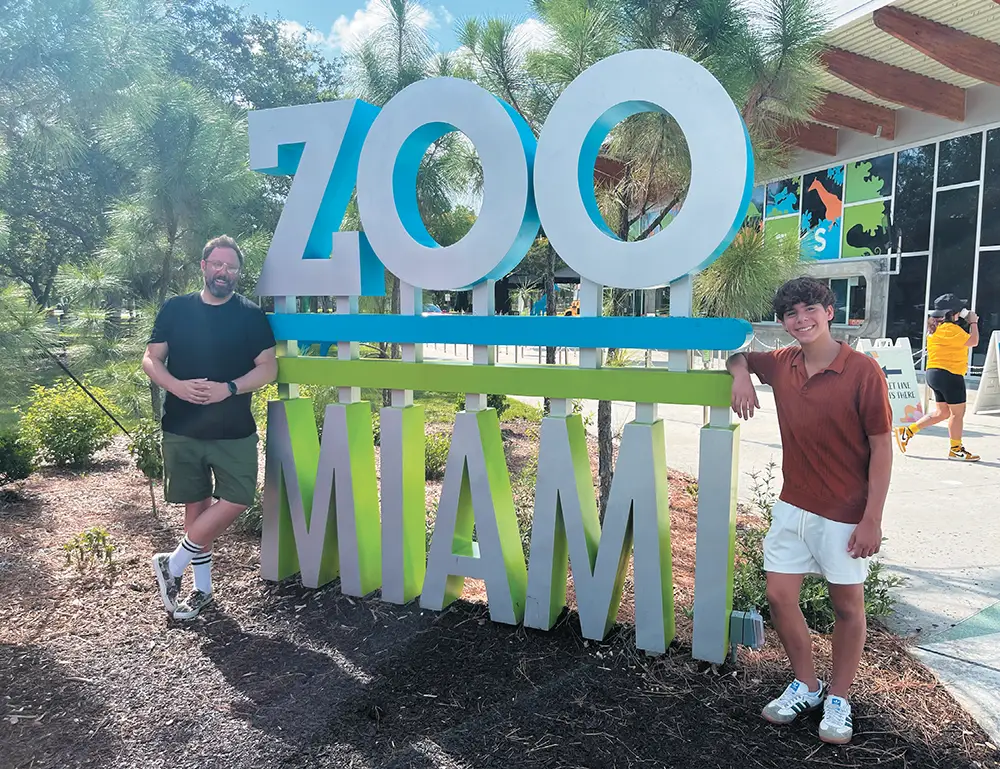
Two people stand by a large "ZOO MIAMI" sign with trees and a building in the background.
Miami student Martin and the LEGO Group’s David Pallash take a photo break between filming Virtual Field Trip segments.
Photo: Mylea Bayless

Using the Power of Play to Save Bats

Teaming up with Discovery Education and the LEGO Group to “Build the Change” for bats
By Fiona Tapp
B

at Conservation International (BCI) has teamed up with Discovery Education and the LEGO Group for an exciting initiative, Build the Change, to shine a light on bats and inspire the next generation of conservationists. This program combines creative problem-solving, environmental education, and the power of play to teach students about bats and how they can make a difference.

At the heart of the initiative is a captivating Virtual Field Trip, Night Navigators: Build for Bats. This immersive experience takes students across Texas and Florida to explore bat habitats and discover the critical role bats play in pollination, seed dispersal, and pest control while learning how to support these essential creatures.

Bats Magazine logo
Thanks for reading our latest issue!